
Catrin Haberfield • Stanford University
Recommended citation: Catrin Haberfield, “User Journeys on the Ruthwell Cross: Conceptualizing Sculptural Encounters through User Experience Theory,” Different Visions: New Perspectives on Medieval Art 13 (2026). https://doi.org/10.61302/ENQA2851.
Medieval designers intentionally integrated signifiers into their objects which aimed to incite certain responses in an audience. This indicates that a central influence on the design process was a consideration of user experience: how an object would be used, in what circumstances, and by whom. Identifying signifiers as implicit directions for use means that the potential of an artwork is not fulfilled until it is activated by a user[1] – a similar user/work dependency to the one put forth by social sculpture.[2] However, this article proposes that re-evaluating early medieval inscribed objects through user experience (UX) theory can show how users were integral to the initial construction of an object, not just its fulfilment or activation. Through a forensic analysis of the Ruthwell Cross (Fig. 1), I identify narratives of user interaction, claim that these user journeys demonstrate such user-influenced production, and show how this approach can positively influence modern object curation and study.
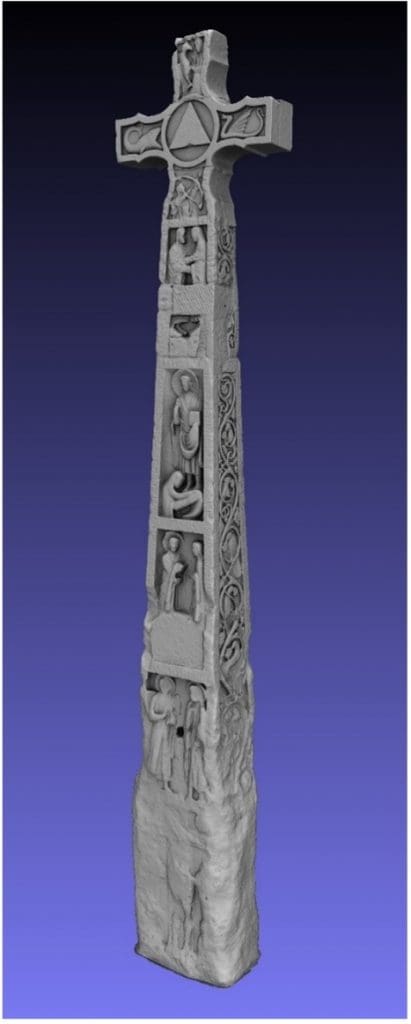
Fig. 1. 3D rendering of the Ruthwell Cross. Daniel O’Donnell and Gurpreet Singh. “Ruthwell Cross – Main.” Zenodo, 3 July 2019. https://doi.org/10.5281/zenodo.3266480. Creative Commons Attribution 4.0 International.
UX, despite being usually associated with modern marketing, is an apt mechanism with which to approach the medieval. UX encompasses different factors concerning audience reception including storytelling, visual layout, interactive design, engagement, and the end objective of the asset itself.[3] Considered together, these create a narrative intended to generate a specific outcome, whether that be purchasing an item or asserting religious faith. Even if it was not conceived of in the same terms, I believe that early medieval epigraphy also relies on significant, sequential touchpoints to prompt specific behavior.[4] This is similar to, but distinct from, rhetoric – a core component of medieval art, literature, and education. Some iconographic programs indicate clear knowledge of rhetorical technique, revealing what a manufacturer thought would be successfully emotive and persuasive. Mary Carruthers notes that “rhetoric was the pre-eminent art of composition,”[5] and it is the multi-formal sense of composition – literary and visual – that I seek to investigate. This paper therefore examines not just a rhetorical program that is activated by a user, but also how it is constructed with the user in mind. This is why UX is useful to examine how early medieval objects center user engagement and ultimately incite action.
First, I will introduce the concepts of UX and user journeys, considering the way they interact with other methodologies in the humanities and establishing a clear framework for this study. Next, I will examine the potential user journey(s) of the Ruthwell Cross,[6] demonstrating the sequential nature of data presentation and the presence of persuasive prompts for user action. Finally, I consider the impact of different environments, physical and virtual, on these user journeys. Central here is the ramifications of digitization, both on our understanding of medieval encounters and on our own encounters with objects. I evaluate how UX and user journeys are affected when an object is digitized, including the influence of metadata and the limitations of interfaces. The aim of this study is not to simply apply modern theory to medieval artefacts without any productive value; rather, I seek to initiate a dialogue, using disciplines rarely considered in tandem to reframe the lifecycle of textual objects as one of ever-evolving user journeys. Conceptualizing material objects through the lens of UX theory can enable us to consider active encounters more forensically whilst not devaluing the phenomenological.
Aligning methodologies
The centrality of activity and interaction to early Insular art makes both UX and social sculpture useful lenses through which to analyze user interaction. Joseph Beuys conceived of social sculpture as “action art” or the creation of an opportunity for “permanent conference.”[7] For proponents of this genre, the artwork is the encounter. Though a modern term, medieval makers were conceiving of their objects as social sculpture, completed or activated by use – as we shall see with Ruthwell. Some scholars claim that the advent of social sculpture saw a “structural shift from a traditional aesthetic with its anticipated spectator to an aesthetic of action and social design.”[8] But medieval art is especially concerned with “action and social design,” making the social sculpture movement of the twentieth century not a shift but a return to such matters. For both UX and social sculpture, the artwork incorporates human activity, requiring bodily participation. However, UX is a more revelatory theoretical framework when analyzing object design: it allows for an examination of the relationship between the narrative design upon an object, how it is activated by users, and how it incites action in them.[9]
There is no single, comprehensive, agreed-upon definition of UX. Originating in the twentieth century, the term is well-known across multiple academic fields including psychology, cognitive sciences, and human-computer interaction, as well as industries such as manufacturing, entertainment, and marketing.[10] In 1934, philosopher John Dewey incorporates the term in his work on aesthetics, implicitly linking UX with social sculpture by considering three concepts: the unfolding experience of a live creature encountering an artwork; the influence of canonical and classist taste on this encounter; and the ramifications of removing a work from its “conditions of origin and operation.”[11] Here, Dewey essentially admits the connection between individual experience, communal context of encounter, and resultant action. In 1955, Henry Dreyfuss developed UX in an industrial manufacturing context, advocating for the integration of intuitive and enjoyable design into a product’s construction process. He laments the way in which 20th century manufacturers “called in an ‘artist’ after their products had assumed their final form” to add a superficial aesthetic layer.[12] Instead, he advocates for designing products with the end user in mind, before manufacturing them – and this is what I argue already occurs in early medieval art. UX was eventually popularized in 1988 by cognitive psychologist Don Norman, who claimed (erroneously) that he […] “invented the term because I thought ‘Human Interface’ and ‘usability’ were too narrow: I wanted to cover all aspects of the person’s experience with a system, including […] design, graphics, the interface, the physical interaction, and the manual.”[13]
As this paper shows, medieval UX covers the same scope of design, interface, interaction, and instruction. Norman’s work examines the application of cognition and emotion to product design – specifically, how to improve discoverability (how a user learns how a product works, and what actions are possible to take), understanding (how a user comprehends the point and meaning of a product), and enjoyment.[14] These are modern terms for ancient concepts; UX and user journeys were taken into consideration during the development of early medieval objects – particularly, I argue, textual objects.
Clearly, UX has had a meandering history, but how is the concept usefully understood for, and applied to, our purposes? At its most basic level, UX can be defined as the way users encounter and interact with an object; positive UX therefore increases a user’s engagement and satisfaction with it. There are three main categories of UX that influence user judgement: pragmatics, hedonics, and aesthetics.[15] In linguistics and philosophy, pragmatics examines how context creates meaning; similarly, pragmatics in design theory explores how intuitive an item is to use. Ease and efficiency contribute to a positive experience, such as manuscripts or websites having clear headings or contents pages which aid navigation. Aesthetics, meanwhile, concerns perceived quality, and when material value is seen as high, the user’s estimation of the object’s productive value (or usefulness) consequently increases.[16] Hedonics describes the pleasure derived from use. When an item is ugly, it is more likely that someone will quickly stop using it. Importantly, all these categories overlap. For example, ease is not easily separated from pleasure: studies show that attractiveness increases perceived ease of use.[17] If an asset’s discoverability requires a little effort, the reward might increase fun.[18] However, if it is too difficult – or conversely, far too easy – then it is often no fun at all. This balance is undoubtedly applicable to the medieval riddling tradition, with objects like the Franks Casket drawing a user into decoding layers of meaning, from the runic inscriptions to the paneled images. For early medieval assets, I would also add a fourth category alongside pragmatics, aesthetics, and hedonics: ethics. Many surviving early medieval textual objects are found in a religious context or contain religious references. Orthodoxy and exemplarity influence their design, which subsequently influences their users. Recognizing the impact of ethics on medieval UX design requires wider knowledge of the context of production and the values of the society in which the object was produced. All four categories are applicable in a medieval context. An object such as Ruthwell needs to be accessible for lay users to be able to parse its content and participate in communal experiences, but complex enough for learned users to find it useful and engaging. Pragmatics, hedonics, aesthetics, and ethics are all integrated into early medieval epigraphy, allowing us to appreciate the influence of an anticipated user’s experience on the artist’s choices.
Textual objects require an even more explicit consideration of UX – thinking about how text is placed, how text and image interact, and the order the content will be encountered. UX design as a discipline emerges to help users make sense of the information being presented, and in this respect, for text media it is not farfetched to consider the printed edition as the original scholarly UX. Indeed, editions often seek to improve discoverability for a modern audience by interpreting uncertainties, rectifying scribal errors, and adding editorial notes. These signposts all steer a user through a text in the way the editors believe the author intended. Yet textual editions remove texts from their contexts, and while they may be designed to improve discoverability their format can be impenetrable, only accessible to those who have learned editorial conventions. There is rarely an easy answer to creating accessible, timeless UX that satisfies all requirements. Yet perhaps the most sustainable form of UX is one of its earliest manifestations: punctuation. Punctuation guides a user through a text, providing prompts and suggestions for interpretation. Even early medieval epigraphy often starts with a cross and sometimes features puncta. Text layout, including punctuation, impacts how a user interacts with, and navigates through, an object. The mise-en-système can therefore be regarded as the original user interface – particularly as a mise-en-système is regarded as “an environment for action.”[19] UX (whether of an original or edition) therefore has two core drivers: conveying information, and doing so in a way that incites action.
The UX concept most integral to this study is that of user journeys. User journey is used in design and marketing to define a series of steps (or touchpoints) that carry users towards an end goal. Whether creating one asset or many, the priority is to optimize UX across the entire user journey. This easily applies to an individual object and the way a user is directed through different sections and hierarchies of information – such as the size, color, and style of script indicating the status of text (headings, commentary, etc) in a manuscript, thereby navigating a user. On a macro scale, modern marketing campaigns use multiple assets like adverts, emails, social media, freebies, competitions, and calls to convert a prospect into a customer. These are not deployed at random – rather, teams of strategists, copywriters, and designers develop a user journey where these assets have a consistent aesthetic, and are then deployed in the right order, at the right time, to be as effective as possible. The overarching narrative order of consumption is therefore the user journey. To borrow another term from UX theory, consume here is more appropriate than read. Much art historical scholarship discusses the act of reading images,[20] but consume captures the act of taking in information and being an active participant in the encounter, regardless of how deeply the user actually comprehends the content. It also transcends the limitations of single-sense terms like read, view, listen, etc. Finally, consume recognizes the asset as an information repository – and the order in which this information is taken in by the user is what we consider the user journey.
User journeys have a rhetorical purpose, creating more effective and emotive artistic experience – which is clearly applicable to the medieval. Similar to mnemonics, a narrative can aid memory. In the modern world, effective user journeys help children to remember necessary lessons or customers to recall certain brands. There is no shortage of early medieval sources which do the same, from computus manuscripts to riddles.[21] On runestones and other memorial monuments, common formulae also suggest a mnemonic element to these inscriptions.[22] Indeed, “medieval culture was fundamentally memorial,”[23] and effective UX is therefore critical in both initially engaging a user and creating a strong enough impression to maintain recall across multiple assets. Crucially, there is no concrete end to a user journey. Even when a modern user is converted (i.e., buys a product, turning from a prospect into a customer) they will still encounter materials like adverts and emails, intended to keep them engaged, encourage loyalty, and upsell. In a medieval context, someone who is converted to Christianity is not then ignored – a religious experience is a continuous one, consisting of regular engagement with religious materials until death.
Despite its origins in philosophy and psychology, UX is rarely used in the humanities. Instead, Art History, Archaeology, and Literature scholars often turn to approaches like reader-response theory or phenomenology. Given UX’s predominance in industry, this aversion is unsurprising but nevertheless disappointing. Fortunately, with the rise of interdisciplinary studies and digital humanities, engagement with non-traditional or non-humanities approaches is increasing. While there are broad similarities between reader-response and UX, there are distinct differences that make UX a useful framework to deploy across humanities research. The principal difference between UX and reader response is that UX is predominantly concerned with the manufacturing process. Reader response, meanwhile, is only concerned with end reception. This decenters the asset, sometimes “even causing the work to ‘vanish’ altogether.”[24] Here, Elizabeth Freund grounds reader response in M. H. Abrams’ visualization of art: “a triangle of artist, audience, and universe, with the work in the centre” (Fig. 2).[25] Freund argues that a reader-response approach destabilizes this triangle, again decentering the work. UX theory brings all four focal points (asset, artist, audience, and universe) together equally. By analyzing (1) an asset in (2) its universe (physical and cultural environment), it is possible to identify the influence of (3) the imagined audience on (4) the artist in constructing (1) the asset (Fig. 3). It may seem a given, but end use was considered during construction – and foregrounding UX in the present encourages scholars to consider the entire lifecycle of an object, as well as the relationship between different actors in the artistic mechanism (Fig. 3). While I believe that assets are constructed with end use in mind, I am not claiming there is only one, correct way to read an object. Rather, I suggest that there are prompts and signposts integrated into works which are intended to guide a user as much as possible in a certain direction.
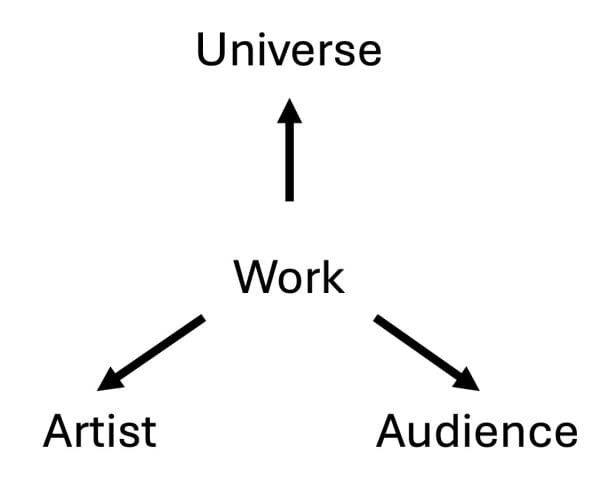
Fig. 2. Based on M. H. Abrams, The Mirror and the Lamp: Romantic Theory and the Critical Tradition (Oxford University Press, 1971).
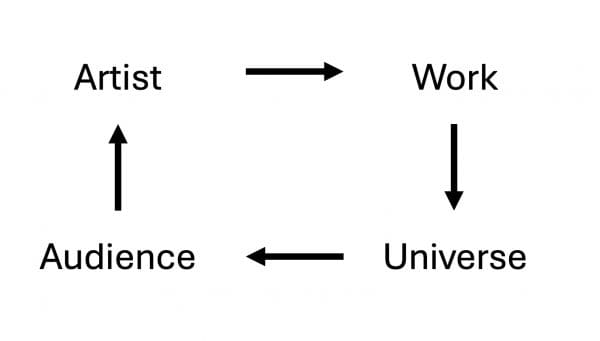
Fig. 3. “By analyzing (1) an asset in (2) its ‘universe’ (physical and cultural environment), it is possible to identify the influence of (3) the imagined audience on (4) the artist in constructing (1) the asset.”
Considering UX and user journeys in conjunction with art historical, iconographic perspectives helps to understand the cause, not just effect, of narrative construction. Some scholars have examined the information-led construction of objects: Naomi Reed Kline labels medieval maps “conceptual enclosures for stored information,”[26] while Martin Foys calls the Cotton Tiberius B.V. mappamundi an “Anglo-Saxon datascape.”[27] In what follows, I align these data-based perspectives with rhetoric to uncover how artefacts are purposefully structured to make their “stored information” comprehensible to their users. This study, therefore, shows how a proactive consideration of the end user’s experience can affect the design of an artefact throughout its lifecycle of use, adaptation, and reuse. This, I hope, demonstrates that modern UX theory is useful for conceptualizing the level of narratological persuasion happening in these assets.
Ruthwell’s user journey(s)
As a three-dimensional object decorated on all four of its vertical sides, Ruthwell has a complicated UX – but it is still possible to map out a sequential user journey. Éamonn Ó Carragáin and Fred Orton, among others, have contributed significant work to deducing its iconographic program, highlighting themes of the Eucharist, baptism, and incarnation.[28] Ó Carragáin calls Ruthwell’s design “an extremely coherent programme, based on ceremonies found in Gelasian, and at times also in Gregorian, sacramentaries.”[29] While I suggest no radically different sequence to the order of consumption, my approach reveals how the designers conceived of their users encountering the object, and how this prediction influenced the design. The broad faces of the shaft contain paneled images of biblical scenes with accompanying Latin inscriptions in roman capitals (e.g. Fig. 4). The narrower inside shaft faces, underneath the arms of the cross, comprise inhabited vine scroll surrounded by a border which is filled with runic verse (e.g. Fig. 5). To consume Ruthwell’s content a user must physically move around the monument, travelling from face to face.[30] This experience is inevitably disjointed as it is impossible to consume all four sides simultaneously, and even circling the monument does not give a linear experience as opposite faces are thematically linked. This interrupted narrative results in “seeing and then not seeing, speaking and then not speaking, touching and not touching, knowing and not knowing.”[31] What James Paz is describing here is UX in its most fundamental form: the live, interactive experience that the user has when they encounter the object and consume the text and images upon it.
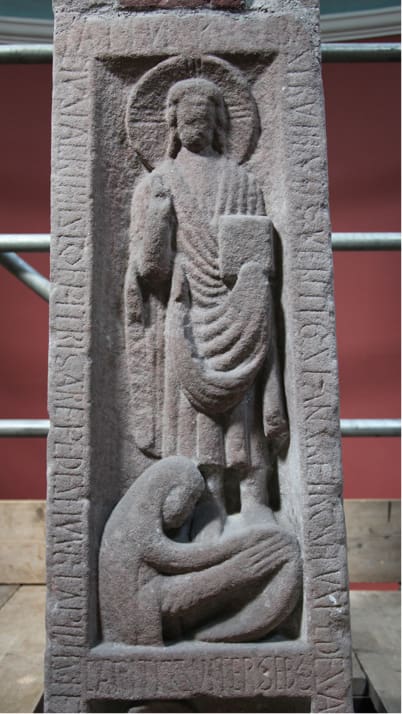
Fig. 4. Jesus and Mary panel on the Ruthwell Cross. Photo: copyright Visionary Cross Project 2017. https://doi.org/10.5281/zenodo.232415. Creative Commons Attribution 4.0 International.
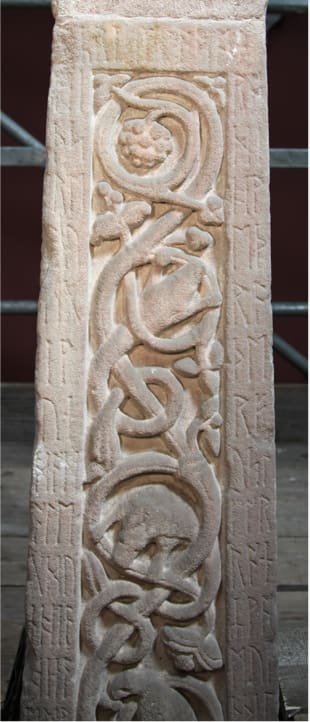
Fig. 5. Runic verse on the Ruthwell Cross. Photo: copyright Visionary Cross Project 2017. https://doi.org/10.5281/zenodo.232415. Creative Commons Attribution 4.0 International.
Examining all faces together can reveal the order in which Ruthwell’s content was intended to be consumed. To determine directionality, we can turn to the runic verse which is a variant of ll. 39-65 of the Old English poem The Dream of the Rood. The east face verse, wherein Christ approaches the rood, narratively precedes the west face verse, where Christ is already upon it.[32] On its own, this does not indicate clockwise or anticlockwise movement, as a user could travel in either direction to move to an opposite face. The most basic user journey can be mapped thus:
[broad side] → east face → [broad side] → west face (→ [broad side] etc)
However, on both runic faces, the runes are arranged to be read as a horizontal top row, then the right column, then the left column (Fig. 6). As left-to-right is Western textual tradition, it is odd that the user is meant to read the right column before the left. However, travelling clockwise means that they would encounter the right column first, explaining this phenomenon. We can therefore be certain that Ruthwell was designed for clockwise consumption (Fig. 7). Ó Carragáin has reached the same conclusion through study of iconography and liturgical custom,[33] but my analysis reinforces the assertion through practical forensics. Reasserting this user journey through a user-centered examination also shows that the text layout was decided specifically with intended user in mind. The standard assumption is that the design drives the encounter, but this demonstrates that the encounter drives the design, completing the cycle outlined in Fig. 3.
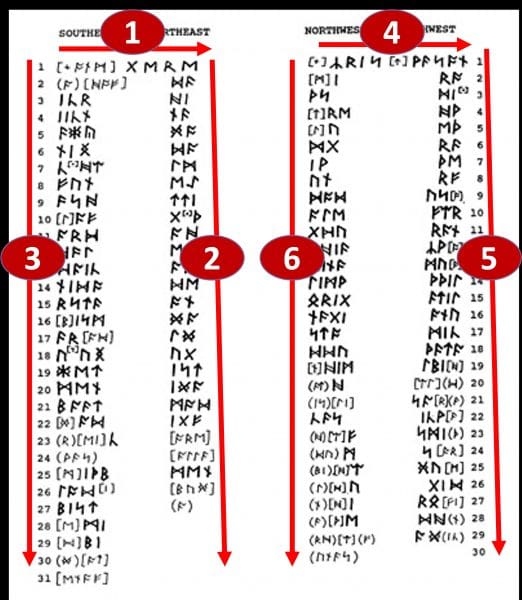
Fig. 6. Narrative order of runic faces, after George Hickes, Linguarum veterum septentrionalium thesaurus grammatico-criticus et archaeologicus, vol. 3 (E Theatro Sheldoniano, 1705), table iv.
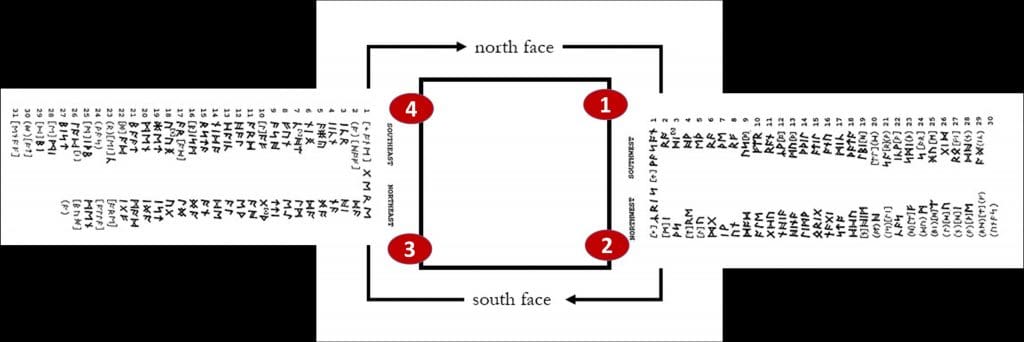
Fig. 7. User journey circumnavigating Ruthwell.
But where does the user journey itself begin? I suggest that a user is meant to start at the face currently oriented north, as the panel depicting John the Baptist and the Agnus Dei is the only panel with Roman text that explicitly includes the user: “[–]DORAMVS” (adoramus, “we adore”). By reading the first-person plural present adoramus the audience is included in a live act of devotion. That the north face was the intended beginning is reinforced by several other features: the largest panel is Christ in majesty, a common and expected focus for veneration, and the now-weathered text in the border surrounding the top arm of the cross, depicting John the Evangelist, likely read in principio erat verbum (“In the beginning was the word”), the opening line of John’s gospel. Users would naturally be drawn to start their journey literally in principio. Furthermore, medieval Christian practice traditionally prayed facing east. The current north face originally faced west, meaning that when a user orients themselves east to pray, they would be facing this side of the cross.[34] All these elements make it probable that the now-north face is where a user started, or where a congregation gathered. I believe a user is also meant to end at this face, too. Ruthwell’s opposing panels are thematically linked, prompting repeated consumption and circumambulation to fully comprehend the theological imagery. Repeatedly encountering and finally culminating at adoramus also reminds the user of the act of worship they are meant to be undertaking throughout.
These touchpoints are not narrative for narrative’s sake; the driving force of UX is to incite action, and the crux of the user journey is the “call to action” (CTA). A CTA is any feature that incites a user to act; modern digital (or even physical) assets often feature an icon which reads “learn more,” “buy now,” “download,” etc. Explicit textual CTAs in Old English occur most frequently on memorial objects, with the majority of their inscriptions following formulae such as gebiddaþ þær saule (“pray for the soul”).[35] In Latin this can occur as orate pro, such as on Billingham 13.[36] These imperatives ask the user to engage in a literal, immediate action. It also usually occurs at the end of an inscription, leaving nothing else for the user to do but to complete the request. The Dewsbury Cross fragment and the Bewcastle Cross have these prayer CTAs, but Ruthwell does not.[37] However, now-illegible runes on the top of Ruthwell’s inner faces, above the poetic runes, could be the remains of a sponsor or memorial formula. This possibility is reinforced by Lancaster (Priory) 1, which has a prayer formula in a similar position immediately under the crosshead.[38] Even the Brussels Cross, which also features verse lines similar to those found on Ruthwell and lines 44 and 48 of The Dream of the Rood, has an additional inscription containing a prayer formula that explicitly states the object’s purpose:
þas rode het Æþlmær wyrican and Aðelwold hys beroþo[r] Criste to lofe for Ælfrices saule hyra beroþor
Æthelmær and Athelwold, his brother, ordered this rood to be made for praise to Christ for the soul of Ælfric, their brother.[39]
Though not an imperative, the reading of this inscription in itself can act as an intercessory prayer for Ælfric’s soul. Any prayer CTA on Ruthwell is now lost – but even if the now-illegible text was such a formula, its location on the object is not in a central, nor final, position. Ruthwell is still generative, but in more implicit ways. An impetus to take action is conveyed in Ruthwell’s design, such as the liturgically-ordered iconography as well as the tituli and sententiae which accompany the paneled images.
These captions show that Ruthwell would have been used for liturgical practices and even processions, not just individual contemplation.[40] The tituli and sententiae explain each scene, often through liturgical quotations. Éamonn Ó Carragáin identifies that the tituli accompanying Christ over the beasts refer to
two chants sung together only at Good Friday at the ninth hour, the moment of Christ’s death on the cross: the tract ‘Domine audivi’ taken from the Canticle of Habbakuk, which prophesied that Christ would be known ‘between two living creatures’ (‘in medio duorum animalium’), and the tract ‘Qui habitat’, based on Psalm 90, which prophesied that Christ would ‘tread on the lion and the dragon.’[41]
Identifying parallels and sources for early medieval iconography is not new – early scholarship on Ruthwell does predominantly this.[42] But asking why this intertextuality is done reveals how the design prioritizes the user’s act of encountering the object, as it helps a user recall exact prayers to carry out. The two chants identified above are traditionally sung at the exact hour of Christ’s death, meaning that Ruthwell is intentionally constructed to play a part in a live, interactive paschal ceremony. Any Christian cross symbolically represents the holy rood, but in the moment of worship Ruthwell transcends time and becomes that crucifix, in its own form of transubstantiation. The runic poem increases this effect as the prosopopoeic cross narrates the unfolding crucifixion, making the live encounter even more visceral and further blurring the two roods across time:
ᛁᚳ/ᚦᚫᛏᚪ/ᛚᛒᛁᚻ/ᛠᛚᛞ/ᛋᚪᚱ/ᛁᚳᚹᚫ/ᛋᛗᛁᚦ/ᛋᚩᚱ/ᚸᚢᛗ/ᚷᛁᛞ/ᚱᛟᚠᛁ/ᛞ
ic þæt al biheald sar ic waes miþ sorgum gidrœfid
I beheld all that, I was sorely afflicted with sorrows
In the poem, ic applies to both the cross and Christ, but by reading the pronoun it applies to the individual, too. Similarly, þæt is both the crucifixion and Ruthwell, with the cross functioning as a metonymic invocation of the event. The user is an active participant in bringing together past and present. In consuming the content upon the cross, a user is ushered from an act of simple observation to that of highly involved liturgical worship.
The purpose of an asset can be expressed in multiple ways, but it can also have multiple purposes. Ruthwell has multiple CTAs – textual, pictorial, and contextual – and despite its dominant Easter liturgical function it is also deeply multivalent. Its existence was certainly a political statement,[43] and one other purpose of Ruthwell may have been to convert Britons to the correct type of Christianity, not least because the scene of Christ healing the blind man is interpreted by both Augustine and Bede as a metaphor for “enlightening and then baptizing the human race.”[44] This conversion message on Ruthwell is particularly likely when we account for Ruthwell’s Easter context, as Augustine himself also healed a blind man to “convince representatives of the British Church to abandon their traditional Easter practice and join him.”[45] The association between Easter, blindness miracles, and Augustine’s Gregorian agenda makes it highly probable that some conversion CTA is intended on Ruthwell. It is also worth circling back – quite literally – to the adoramus on the north face. While not an imperative, the first-person plural automatically includes the user in the action. Ruthwell therefore has at least two, possibly three, CTAs: the first being the adoramus, the most immediate, real-time guide through Easter liturgical worship. The second is the broader, more long-term conversion mission; and the potential third is the possibility of a now-lost memorial formula. This multivalence is intentional; as cited above, successful engagement can be achieved by finding the balance between ambiguity and discoverability, or effort and ease.[46]
Evidently, even non-textual features can be productive. I use productive here in the sense of eliciting a result from a user engaging with an asset. There is evidence for this intentionally occurring in the eighth century: Bede claims that imagery within churches existed
Quatenus intrantes ecclesiam omnes etiam literarum ignari, quaquaversum intenderent, vel semper amabilem Christi sanctorumque eius, quamvis in imagine, contemplarentur aspectum; vel Dominicae incarnationis gratiam vigilantiore mente recolerent; vel extremi discimen examines, quasi coram oculis habentes, districtius se ipsi examinare meminissent.
(In order that all men which entered the church, even if they might not read, should either look (whatsoever way they turned) upon the gracious countenance of Christ and His saints, though it were but in a picture; or might call to mind a more lively sense of the blessing of the Lord’s incarnation, or having, as it were, before their eyes, the peril of the last judgement might remember more closely to examine themselves).[47]
In a “fundamentally memorial” society of mixed literacy,[48] images would be as evocative and productive as text. For Bede, murals within churches cause users to recollect or even reanimate scripture (“a more lively sense”) and prompts them to “examine” their own souls. The outward activity prompts inner action, too. Almost every design aspect of religious spaces is structured to facilitate rumination and prayer. Whether textual or pictorial, individual objects contain features which create such an experience that it prompts a user to take action.
But action can only be prompted if the information is discoverable. The easiest and perhaps most useful way to comprehend the relationship between design and information communication on the Ruthwell Cross is to consider it as a user interface. If we view the paneled images as the primary object and the physical stone itself as an interface, the inscriptions then function as metadata. The roman tituli provide contextual information to guide a user through the primary material, aiding discoverability and understanding of the images. The liturgical quotations allow the user to comprehend and engage with the object fully. The physical, stone artefact is almost secondary to the data upon it, but also interacts with the data in a way that fundamentally affects the user journey. As an object in the shape of the cross about which it speaks, the monument is inextricably linked to the data it is presenting. This is certainly the case with the Alnmouth Cross shaft, which depicts a crucifixion scene (Fig. 8). This panel is unusual in Northumbrian sculpture as it portrays an almost landscape scene with multiple figures, a crucifix, and background details, rather than focusing on one or two figures as is common on early medieval decorated crosses. The Alnmouth crucifixion panel does two things: enforces user involvement, and presents the asset as a user interface. First, the physical stone cross is a metonym for Christ’s crucifix, simultaneously embodying it (via its physical shape) and depicting it (via the inscribed image). In consuming the object, the user becomes a witness in more ways than one as they are physically replicating the same scene that the interface shows, becoming the depicted figures who gaze upon the rood. The immersive experience goes further than Ruthwell as the design of the pictured cross replicates almost exactly the interlace found on the other sides of the Alnmouth Cross itself (figs. 9-10).[49] Secondly, the unusually comprehensive scene casts the physical cross-shaft even more as a data repository or user interface. The panel is of such detail and size that it is almost easy to forget that it is carved upon a cross; it functions more like a mural in that the image feels primary over the object it is created upon. The text also reinforces this relationship, providing metadata about both the image and the interface. Like Ruthwell, Alnmouth uses roman and runic lettering as supplementary metadata: “myredᚪh meh ᚹo-” (myredah meh wo-, “Myredah made me”) and two other now-illegible inscriptions. Many modern user interfaces for digitization projects also include the names of the individuals who worked on these editions. It is not only digital platforms that can be databases with front-end user interfaces. In both formats, the user encounters the primary data, peruses the metadata, and considers the functionality of the interface. Using the term user interface to conceptualize Ruthwell, Alnmouth, and other assets complements the methodology set out at the beginning of this paper, which brings asset, artist, audience, and universe all into conversation (Fig. 3).
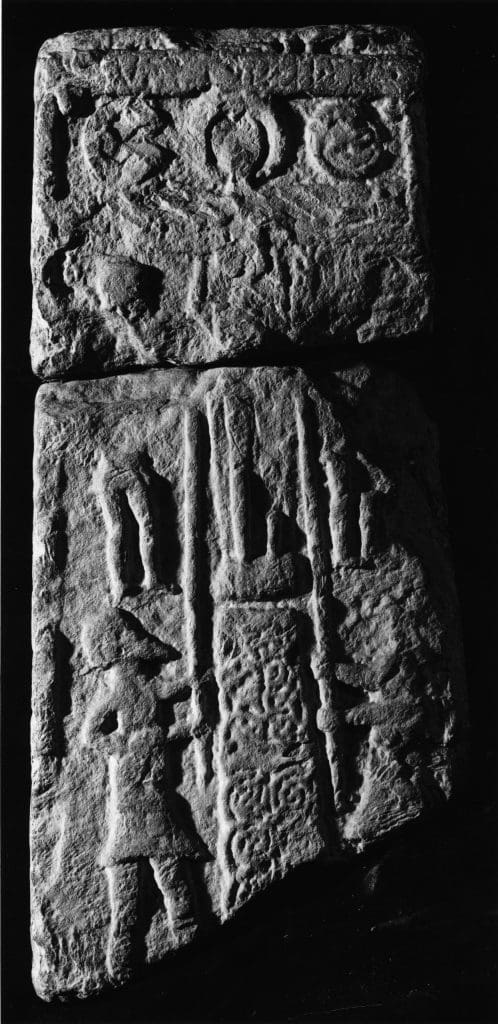
Fig. 8. Alnmouth Cross, face 1A. Great North Museum: Hancock. From the collection of the Society of Antiquaries of Newcastle upon Tyne. Photographs provided by the Corpus of Anglo-Saxon Stone Sculpture. © University of Newcastle.
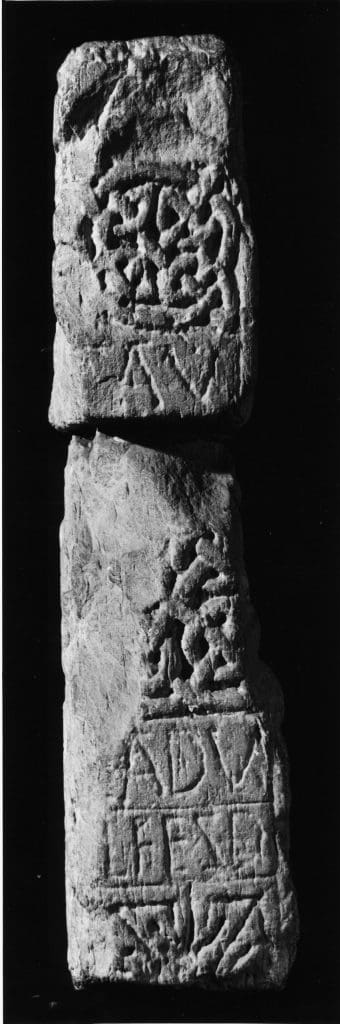
Fig. 9. Alnmouth Cross, face 1B. Great North Museum: Hancock. From the collection of the Society of Antiquaries of Newcastle upon Tyne. Photographs provided by the Corpus of Anglo-Saxon Stone Sculpture. © University of Newcastle.
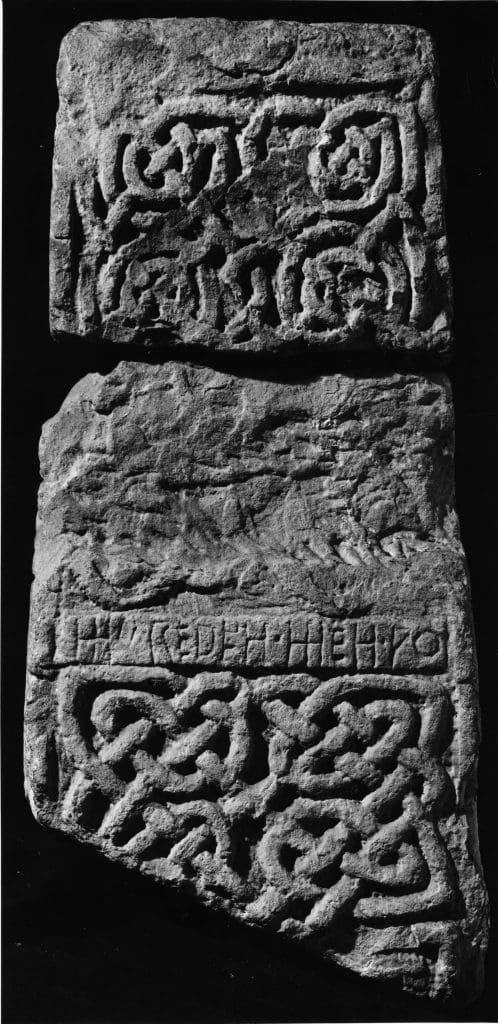
Fig. 10. Alnmouth Cross, face 1C. Great North Museum: Hancock. From the collection of the Society of Antiquaries of Newcastle upon Tyne. Photographs provided by the Corpus of Anglo-Saxon Stone Sculpture. © University of Newcastle.
Deploying UX methodology to analyze the user journeys of textual objects can evidently reveal how the end user influenced the initial design of textual assets to create a form of social sculpture. Ruthwell is fundamentally productive, with the user playing a crucial part in activating the encounter. However, it is worth noting that contemporary social sculpture often incites anti-establishment action, featuring “radical emancipatory attitudes and an insistence on self-determination,” while Ruthwell incites conforming action.[50] Furthermore, we cannot ignore the difference between how modern and medieval users experience something. Writing of buildings, Tomás Ó Carragáin calls this
our duty to approach ancient buildings […] not as monuments to be visited and interpreted as they are now, but as spaces built by living communities in order to articulate, through ritual, core ideas and values.[51]
The living, evolving contexts of assets and their users influence how a designed user journey is experienced – as we shall explore below.
Encounter and Environment
Thus far, we have established the user journey of Ruthwell as an isolated object. However, there are two large caveats: environment changes how we experience a user journey, and objects themselves are not static. Any given moment can change due to weather, sound, or audience behavior, while over time objects can deteriorate or be manually altered. In what follows, I consider how the context of encounter impacts the user journey – first looking at Ruthwell’s own materiality, then at its various environments.
There are already detailed, significant considerations of what it is like to experience Ruthwell.[52] The point of the present paper is not to restate the stated, but rather to highlight how different phenomenological contexts can affect the user journey. Physical objects are never static, and the older the object the more likely its level of change. Several of Ruthwell’s inscriptions are now illegible, meaning the medieval user journey can never be fully reconstructed. Some scholars believe that Ruthwell’s runes were a later addition to the monument, which would have meant an extremely different original user journey.[53] Content aside, other significant changes also affect how we consume the user journey. Ruthwell may well have been painted initially, with eighteenth century sources noting traces of green paint – similar to the Rothbury Cross and Lichfield angel.[54] Colors can reinforce parallels between figures or scenes, and if the runes were painted red – like Scandinavian runestones – this would create a more navigable mise-en-système. There are many instances of Insular sculpture that may have had inset glass eyes or metal appliques, and an absence of evidence of this on Ruthwell is not evidence of absence.[55] Bright colors and shining adornments would have created an engaging, even intimidating UX, and a clearer user journey. What remains now is bare stone: a lower stone of “pinkish-grey medium-grained quartz-rich sandstone” and an upper stone of “pale red quartz-rich medium- to coarse-grained sandstone.”[56] Heather Pulliam convincingly reads the affective power of the stone, claiming the pink “seems to pulse within the grey.”[57] Though this affects present encounters, would the color and sparkle have even been a consideration for a manufacturer who knew it was to be painted? Regardless, materiality was clearly a concern for Ruthwell’s overarching program, as it is inescapably woody, with its vine scroll declaring its existence as the (once-)organic holy rood. To view Ruthwell is to engage in transubstantiation and a suspension of literal interpretation, something which is still true even now, devoid of paint and ornaments. In short, Ruthwell’s phenomenological state at any given point influences how a user is directed through its user journey.
But of course, no encounter takes place in a vacuum. “Life goes on in an environment; not merely in it but because of it, through interaction with it,”[58] and an asset’s environment also affects user engagement. No object would have quite so domineered a medieval landscape like high crosses, which interacted with and reconfigured the geography. In medieval Ireland Irish, Cerball mac Dúnlainge commissioned many of the stone crosses in the kingdom of Osraige to function as territory markers.[59] The political interacts with the physical, affecting the medieval UX of encountering these crosses. On a smaller scale, the Clonmacnoise Cross of the Scriptures interacts intentionally with its proximate landscape, including the church and other high crosses at the monastery. The cross stood opposite the church’s west entrance, an ideal location for interacting with processions. The entire monastic site is turned into a network of intensifiers, with the Cross of the Scriptures as the central node. Ruthwell was likely also erected outside its church, but due to its deconstruction in 1642 by iconoclasts its exact initial location is unknown. Furthermore, its wider geographic site is mysterious as early medieval Ruthwell was a “peripheral area in the west, and a site with no known historical context.”[60] As discussed above, its location may have facilitated a conversion campaign; most 7th–10th century Northumbrian epigraphy occurs along the eastern Pennines and north of the Tees, and Ruthwell and it could even have “functioned as a symbol of aggression” and colonial power at Northumbria’s borders.[61] This could also explain the preoccupation with wilderness and taming of beasts on the north face. Furthermore, at approximately 17 feet high, Ruthwell would have been visible for almost 6 miles around.[62] It is an imposing monument, and in approaching it one starts from afar and consumes it holistically in the context of the landscape. Up close, a user can comprehend text and image more easily, but at the expense of viewing the cross as a whole. Paz questions whether “the highly visible nature of this beacon was its primary function,”[63] and at the very least I would suggest that its visibility is integral to the user journey.
The geographic environment also inevitably changes the materiality of the object. Subject to the elements, Ruthwell would physically alter depending on the weather. Rain could make figures appear to weep,[64] and would bring a new vividness to the possibly-red runes which read
ᛁᚳ / ᚹᚫᛋ / ᛗᛁᛞᛒ / ᛚᚩᛞᛁ / ᛒᛁᛋᛏ / ᛖᛗᛁ / ᛞ
ic wæs miþ blodi bistemid
(I was drenched with blood)
Karkov connects these runes to the vine scroll and Ruthwell’s general woodiness, with “the base of the vine appearing to emerge from the ground.”[65] But this would not have been a binary transition from ground to vine; like much in situ stonework today, the base would have become mossy, covering vine in organic matter and drawing the iconographic into the real. Nature changes Ruthwell’s very composition, and impacts not just visual UX but textural and temporal. Touch was not prohibited and even encouraged, and stone warmed by the sun lends further animacy to the iconographic program. Stone also retains heat for a while after returning to shadow,[66] which can also increase the impact of certain iconographic themes, especially the idea of solace in Christ. Each part of the user journey would be lit sequentially by the sun, “reveal[ing] their meaning gradually in the course of the day.”[67] The user journey is still discernable from the object in isolation, but it is informed and intensified by its environment. However, we must remember that we are analyzing these objects from over a millennium removed. There are limits to the claims we can make about what a medieval encounter would be like; even when still in situ, UX is different as the landscape is as subject to change as the object itself.
Furthermore, whether by a medieval or modern audience, encountering an asset comes with “a formulated set of expectations and interpretations” about both the asset and its environment.[68] For example, a gold, jeweled, processional cross in a museum is initially viewed by a non-expert as aesthetically pleasing, of material and cultural value, and Christian – largely divorced from its original purpose unless supplementary information is provided via label or guide. In a church, it is more likely to be primarily venerated and appreciated for its religious associations. Modern curatorial environments usually prioritize artefact preservation over UX – though when an asset is on display, UX is a close second. For example, the lighting on St Cuthbert’s coffin in the exhibition space of Durham Cathedral is angled to enhance the object’s engravings, making it easier to consume and cultivating an inviting, engaging, and dramatic environment for visitors. User journeys can also be affected, not just UX. While an object’s structure and composition theoretically remain unchanged, the macro-narrative of an overarching exhibition (i.e., which assets come before and after) influence the way an individual asset is approached. Furthermore, if an object decorated on all sides is placed against a wall, it cannot be circumambulated and only a limited section can be viewed, possibly interrupting the original user journey. But these are just possibilities; by and large, physical environment is guaranteed to affect UX but not necessarily user journeys.
The reconstructed Ruthwell is now housed within Ruthwell Parish Church, largely to protect it from the elements. Viewable from the pews, it is a dominating presence in the relatively small church; though still in a religious space, this is a fundamentally different UX from its original context. Furthermore, to fit in the height of the building, it has been placed in a sunken pit (Fig. 11). This overcomes a potential issue with the original context of its user journey, as it makes the text and images towards the top easier to consume, demonstrating that the modern user was taken into consideration when constructing this space. These examples all show how physical environment is inextricably linked to user experience, changing the way in which users approach and encounter an asset. User journeys are another matter: micro user journeys of a single asset are largely independent from environment (as the physical object’s mise-en-système does not change) with a few exceptions re. visibility and circumambulation. Macro user journeys across multiple assets, meanwhile, are more likely to be affected when an asset is removed from its original environment or narrative network.
The same is not true of digital environments. As discussed above, thinking about a physical asset as an interface forces us to reconsider the ways different types of information interact with one another as well as with the user. However, using the same vocabulary and framework to consider physical and digital assets does not mean that these assets are the same. The digitized version of an asset – or digital aspect[69] – is unavoidably different from the physical. But I would argue that using the same vocabulary actually highlights this difference better than using specialist language for each format.
Digitizing an asset removes it from its original environmental and network contexts on an experiential level. Even if information about its origins is provided in the metadata, the unique situational features are no longer part of the UX of encountering the asset. As Jasmine Burns says,
the viewer is not prompted to seek this information from the surface of the image, but rather from the embedded and stored data. In changing the way in which visual information is evaluated […] there evolves a distinct separation between the modern viewer of the digital object and the past viewers of the material manuscript.[70]
Digitization fundamentally alters UX, with assets reduced to the size of a device screen, often rendered as static 2D images, and usually devoid of any background other than blank, black space. However, we must again remember that UX and user journeys are different concepts. While it is impossible to fully capture the UX of an original physical environment, it is possible (to a certain extent) to capture the narrative way a user would encounter the asset. I believe that actively thinking about the user journey can positively influence the way digital editions are made. Digital editions of three-dimensional assets rarely convey the order in which information is meant to be encountered – but by thinking about user journeys and the touchpoints across an asset, we can narratively contextualize said asset and ensure its sequential narrative is transferred to the digital aspect, improving the accuracy and discoverability of the edition. This may be as simple as loading the facsimile at the natural starting point of the object, such as the north face of Ruthwell. When the user journey is not taken into consideration, the result is unsatisfactory UX. For example, a 3D scan of a manuscript can encourage its examination as a physical object but prevent the consumption of the material within.[71] Similarly, there are online corpora too numerous to name where data storage is prioritized over usability, to the extent where productive search functionality is near impossible. The digitization of such corpora is surely intended to increase reach and use – if so, UX should be addressed to increase discoverability and understanding. When there are external constraints such as time or funding, the compromise is usually at the expense of UX, particularly as truly comprehensive digitization initiatives such as 3D builds can be costly. There are further factors that disrupt or corrupt the original, physical user journey. Perhaps most drastically, digital facsimiles limit a user to one, possibly two senses – sight and sound. There is no widely available, virtual way to experience haptics such as heat, texture, and acoustics. Modern consumers of digital aspects are therefore “restricted to the status of an observer by interacting with the object visually.”[72] Digital editions inescapably restrict the level of interaction a user can have with an asset.
The Ruthwell facsimile, built as part of the 2012-2017 Visionary Cross project, is a rare exception, though it is by no means perfect.[73] This three-dimensional interface allows a user to zoom in on the object, change the light source direction, and explore comprehensive metadata (Fig. 12). The 3D scan is a high-resolution render which has captured aspects that are now illegible to the naked eye, and the color filter provides both greyscale and color-accurate options. The facsimile is accessible for both academic scholars and lay users, and for those with varying levels of technological competence. While the UX is inevitably different from a physical encounter, as much as possible has been done to create an accurate rendition of the object within the limits of a digital environment and the technology of the time. However, there are inevitable limitations. It is slow to load, the light is artificial, and texture is largely lost. And what about the user journey? The presenter automatically loads Ruthwell fully zoomed out, so a user encounters it as they would naturally – first from afar, then up close. However, it loads on its south (originally east) face – mid-way through the user journey I propose above. This editorial choice implies that the south face is the natural starting point for consuming the object. If the user journey had been considered during the digitization process, perhaps the north face would have been chosen as the first face to load. And the most pressing issue with the Ruthwell facsimile is – as with all digital projects – longevity. As of the time of writing, the Visionary Cross Project website is subject to a DDOS attack.[74] A 3D scan is still available via Sketchfab, but is reduced to greyscale with even more limited features.[75]
However, neither the physical nor digital versions of Ruthwell are accurate to the original user journey, as it was reconstructed in the nineteenth century after the monument’s destruction in 1642. Ruthwell is still technically incomplete, with the gaps now filled with blank mortar and the lost transom replaced with a reconstruction whose designs are complete conjecture. The original north face of the transom would certainly have been Mark and Luke with their evangelist symbols, to match the extant Matthew and John on the top and bottom cross arms, as this pattern occurs on many stone crosses.[76] Furthermore, the top arm of the crosshead is currently back-to-front; John and his evangelist symbol should be aligned with the north face to match Matthew on the bottom arm. While metadata can provide us with this context, it is impossible to experience the cross in its original user journey format in either physical or digital environments.
Just as an object changes over time, so too does the way users engage with it. Different audiences have different needs. In the present, a user of a seventh-century homiliary is more likely to be a researcher than a monk; more likely to be engaging with the text as research than as scripture, or with the book as material object than as word of God. But even a medieval user would not have read it front-to-back in the manner of a novel. Rather, homiliaries are designed to function almost as reference books. It may be used chronologically, but not in one sitting. And this one object would have also been part of wider macro user journeys of a church service and, wider still, the liturgical year. For digital projects, a user is far more likely to have a different purpose (and macro user journey) than those who encounter the physical asset. Ruthwell is still in a church and most regularly consumed in a religious setting; the digital version most often in an academic one. The type and style of digitization will also depend on the users’ needs. For some, particularly literary scholars, digitizing a textual asset will simply involve hosting a transcription of the text; in a project about text transmission or linguistics, it is not necessarily useful to digitize the physical object. For others, a paleographical approach would necessitate images of the text at the very least, but probably not of the entire bound codex. For others still, their aim might be to increase accessibility and make an open access pedagogical tool. Depending on the goal, a seamless, replicative, facsimile-like UX may not be the priority. This also depends upon whether a digital edition is claiming to be a reproduction or a representation – i.e., does it pretend to be a replica, accurate to the point that it could replace the original, or does it make clear that the digital asset is only an interpretation, mediated by the photographer, editor, et al? And beyond this, whether reproduction or representation, data is not objective. Algorithms and metadata can be biased, and the decisions made by a digitizer in taking an object from the physical to the virtual all impact an end user’s experience of that object. These factors must all be considered when making and using a digital asset – indeed, emerging scholars across all fields should be trained in digital literacy.
Ultimately, experiential qualities affect any encounter,[77] whether these are immediate results of the environment (physical or digital) or expectations set by previous experiences. It is always worth comparing the experiences and narrative journeys of a single asset across both physical and virtual formats. Most assets that exist in the digital still exist in the physical – though of course, many physical artefacts are restricted in their access, particularly when it comes to medieval manuscripts. In some instances, it is even possible to experience both, side-by-side, such as museum touch screens of manuscripts placed next to the manuscript itself. Users can then virtually turn the pages of the book that is in the case in front of them, and sometimes these can even simulate the animation of a page turning rather than simply loading a new 2D image. While this digital edition is a different form of haptic engagement, and cannot replicate a real encounter, it goes some way towards experiencing the asset more viscerally. What is clear is that each environment affects the way an asset is perceived – and these perceptions are also impacted by the way the asset is approached within that environment.
Concluding remarks
Why is it not permissible that the exaltation of the Lord our saviour on the cross whereby he conquered death be recalled to the minds of the faithful pictorially […] since the sight of these things often tends to elicit great compunction in the beholders.[78]
Here, Bede argues in favor of pictorial representations of scripture to benefit the laity. He calls these a “living narrative of the story of the Lord,”[79] providing contemporary proof that early medieval society thought about the ways people actively encountered art. The events portrayed are made present-tense – a living narrative – by the simple act of being witnessed. Like social sculpture, public consumption is critical to the work’s existence and the user is a necessary component for its completion. In the same way, by identifying user journeys and situating Ruthwell in a UX context, this study has shown that this monument is designed to engage and evoke a response from the user – whether that be compunction, devotion, or otherwise. While other features such as material practicalities and religious or social contexts also impacted construction choices, these are consistently mediated through the lens of UX. Examining how information is sequentially revealed demonstrates that UX and user journeys were taken into account during construction. When a user is added to the artistic mechanism, assets become inherently productive, designed to evoke an action or reaction – making it logical that craftsmen considered how the object would be encountered, used, and interacted with.
This paper has been predominantly concerned with the sequential, narrative user journey and how this can be forensically decoded in medieval objects. However, the impact of wider UX cannot be ignored. When an asset is digitized, the original user journey can become lost due to the different environments and methods of user interaction. When the narrative sequence or haptics are disrupted, it is not possible to engage with the facsimile in the same way as the physical asset. A digitized manuscript, for example, often begins either with an image of the front of the binding, or even just the first leaf of the pages within. It is not until the end that you come across photos of the spine, top, bottom, and fore edge – even though these are the first elements you would encounter when picking up a physical book. The organic user journey is disrupted from the start. Considering the user journey during the digitization process would have placed these images at the beginning, improving the UX and creating a more accurate rendering not only of the asset but of the user journey of consuming that asset. The user is integral to the physical asset, and they should also be to the digital one. It is not possible to completely replicate a physical user journey or UX in their entirety due to haptic limitations, but the productive nature of an asset should be considered alongside its other features. It is just as important to capture its purpose, what it does, and what we do with it, as it is to capture its physical likeness. Doing so can unlock new ways to teach these assets and the early medieval period. The potential pedagogical impact of teaching the “why” alongside the “what” and the “how,” with open access resources for students to encounter assets themselves, cannot be understated. Comprehensive and penetrable projects can also make a discipline more accessible for people new to it – particularly in a field like medieval studies, where misinformation can influence extremism in very real ways. Scholars themselves should not study an asset without thinking about what their active encounter with it is like. There should be a self-conscious examination of one’s own experience, as well as a consideration of the medieval encounter. Visual and digital literacy are key tools that must be taught to future generations of scholars.
With this preliminary study inevitably come many caveats. Weather and use shape materials, meaning that as details are lost, so too is the original user journey. Digitization freezes an asset at a specific moment – ideal for preservation of data, but with the result that over time, the digital asset will diverge from the state of its physical counterpart. UX changes as an object changes: marginalia, palimpsests, erosion, or Ruthwell’s flaked-away paint. And it is worth considering that text can be painted without being incised, meaning that objects we assume are not textual could well have been. Digital assets, while static in their data, can also erode as software becomes unsupported. All media types are living objects, not just in the sense that they change over time, but also in that to engage with them creates a present-tense experience.
There is plenty more to be said about the impact of user journeys on medieval asset design. A longer study would look at other mediums, such as manuscripts, metalwork, and even wood and textiles like St Cuthbert’s coffin and vestments. Jennefer Hart notes that “user judgement of UX remains consistent across product type,”[80] proving that UX can have a similar impact regardless of material asset. This is not to disregard the importance of material and materiality, though. Sensory interactivity was significant in medieval religious contexts,[81] and physical practicalities do influence the execution of a design. However, the exploitation of individual material form co-exists with super-media artistic features.[82] Acknowledging both continuity and discrepancy across media can show how user journeys are taken into consideration during construction. And crucially, across every medium, encountering a specifically textual object prompts a more interactive encounter as we are forced to read and interpret. What is clear, though, from this initial examination of the Ruthwell Cross, is that modern design methodologies can certainly help to illuminate medieval practices. People did consider the end user when constructing textual assets. And even though marketing is a completely different discipline, using the vocabulary of user journeys and experiences can be fruitful. It prompts us to think of these live, active encounters in new ways, without prioritizing asset, audience, or artist over one another. Especially in the context of the digitization process, using the same terminology for both the physical and the virtual, rather than specialist language for each format, can drive home similarities between the two.
References
| ↑1 | Though some UX terminology must be adapted for a medieval context, the term user is more inclusive than reader or audience and more interactive than viewer, encompassing both the individual’s agency and the term’s cross-media applicability that I will demonstrate within this study. |
|---|---|
| ↑2 | See: David Adams, “From Queen Bee to Social Sculpture: The Artistic Alchemy of Joseph Beuys,” in Steiner, Rudolf. Bees: Lectures. (Anthroposophic Press, 1998), 189-213. |
| ↑3 | The term asset is used interchangeably with object as it is particularly useful when considering both physical and digital forms. |
| ↑4 | I believe this concept is present in textual objects across the Insular world and even further afield, which I will seek to prove in future research. The scope of this study, however, is limited to simply demonstrating the theory using a single artefact. |
| ↑5 | Mary Carruthers, “Editor’s Introduction,” in Rhetoric Beyond Words: Delight and Persuasion in the Arts of the Middle Ages, ed. Mary Carruthers (Cambridge University Press, 2010), 8. |
| ↑6 | Hereafter “Ruthwell.” |
| ↑7 | Caroline Tisdall, Joseph Beuys (Solomon R. Guggenheim Foundation, 1979), 265. |
| ↑8 | Karen van den Berg, Cara M. Jordan, and Philipp Kleinmichel, eds., “Introduction: From an Expanded Notion of Art to an Expanded Notion of Society,” in The Art of Direct Action: Social Sculpture and Beyond (Sternberg Press, 2019), x. |
| ↑9 | For more on medieval activation, see: Fiona Griffiths and Katheryn Starkey, eds., Sensory Reflections: Traces of Experience in Medieval Artefacts (De Gruyter, 2018). |
| ↑10 | The earliest extant reference citied in the OED is from a 1925 tire advertisement. Oxford English Dictionary, s.v. “user experience (n.),” September 2025, https://doi.org/10.1093/OED/1047158695. |
| ↑11 | John Dewey, Art as Experience, 23rd ed. (Perigee Books, 1980), 3. |
| ↑12 | Henry Dreyfuss, Designing For People, 3rd ed. (Allworth Press, 2003), 22. |
| ↑13 | Sheena Lyonnais, “Where Did the Term “User Experience” Come From?,” Adobe, August 28 2017, <https://blog.adobe.com/en/publish/2017/08/28/where-did-the-term-user-experience-come-from> |
| ↑14 | Don Norman, The Design of Everyday Things: revised and expanded edition (Basic Books, 2013). |
| ↑15 | Jennefer Hart, “Investigating User Experience and User Engagement for Design” (PhD diss., University of Manchester, 2014), 21. |
| ↑16 | Hart, “Investigating User Experience,” 39. |
| ↑17 | N. Tractinsky, et al. “What is beautiful is usable.” Interacting with Computers 13 (2000): 127-145. https://doi.org/10.1016/S0953-5438(00)00031-X. |
| ↑18 | Carroll, John, and John Thomas, “FUN,” ACM SIGCHI Bulletin 19, no. 3 (1988): 21-24. https://doi.org/10.1145/49108.1045604. |
| ↑19 | Johanna Drucker, Graphesis: Visual Forms of Knowledge Production (Harvard University Press, 2014), 139. |
| ↑20 | See: Michelle Brown, “The Jellinge Stone: From Prehistoric Monument to Petrified ‘Book’,” in Aspects of Knowledge: Preserving and Reinventing Traditions of Learning in the Middle Ages, ed. Marilina Cesario and Hugh Magennis (Manchester University Press, 2018); Catherine Karkov, The Art of Anglo-Saxon England (Boydell & Brewer, 2011); Jane Hawkes, “Reading Stone,” in Theorizing Anglo-Saxon Stone Sculpture, ed. Catherine Karkov and Fred Orton (West Virginia University Press, 2003). |
| ↑21 | Mary Carruthers, The Book of Memory: A Study of Memory in Medieval Culture, 2nd ed. (Cambridge University Press, 2008). https://doi.org/10.1017/CBO9781107051126. |
| ↑22 | Ing-Marie Back Danielsson, “Walking Down Memory Lane: Rune-Stones as Mnemonic Agents In The Landscapes Of Late Viking-Age Scandinavia,” in Early Medieval Stone Monuments: Materiality, Biography, Landscape, ed. Howard Williams et al. (Boydell & Brewer, 2015). https://doi.org/10.1017/9781782045823.003. |
| ↑23 | Carruthers, The Book of Memory, 9. |
| ↑24 | Elizabeth Freund, The return of the reader: reader-response criticism (Routledge, 2003), 2. |
| ↑25 | M. H. Abrams, The mirror and the lamp: romantic theory and the critical tradition (Oxford University Press, 1971), 6. |
| ↑26 | Naomi Reed Kline, Maps of medieval thought: The Hereford paradigm. (Boydell Press, 2003), 10. |
| ↑27 | Martin Foys, Virtually Anglo-Saxon: Old Media, New Media, and Early Medieval Studies in the Late Age of Print (University Press of Florida, 2007), 53. |
| ↑28 | To name a (very) few: Éamonn Ó Carragáin, “Visual theology within a liturgical context: the visual programmes of the Irish high crosses,” in L’Irlanda e gli Irlandesi nell’alto Medioevo (Spoleto, 2010), 707-750; Fred Orton & Ian Wood with Clare A. Lees, Fragments of History: Rethinking the Ruthwell and Bewcastle Monuments (Manchester University Press, 2003); Robert T Farrell, “Reflections on the Iconography of the Ruthwell and Bewcastle Crosses,” in Sources of Anglo-Saxon Culture, ed. Paul E. Szarmach (Medieval Institute Publications, 1986), 357-376. |
| ↑29 | Ó Carragáin, “Visual theology”, 722. |
| ↑30 | James Paz, Nonhuman Voices in Anglo-Saxon Literature and Material Culture (Manchester University Press, 2017), 197. |
| ↑31 | Paz, Nonhuman Voices, 197. |
| ↑32 | For clarity, I am using Ruthwell’s current cardinal orientation, rather than the conjectured original placement. |
| ↑33 | Éamonn Ó Carragáin, “The Ruthwell Crucifixion Poem in its Iconographic and Liturgical Contexts,” Peritia 6/7 (1987/88): 1-71. https://doi.org/10.1484/J.Peri.3.157. |
| ↑34 | Based on the similarities between Ruthwell and the Bewcastle cross, it is probable that their orientation was the same. The Bewcastle cross has a sundial on its south face; vertical sundials only function when facing south, meaning that the monument has always been in this orientation. Extrapolating, we can conjecture that Ruthwell’s current north face originally faced west. |
| ↑35 | Lilla Kopár, “Heroes on the Fringes of the Anglo-Saxon Poetic Corpus: Vernacular Memorial Inscriptions on Stone Sculpture,” in Heroes and Saints: Studies in Honour of Katalin Halácsy, edited by Zsuzsanna Simonkay and Andrea Nagy (Mondat, 2015), 88. |
| ↑36 | “Billingham 13,” in Corpus of Anglo-Saxon Stone Sculpture, vol 1: 51-52. |
| ↑37 | “Dewesbury 04,” in Corpus of Anglo-Saxon Stone Sculpture, vol 8: 133-5. “Bewcastle 01,” in Corpus of Anglo-Saxon Stone Sculpture, vol 2: 61-72. |
| ↑38 | “Lancaster (Priory) 01,” in Corpus of Anglo-Saxon Stone Sculpture, vol 9: 215-218. |
| ↑39 | “The Brussels Cross / Reliquary: Edited Text, Translation & Details,” in Old English Poetry in Facsimile 2.0 ed. Martin Foys et al (Center for the History of Print and Digital Culture, University of Wisconsin-Madison, 2019-present) https://doi.org/10.21231/t6a2-jt11. |
| ↑40 | See: Eamon Ó Carragáin, “At Once Elitist and Popular: The Audiences of the Bewcastle and Ruthwell Crosses,” Studies in Church History 42 (2006): 18-40; Karkov, The Art of Anglo-Saxon England; Tomás Ó Carragáin, “Conversion, justice, and mercy at the Parousia: liturgical apocalypses from eighth-century Northumbria, on the Ruthwell and Bewcastle crosses,” in Literature & Theology 26 no. 4 (2010): 367–383. https://doi.org/10.1093/litthe/frs054. |
| ↑41 | Éamonn Ó Carragáin, “At Once Elitist and Popular”, 23-4. |
| ↑42 | James Macfarlan, The Ruthwell Cross (J. Maxwell, 1896). |
| ↑43 | See: Fred Orton et al., Fragments of History. |
| ↑44 | Clare Stancliffe, “The riddle of the Ruthwell Cross: audience, intention, and originator reconsidered,” in Crossing Boundaries: Interdisciplinary Approaches to the Art, Material Culture, Language and Literature of the Early Medieval World, ed. Eric Cambridge and Jane Hawkes (Oxbow Books, 2017), 7. |
| ↑45 | Stancliffe, “The riddle of the Ruthwell Cross,” 7. |
| ↑46 | For more on Ruthwell’s multivalence, see Éamonn Ó Carragáin, “Christ over the Beasts and the Agnus Dei: two multivalent panels on the Ruthwell and Bewcastle crosses,” in Sources of Anglo-Saxon Culture, ed. Paul E. Szarmach (Medieval Institute Publications, 1986), 377-403. |
| ↑47 | Bede, Ecclesiastical History, Volume II: Books 4-5. Lives of the Abbots. Letter to Egbert, trans. J. E. King (Harvard University Press, 1930), 404-407. https://doi.org/10.4159/DLCL.bede-lives_abbots.1930. |
| ↑48 | Carruthers, The Book of Memory, 9. |
| ↑49 | Rosemary Cramp lists the various types of interlace patterns on Alnmouth, but does not note the similarities between the three-dimensional artefact and the pictorial cross engraved upon it. See: Rosemary Cramp et al. Corpus of Anglo-Saxon Stone Sculpture, vol. 1 (Oxford University Press, 1984), 161-2. |
| ↑50 | van den Berg et al, The Art of Direct Action, xi. |
| ↑51 | Tomás Ó Carragáin, Churches in Early Medieval Ireland (Yale University Press, 2010), 167. |
| ↑52 | Particularly noteworthy are: Catherine Karkov, “Thinking about Stone: an Elemental Encounter with the Ruthwell Cross,” in Slow Scholarship: Medieval Research and the Neoliberal University (D.S. Brewer, 2019), 99-121. https://doi.org/10.1515/9781787447042-009; and Heather Pulliam, “Blood, Water and Stone: The Performative Cross,” in Making Histories: Proceedings of the 6th International Conference on Insular Art, York 2011, ed. Jane Hawkes (Shaun Tyas, 2013), 262–78. |
| ↑53 | Éamonn Ó Carragáin, “Who Then Read the Ruthwell Poem in the Eighth Century?,” in Aedificia Nova: Studies in Honor of Rosemary Cramp, ed. Catherine Karkov (Medieval Institute Publications, 2008) 43-75. |
| ↑54 | Jane Hawkes, “Stones of the North: Sculpture in Northumbria in the ‘Age of Bede,’” in Newcastle and Northumberland: Roman and Medieval Architecture and Art: Conference Transactions for the Year 2010, ed. Jeremy Ashbee and Julian Luxford. (British Archaeological Association Conference Transactions 36, 2013), 42. |
| ↑55 | Hawkes “Stones of the North,” 42. |
| ↑56 | Karkov, “Thinking about Stone,” 103. |
| ↑57 | Pulliam, “Blood, Water and Stone,” 267. |
| ↑58 | Dewey, Art as Experience, 130. |
| ↑59 | Tomás Ó Carragáin, Churches in Early Medieval Ireland, 120. |
| ↑60 | Stancliffe, “The riddle of the Ruthwell Cross,” 10. |
| ↑61 | Paz, Nonhuman Voices, 203. |
| ↑62 | Taking an average person height of 5’6″, Ruthwell’s height of 17 feet, and the horizon formula distance = 1.22459√(total height). |
| ↑63 | Paz, Nonhuman Voices, 204. |
| ↑64 | Pulliam, ‘Blood, Water and Stone,” 269-270. |
| ↑65 | Karkov, “Thinking about Stone,” 106. |
| ↑66 | Nicholas Chare, “Writing Perceptions: The Matter of Words and the Rollright Stones,” Art History 34.2 (2011): 247. https://doi.org/10.1111/j.1467-8365.2011.00818.x. |
| ↑67 | Ó Carragáin, “Visual theology”, 713. |
| ↑68 | Jasmine Elizabeth Burns, “Digital Facsimiles and the Modern Viewer: Medieval Manuscripts and Archival Practice in the Age of New Media,” Art Documentation: Journal of the Art Libraries Society of North America 33, no. 2 (2014): 149. https://doi.org/10.1086/678515. |
| ↑69 | Elaine Treharne, Perceptions of Medieval Manuscripts (Stanford University Press, 2021), 17. https://doi.org/10.1093/oso/9780192843814.001.0001. |
| ↑70 | Burns, “Digital Facsimiles and the Modern Viewer,” 158-9. |
| ↑71 | See, for example, the 3D rendering of John Rylands Library, Latin MS 48: <https://sketchfab.com/3d-models/latin-ms-48-84f053902b5e4de2b3c7a5f15188e62a>. |
| ↑72 | Burns, “Digital Facsimiles and the Modern Viewer,” 152. |
| ↑73 | Daniel O’Donnell et al., The Visionary Cross Project, <https://vcg.isti.cnr.it/activities/visionarycross/>. |
| ↑74 | The project website (http://visionarycross.org/) and the 3D presenter (https://vcg.isti.cnr.it/activities/cross//) are unavailable. However, the archived project website <https://vcg.isti.cnr.it/activities/visionarycross/> is still functional as of October 1, 2024. |
| ↑75 | Historic Environment Scotland, “Ruthwell Cross,” <https://sketchfab.com/3d-models/ruthwell-cross-4227085477004f04aadb6b3082b41eb2>. |
| ↑76 | E.g.: “Durham 15,” Corpus of Anglo-Saxon Stone Sculpture, vol. 1: 152. |
| ↑77 | Burns, “Digital Facsimiles and the Modern Viewer,” 152. |
| ↑78 | Bede, On the Temple, II.91.10, trans. Sean O’Connolly (Liverpool University Press, 1995), 91. (Italics mine). |
| ↑79 | Bede, On the Temple, II.91.10. |
| ↑80 | Hart, “Investigating User Experience,” 22. |
| ↑81 | Suzannah Biernoff, Sight and Embodiment in the Middle Ages (Palgrave Macmillan, 2002). https://doi.org/10.1057/9780230508354. |
| ↑82 | Catrin Haberfield, “‘A Book in Stone’? Examining the Early English Runic Tradition across Manuscripts and Epigraphy,” in Proceedings of the Ninth International Insular Art Conference (Oxbow Books, forthcoming). |