
Dagmar Preising • Former Curator of Suermondt-Ludwig-Museum, Aachen, Germany
Recommended citation: Dagmar Preising, “Performative Sculptures of the Virgin Mary in the German-Speaking Lands during the Late Middle Ages: Animated versus Self-Acting Figures,” Different Visions: New Perspectives on Medieval Art 13 (2026). https://doi.org/10.61302/CAFB8232.
Definitions and the Question at Hand
Numerous sculptures produced from the fourteenth to the early sixteenth century in the German-speaking lands were used in liturgical and devotional practices in ways that made them seem alive.[1] As is often discussed in the literature, most of the works in question served to illustrate the Passion and resurrection of Christ in publicly accessible areas of church interiors. In the context of church ceremonies, these sculptures enabled direct comprehension and experience of episodes from Christ’s life. Such works included figures of Christ riding a donkey (Palmesel), the crucified Christ with movable arms, the body of Christ lying in the Holy Sepulcher (Grablieger), and the resurrected Christ. Less frequently considered, however, are Marian sculptures that, like the Christ figures, were put to use before the eyes of the congregation.
In the performative re-enactment of sacred events, sculptures of this kind took on a special air of living agency. In German-language publications, such works are most often described as handelnd (active, taking action), even though they do not act on their own, instead being moved by human hands in ways merely suggestive of independent action.[2] For this reason, it has recently been suggested to apply the term bewegt (moved, activated) to sculptures of this type.[3] The English-language literature uses the terms “animated sculptures”[4] and “movable sculptures.”[5] The phrase “moveable and animated statues”[6] probably most precisely describes the phenomenon represented by figures that were physically moved to evoke animacy. Sculptures that were meant to be moved could also be essentially static but have movable parts, such as the arms, the head, the lower jaw, the tongue, and the eyelids.
There is a distinction between sculptures termed “animated” and figures that can be called “self-acting.” The latter category includes not just mechanical automata but also painted and printed depictions of moving, speaking, or bleeding sculptures. Self-acting figures are found, for example, in representations of Saint Catherine of Siena receiving the stigmata, of Saint Hedwig being blessed and spoken to by a crucifix, of the crucified Saint Wilgefortis with a fiddler at her feet, and of Saint Bernard being either embraced by the crucified Christ or sprinkled with the Virgin Mary’s milk.[7] Both “animated sculptures” and “self-acting figures” can be characterized as performative, since in both cases it was through the fact of being observed—by real-life worshippers or by persons depicted in images—that these sculptures gained agency, transporting sacred events into the realm of reality.[8] Although we still lack written sources dealing with how the faithful perceived re-enactments of episodes from the history of salvation, pictorial representations of people shown in prayer before self-acting figures may be indicative of the emotions experienced by viewers of animated sculptures.
This essay presents several examples of performative sculptures of the Virgin Mary from the late Middle Ages in the German-speaking lands, a subject that, as noted, has not yet been extensively investigated.[9] Special consideration is given to the question of how these works, in their interaction with beholders, can be seen as a form of social sculpture.
Animated Marian Sculptures
Animated Marian sculptures are mostly wooden, but some were fashioned from precious metals. Various types can be distinguished: the Maria gravida (expectant Virgin) with a removable Christ Child in the abdominal area, the seated Madonna holding a detachable Christ Child or body of Christ, the Madonna holding a Christ Child with a rotatable head, the Virgin Immaculata that could be hoisted upward on Assumption Day, and figures that could be suspended overhead. Such Marian sculptures have been less studied than movable Christ figures not only because comparable figures of the Virgin have less frequently survived, but also because Marian mysticism and the concept of Imitatio Mariae have not been given as much attention as the topic of Imitatio Christi.[10] Marian sculptures that have movable parts or that were moved from one place to another in the context of veneration and ritual are found in several regions of German-speaking Europe. They were used both in monasteries and in publicly accessible churches. Since the present issue of this journal deals with the twentieth-century concept of social sculpture and its relevance to earlier centuries,[11] a chief concern of mine is to consider the integration of sculptures into public rituals. A distinction must be made here between figures’ use in quasi-dramatic liturgical celebrations and their use in religious drama. In the former, the performed ritual is closely linked to the liturgy; in the latter, the drama is autonomous, existing independently of liturgical texts.[12] Yet medieval practice often encompassed hybrid forms which combined elements from both categories.[13] In each case, however, the integration of sculptures into sacred observances and performances had a public aspect. The moved or movable figures exerted an effect on the people who were present in the church, and people’s responses not only formed part of a collective experience but also enabled participation in the events of sacred history.[14] Communal events of this sort constituted a phenomenon that can be categorized as social sculpture. It is only through a shared, emotionally gripping visual and auditory experience that the event being acted out becomes reality, thus giving rise to social sculpture—sculpture that fundamentally involves its beholders. Although no contemporary written sources are known that deal with how animated sculptures affected worshippers, it is reasonable to assume that impression of animacy was enhanced when the person responsible for activating the work was hidden from view. Such was the situation, for example, with stagings of the Assumption of Mary by means of a sculpture hoisted into the church vault.
The Virgin and Child as Performative Sculpture
Figures of the Virgin and Child that functioned as performative sculpture exist in three variants: the Maria gravida, the Madonna or Anna Selbdritt with a detachable Christ Child, and the Madonna holding a Christ Child with a rotatable head.
Representations of Maria gravida, the pregnant mother of Jesus, normally belong to scenes of the Visitation, the episode in the Gospel of Luke (1:39–44) that tells of the Virgin Mary’s visit to her cousin Elizabeth, who at the time was pregnant with John the Baptist. Scenes of the Annunciation might also feature a Christ Child in Mary’s womb.[15] Although most representations of a visibly expectant Virgin Mary occur in painting, works of sculpture have also been preserved, either in two-figured scenes or as single figures.[16] These show the Virgin standing upright, her hands folded on her breast, with a removable figure of the baby Jesus in her abdominal cavity. Several examples dating from about 1300 into the fifteenth century are known from monastic contexts.[17] Others came from, or are still present in, publicly accessible churches, for example, the Marian pilgrimage church on the Bogenberg in Lower Bavaria.[18] The miraculous image there is a sandstone sculpture of the Virgin from the early fifteenth century, measuring 105 cm in height. In the work’s present state, the abdominal window displaying the child must be a reconstruction based on old models, as is clear from numerous Baroque replicas.[19] Presumably the statue was originally equipped with a cavity holding a removable Christ Child figure. A sculpture that is based on the Bogenberg miraculous image is the expectant Virgin Mary of about 1520–25 at the Bayerisches Nationalmuseum in Munich, which stands 119 cm tall.[20] Its separately carved baby-Jesus figure is set within an oval opening, from which it currently cannot be removed.[21] Yet here, too, the child was probably originally mobile, as with the Maria gravida figures used in monasteries. Even though the provenance of the Munich sculpture is unknown, it was presumably used in a public context, since replicas of prominent miraculous images usually took on the miracle-working power of their models (Fig. 1). A Maria gravida that has its own cult of veneration is found on the high altar of the Church of the Visitation in Květnov, in the Bohemian portion of the Ore Mountains. It was made about 1480 in Lower Bavaria or Franconia. The legend surrounding this figure’s creation gave rise to a pilgrimage tradition in the late fifteenth and early sixteenth centuries (Fig. 2).[22]
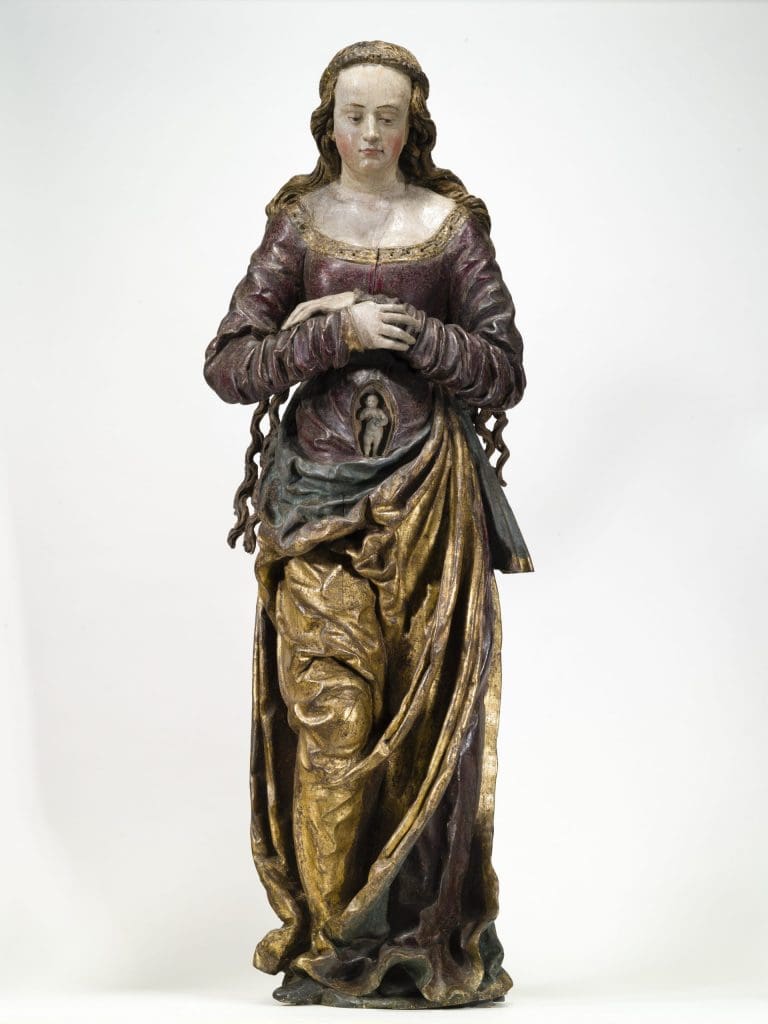
Fig. 1. Lower Bavaria, Virgin of the Expectation (Maria gravida), ca. 1520–25, 119 x 39 x 24 cm, Bayerisches Nationalmuseum, Munich (photo: Bastian Krack).
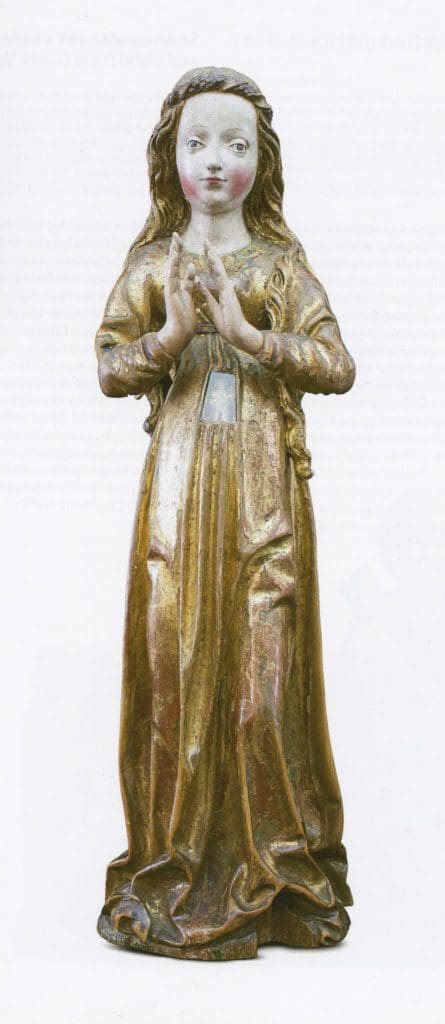
Fig. 2. Lower Bavaria or Franconia (?), Virgin of the Expectation (Maria gravida), ca. 1480, 65 x 19 x 13 cm, Church of the Visitation of the Blessed Virgin Mary, Květnov (photo from Exh. cat. Prague 2015, p. 147).
No written sources have been identified concerning the removal of a Christ Child figure from the womb of a Marian sculpture. Yet there is reason to believe that this action was performed on Christmas, to enact the Nativity either in a dramatic elaboration of the liturgy or in a religious drama.[23] The small Christ Child figures, once removed, were probably placed on the altar next to the sculpture of the Virgin. It is known that independent representations of the infant Jesus were kept on altars from Christmas until Candlemas, the Feast of the Purification of the Virgin.[24] Presumably the same is true for figures that could be removed from the abdomen of a Maria gravida. There was also a tradition, beginning in the mid-twelfth century, of placing Christ Child figures in small cradles or beds.[25] These, too, could be displayed on the altar until Candlemas, particularly considering that in medieval thought the symbolism of the altar encompassed Christ’s crib.[26] Although large Maria gravida sculptures are less frequently encountered than the smaller-scale ones that tended to be found in convents, where Mary’s motherhood was a central focus of devotion,[27] Christ Child figures, probably including ones associated with relatively large Maria gravida sculptures, belonged to the liturgical equipment of every parish church and cathedral in the late Middle Ages.[28] It is recorded that in parish churches the veneration of the Christ Child could be accompanied by singing and dancing, and that the carved figures could be passed around among parishioners before being laid back in bed.[29] In the case of baby Jesus figures belonging to a carved Maria gravida, these participative rituals, including the rocking of the cradle by the clergy before the eyes of the congregation, indicate that the concept of social sculpture is relevant to such Marian sculptures.
A good number of Madonna and Anna Selbdritt sculptures dating from the fourteenth century up to about 1500 were equipped with separately carved Christ Child figures that could be removed and used in different iconographical settings. These figures were fashioned both in seated and standing variants. For example, a seated, removable Christ Child was part of the Shrine Madonna of about 1330–40 from Cheyres in the canton of Fribourg (present location unknown).[30] Likewise, an Anna Selbdritt made in Cologne about 1470–80 and now at the Museum Schnütgen displayed a removable seated infant Jesus (still extant but currently separated). The figure of Saint Anne is fitted with a wooden spike in its left thigh, onto which the Christ Child could be mounted (Figs. 3 a–b). The child figure has a corresponding hole drilled into its underside (Fig. 3 c).[31] The Suermondt-Ludwig-Museum in Aachen also has a seated Christ Child from Cologne with a hole drilled into the bottom for attaching to an enthroned Virgin Mary or Saint Anne (Fig. 4).[32] Seated figures of the Christ Child also appear to have been mounted on carved cushions.[33] In some cases, no physical mounting was involved, as with the southern Swabian Christ Child seated on a cushion at the Liebieghaus in Frankfurt. Traces of use suggest that this work, which has no drilled holes, was meant to be inserted into a freestanding figural group or placed in altarpiece and could be removed for acts of veneration (Fig. 5).[34] It is altogether possible that Anna Selbdritt groups that feature a column positioned between Saint Anne and the Virgin Mary were also equipped with removable Christ Child figures.[35] The 1519 Holy Kinship Altarpiece from Mirostowice Dolne (Nieder Ullersdorf) in Lower Lusatia, a work by the Master of the Gießmannsdorf Altarpiece, contains an “unoccupied” column that presumably once bore a removable Christ Child.[36] It will be the task of future investigations to determine whether the Jesus figures on columns in other Anna Selbdritt groups were originally removable, as is the case with the Lower Lusatian altarpiece in Groß Kölzig[37] and the sculptural group at the LWL-Museum für Kunst und Kultur in Münster.[38]
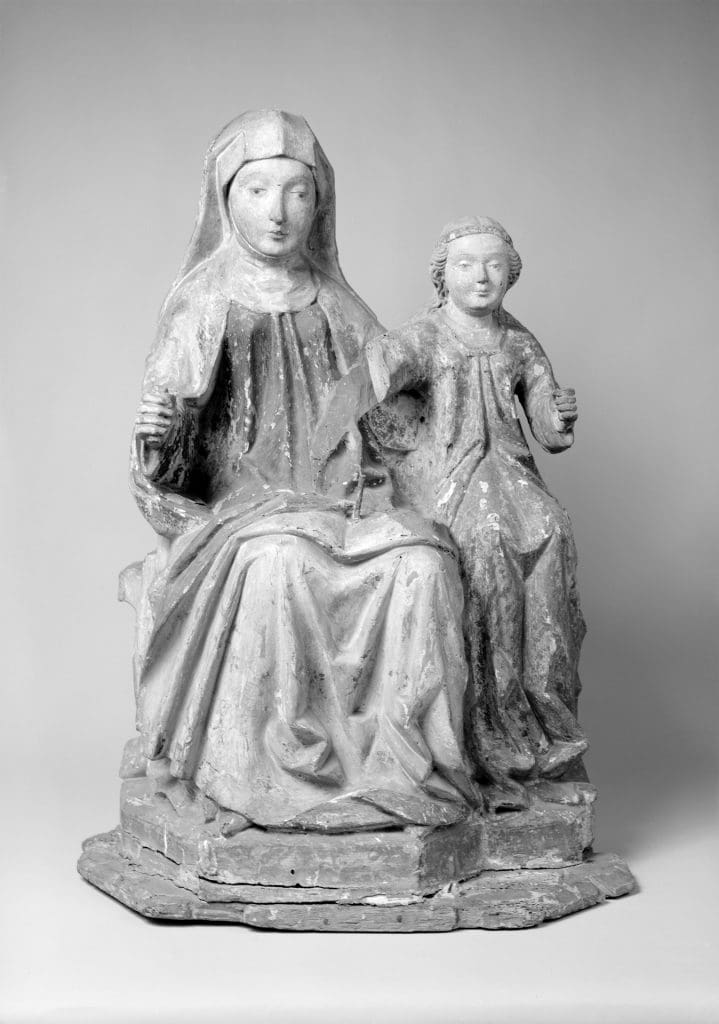
Fig. 3a. Cologne, Anna Selbdritt, without the still-extant Christ Child, ca. 1470–80, 77.5 x 55 x 31 cm, Museum Schnütgen, Cologne (photo: Historisches Archiv der Stadt Köln mit Rheinischem Bildarchiv, Helmut Buchen, rba_220294; https://www.kulturelles-erbe-koeln.de/documents/obj/05111607).
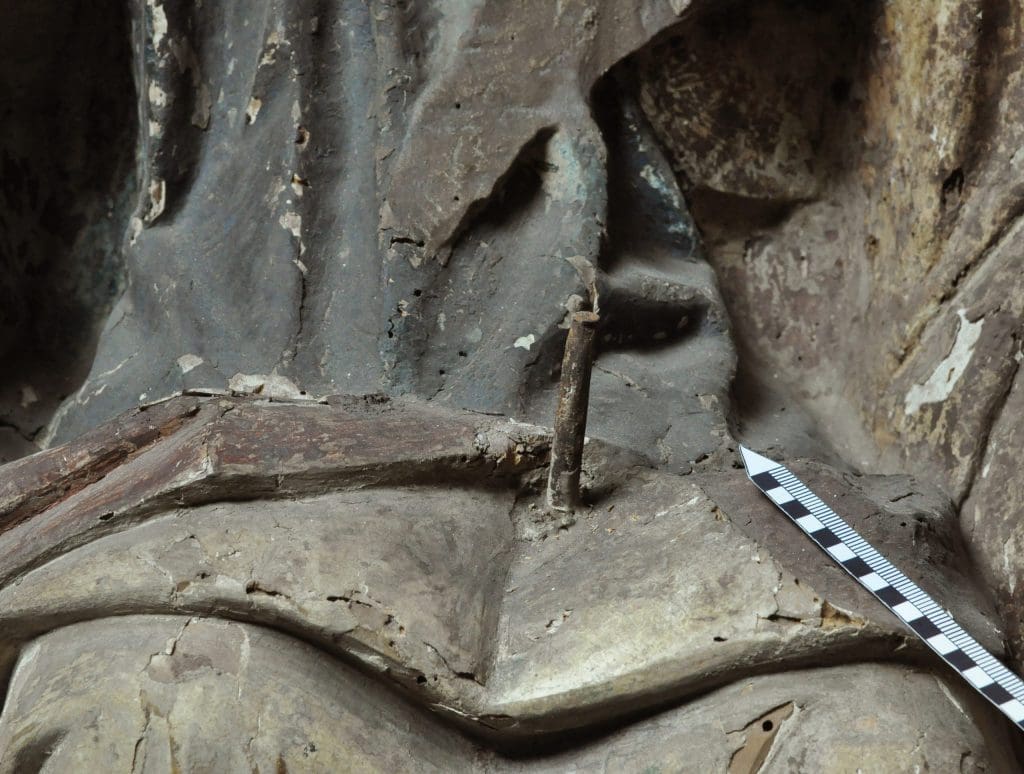
Fig. 3b. Detail showing the mounting spike on the Anna Selbdritt in fig. 3a (photo: Andrea Hünteler, Cologne).
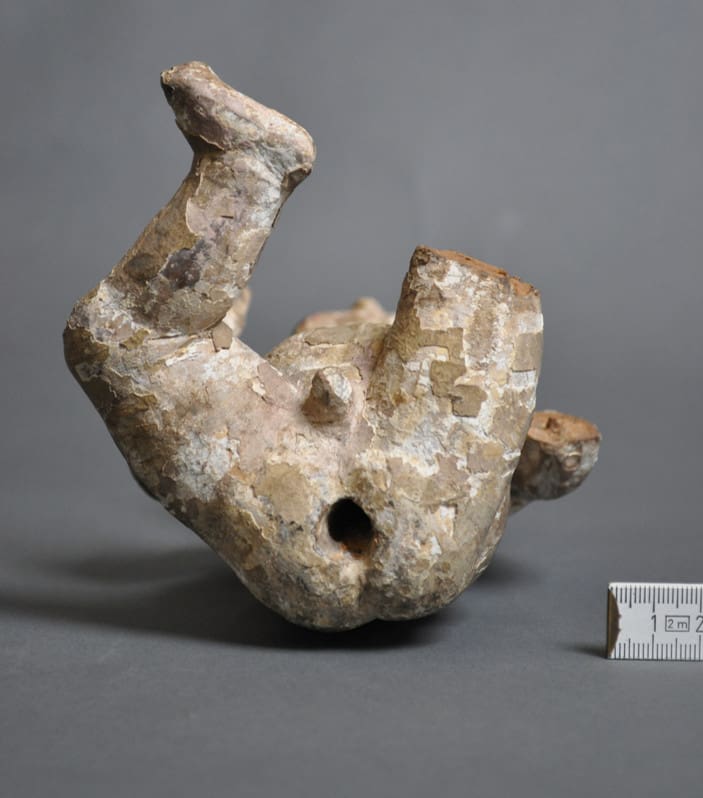
Fig. 3c. Underside of the Christ Child belonging to the Anna Selbdritt in fig. 3a (photo: Andrea Hünteler, Cologne).
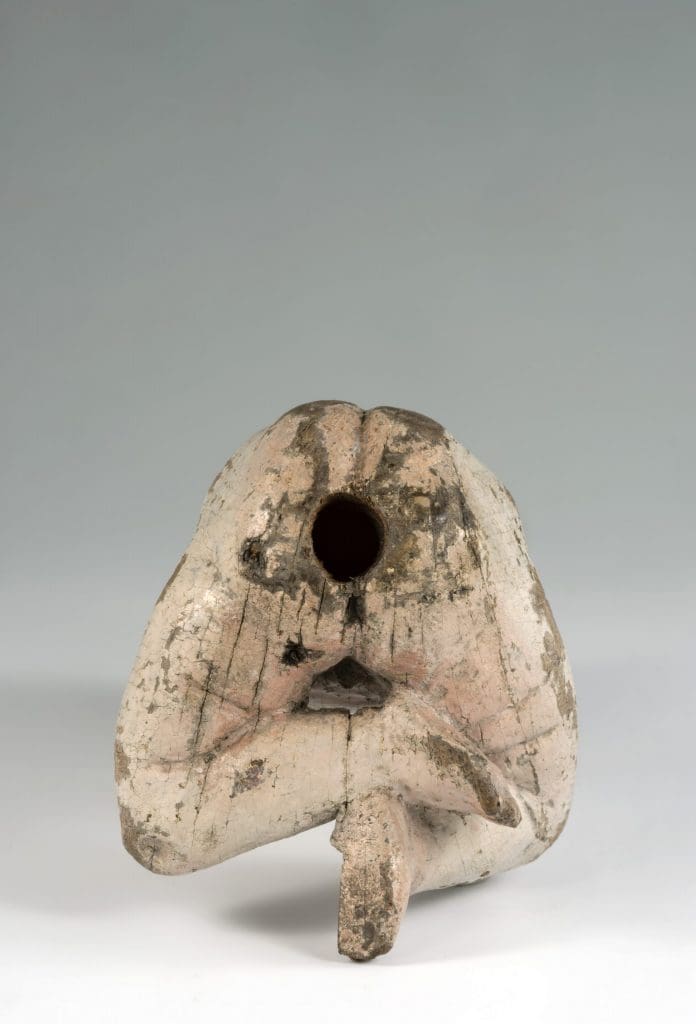
Fig. 4. Cologne, Christ Child (underside), ca. 1470–90, 19.1 x 8.3 x 9.7 cm, Suermondt-Ludwig-Museum, Aachen (photo: Anne Gold, Aachen).
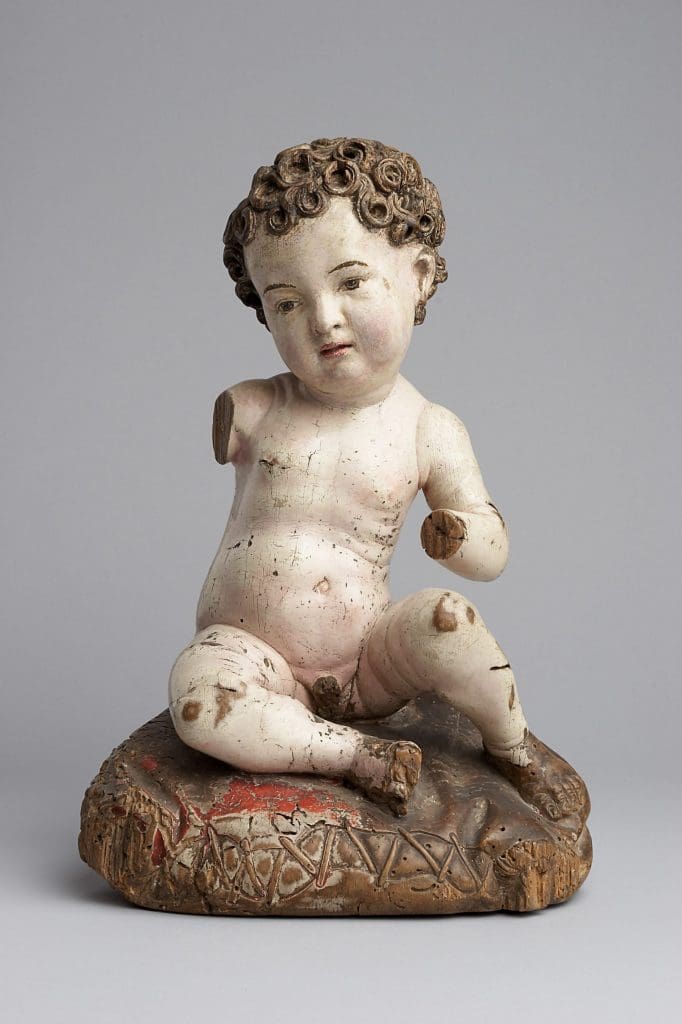
Fig. 5. Swabia, Seated Christ Child, ca. 1500, original polychromy, 33 x 32.5 x 16 cm, Liebieghaus Skulpturensammlung, Frankfurt a. M. (photo: Rühl und Bormann, Darmstadt).
Removable Christ Child figures were put to use in the context of liturgical feasts and in the dramatic elaborations of those feasts. The literature refers to the Three Kings plays staged to celebrate Epiphany on January 6 and to the Purificatio Mariae feast that took place on February 2 to commemorate Mary’s purification and the presentation of the infant Jesus in the Temple.[39] The Purificatio feast has its basis in the Gospel of Luke (2:22–39) and emerged in the Early Christian period. Its medieval form included candle consecrations and processions, which gave rise to the term “Mary’s Candlemas” (Mariä Lichtmess in German).[40] On the day of the feast, Christ Child figures taken from sculptures of the Virgin Mary were carried in the Candlemas procession and subsequently placed on the altar.[41] This applies primarily to figures of Jesus shown seated on cushions, but it was also done with standing examples,[42] which, like their seated counterparts, could be presented on cushions as well.[43] Furthermore, we can assume that Jesus figures extracted from the context of Marian sculptures were used at Christmas. Just like the numerous independent infant-Jesus figures that have been preserved, these ones, too, must have been laid in beds and rocked in cradles.
The mobilization of sculptures that were normally mounted in altarpieces or figural groups was probably much more common than studies have hitherto revealed.[44] A noteworthy example is the Nativity scene of the Tramin Altarpiece by Hans Klocker (before 1474–after 1500). The recumbent Christ Child at the center was removable. This is evident from the fact that the dowel protruding from the outstretched mantle of the Virgin corresponds to a drilled hole on the back of the Christ Child; also, the fact that the Christ Child is polychromed in the round is further evidence of a mobile configuration (Figs. 6 a, 6 b).[45] Scholarship has not yet devoted much attention to the mobility of Christ Child figures in the context of Marian altarpieces and figural groups. As a consequence, technical investigations that might illuminate the topic have been infrequent. It can be assumed that Christ Child figures were not merely displayed on altars but also, in re-enactment of the Presentation in the Temple, were placed in the arms of a living “Simeon,” a real-life cleric. In a religious drama of this sort, the Virgin Mary might also have been represented by a living person who handed the sculpture of the infant Jesus to the devout Simeon.[46] However, the performance of a ritual act using a mobile wooden sculpture in the context of a religious play was never an end in itself; rather, this was always done with pious spectators in mind, members of the congregation who participated through their viewing and were thereby strengthened in their faith. In this respect, under the assumption of a witnessing audience, the presentation of the Christ Child at the altar became a social sculpture.
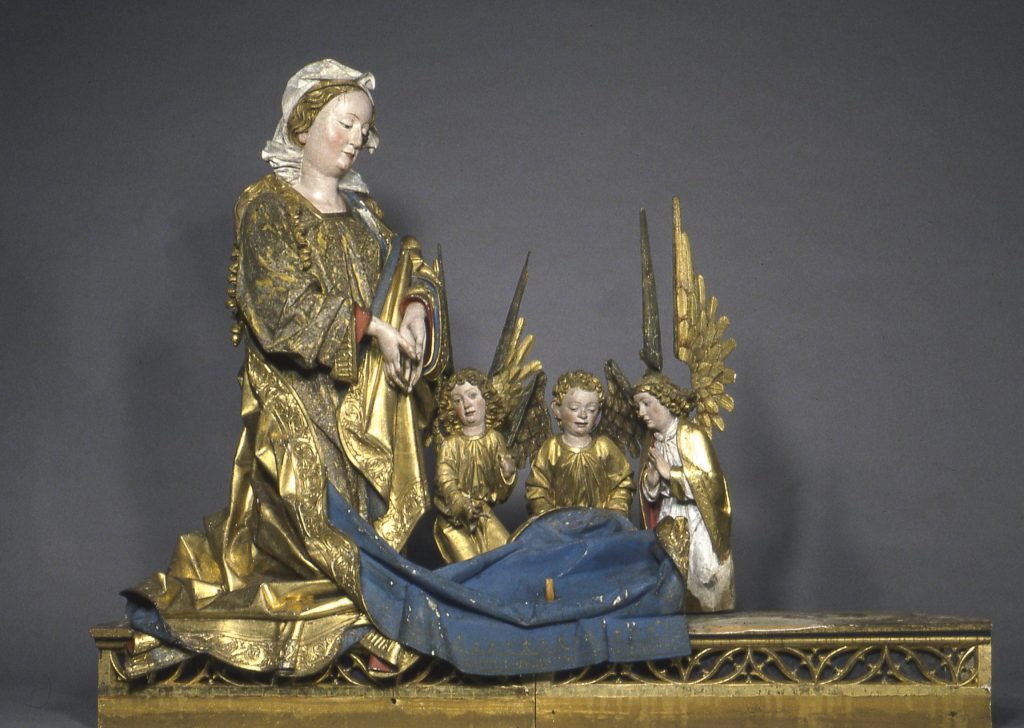
Fig. 6a. Hans Klocker and workshop, Tramin Altarpiece, detail showing the mounting dowel for the Christ Child, ca. 1485–90, 239.5 x 286.5 x 47 cm (altarpiece, overall), Bayerisches Nationalmuseum, Munich (photo: Bayerisches Nationalmuseum, Munich, Kerstin Wittenburg).
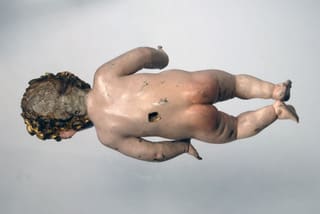
Fig. 6b. Reverse of the removable Christ Child from the Tramin Altarpiece, fig. 6a (photo: Walter Haberland, Munich).
The third category of performative Virgin and Child sculptures consists of Madonnas holding a Christ Child with a rotatable head.[47] Some examples dating from the period 1320–1360 originated in the regions of Spiš and Lesser Poland. These sculptures include the one from Toporec (Toporc in Hungarian, Toppertz in German) in the Hungarian National Gallery in Budapest (Fig. 7) and the one from Ruskinovce (Ruszkin, Rissdorf) in the Slovak National Gallery in Bratislava, as well as the figure in the Church of Saint Margaret in Nowy Sącz (Újszandec, Neu Sandez) and the one in the Church of Saint Mary of the Assumption in Podolínec (Podolin, Pudlein).[48] The removable and rotatable head of each Christ Child is fitted with a peg that is notched in two places on the sides. A string was looped around the peg and its ends passed through a hole in back that remained out of sight for beholders. When the string ends were pulled from behind, the child’s head could be rotated to the left or right. An example from the late-medieval period was the carved altarpiece formerly in the choir of Lübeck Cathedral, completed by Bernt Notke in 1478 but no longer preserved. As recorded in written descriptions,[49] the center of the altarpiece was occupied by a Madonna holding a Christ Child whose head could be manipulated to move.[50] In some works, the head not only of Jesus but also of Mary was movable. Mobile hands were also possible, as with a Madonna in Rötha.[51] In addition, there were sculptures of the Virgin whose eyes could be opened and closed, and whose facial expressions could be changed. Such works are noted in the literature as having existed in Cracow, Myślenice, Zielenice, Saalfelden, Kłodzko, Munich, and Rottweil.[52]
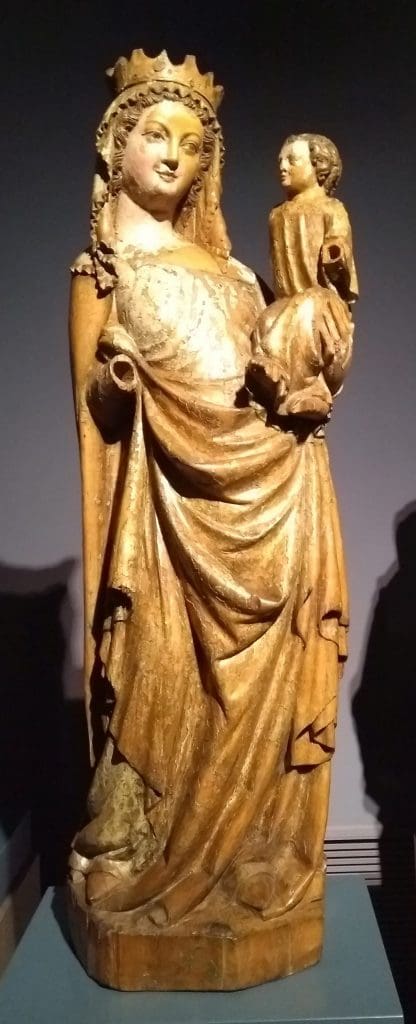
Fig. 7. Spiš, Virgin and Child, child with rotatable head, from Toporec, ca. 1320–30, 117 x 40 x 25 cm, Hungarian National Gallery, Budapest (photo: Michael Rief, Aachen).
Protestant writings from the sixteenth and seventeenth centuries offer information, from a critical perspective, about supposed ways in which sculptures with rotatable heads were used. These sources lead readers to believe that people came before such sculptures to pray for divine favor in personal matters. If favor was granted, the Virgin or the Christ Child figure would turn its head to the supplicant. But if either figure turned its head away, this was a sign that offerings such as wax votives were required to secure divine grace.[53] Luther and other Protestant theologians denounced as fraud the mechanism that set the figures in motion.[54] Both the frequency and the intensity of Protestant criticism suggest that such sculptures were widespread.[55] Yet presumably Reformation polemics did not reflect actual medieval practice. Rotatable Virgin Mary and Christ Child heads were more likely to have been used to stage a dialogue between the two holy figures in a kind of sacred theatrical piece. Dialogues between Mary and her son could have been performed by one or two narrators before an audience. A dialogue of this sort, which appealed to believers’ emotions, is found in the Soliloquium of about 1400 by Andreas Kurzmann, a Cistercian monk from Neuburg in Styria. The text, recited in vernacular form, presents a conversation that illustrates the Virgin Mary’s reactions to her son’s revelations: she shows sadness over the coming Passion and joy over the prophecies of resurrection and salvation.[56] Movable Virgin and Child sculptures should be understood in a similar context. Apparently, some sculptures were even equipped with means of changing the Virgin’s facial expression to suit particular emotions.[57] Possibly the act of a sculpture engaging in speech, as often described in the legends and as criticized by Protestants, consisted of texts like Kurzmann’s being read aloud. Much like the sculpted figures, such texts contributed to worshippers’ emotional experience of events from the history of salvation. The auditory faculties of the actors and the visual perception of the spectators were essential elements in the creation of social sculpture.
The Mater dolorosa as Performative Sculpture
Performative Marian sculptures also featured in representations of the Passion. Among large-format Pietàs made for display in church interiors, several are known that feature a removable body of Christ. A group of Pietàs made in the Lake Constance region in the first half of the fourteenth century is distinguished by the body of Christ being detachable from the Virgin’s lap. These sculptures are preserved in Meersburg, Radolfzell, Bamberg, and Watterdingen (Fig. 8).[58] Another example of a Pietà with a removable Christ figure is found in Saxony, in Saint Mary’s in Freiberg.[59] Mobile Christ sculptures of this sort appear to have been fairly common. But at this point it will have to suffice merely to note the existence of separately carved Christ figures that could be removed from a supporting Virgin Mary. Technical investigations of further objects are needed to better assess the prevalence of such Pietàs.[60] Presumably, detachable Christ figures were not just a technical peculiarity but could also be used in ritual acts. These figures, like crucifixes with or without movable arms,[61] were suitable for being placed in a Holy Sepulcher on Good Friday. This was probably true even for bodies of Christ with bent legs, as seems plausible for the example from about 1340 in the Church of Saint Martin in Bamberg.[62] Furthermore, Passion plays offered a situation in which a sculpture of the dead Christ could be placed on the lap of the actor or actress playing the Virgin Mary.[63] This created a plaintive interlude between the Descent from the Cross and the Entombment, enriching the plot with further drama.[64] The Passion-play context was not uncommon. From the fourteenth century onward, such spectacles gained in popularity; they were no longer limited to monasteries and select churches, and stagings were held in every large town or city.[65]
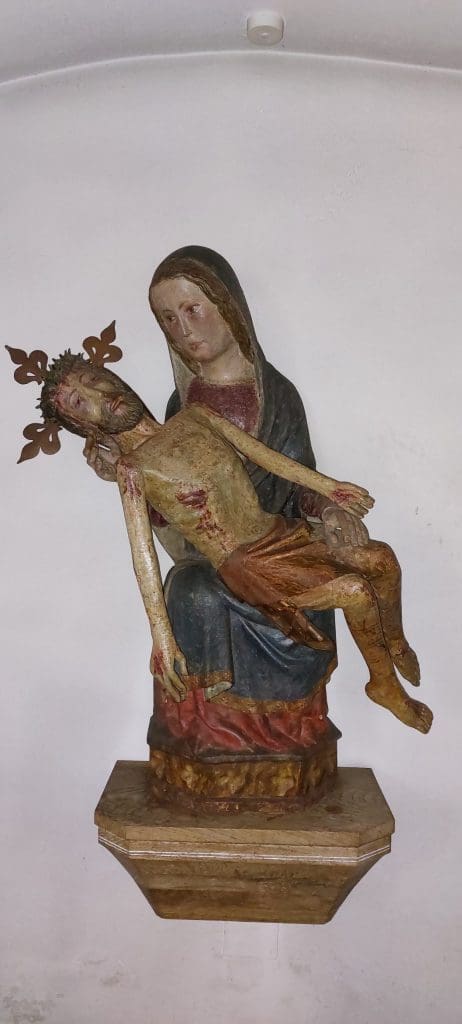
Fig. 8. Upper Swabia, Pietà (Vesperbild), with removable body of Christ, ca. 1340–50, height 110 cm, Church of Saints Gordianus and Epimachus, Watterdingen (photo: SE Tengen).
The Mater dolorosa could also take the form of a Virgin Mary shedding tears, a type thought to be especially powerful in the dispensation of grace.[66] Weeping Virgins even had the potential to inspire pilgrimages. Instances of Marian sculptures shedding tears are recorded for various places in the late-medieval period, several of them in Alsace: Oderen in the fourteenth century, Kientzheim in 1466, Marienthal in 1525, Saint Margaret’s Convent in Strasbourg in 1529, and, beyond Alsace, Rastede Monastery in the former county of Oldenburg in 1416 and Bern in 1549.[67] The Baroque period saw additional occurrences.[68] Protestant critics accused the Catholic clergy of using mechanical artifice to boost the alleged grace-bestowing power of their Marian sculptures and of seeking to aggrandize their churches through deception. A Protestant pamphlet published in 1523 or 1524 tells of how weeping sculptures functioned. It is titled Ein Gespräch zwischen vier Personen, wie sie ein Gezänk haben von der Wallfahrt im Grimmental, was für Unrat oder Büberei daraus entstanden sei (A dialogue among four persons in which they argue about the pilgrimage in Grimmental and what sort of rubbish and villainy resulted from it). We read in the pamphlet that priests spurred pilgrimage by taking the sculpture of Mary that was the focus of this pilgrimage and hollowing out its head, then filling the head with water and poking holes in the eyes with a needle so that the water would seep out and trickle down from the eyes, as if the sculpture were weeping, and then they convinced the people that this Virgin was crying because nobody had paid her a visit recently.[69]
In Bern, four Dominicans were burned to death because they were suspected of having fraudulently made a figure of the Virgin Mary weep and speak.[70] Almost no works prepared in this manner are preserved. A rare exception is found in an Anna Selbdritt sculpture now in the Kulturhistorisk Museum in Oslo. In that work, holes were drilled through the inner corners of Saint Anne’s eyes to allow simulated tears to flow out from behind (Figs. 9 a–c).[71] Weeping sculptures were surely involved in religious dramas, particularly considering that the mutability of the Virgin Mary’s emotions was both of topic of texts, as in the aforementioned dialogue by Andreas Kurzmann, and a real feature of actual sculptures, as noted by Beissel.[72] Although no weeping Marian sculpture is known to survive, it seems plausible that imitation tears would have been employed at times as a means of intensifying compassio, the sharing of the Virgin Mary’s suffering, among the faithful.
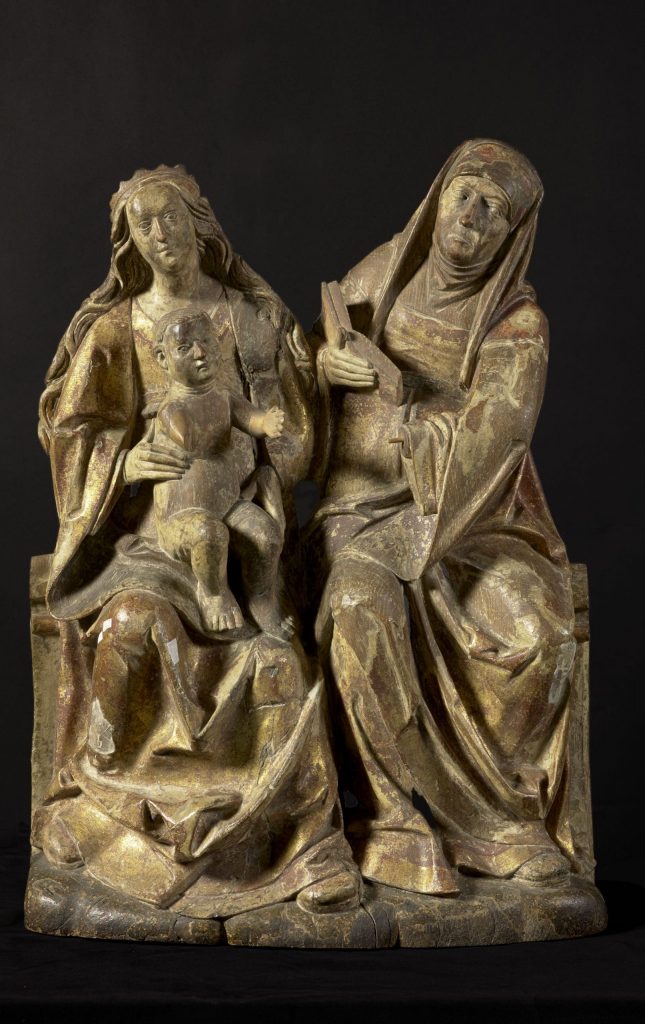
Fig. 9a. Northern Germany, Weeping Saint Anne, from an Anna Selbdritt, after 1510, 71.5 x 52 cm, Kulturhistorik Museum, Oslo (photo from Streeton, N.L.W. 2025, Fig. 5.1, on p. 122).
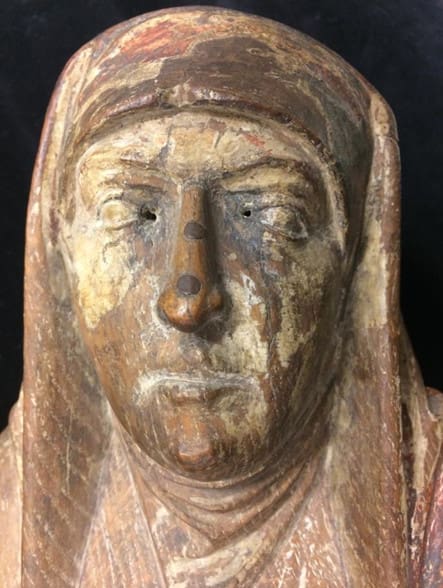
Fig. 9b. Face of the Weeping Saint Anne in fig. 9a (photo: Michael Rief, Aachen).
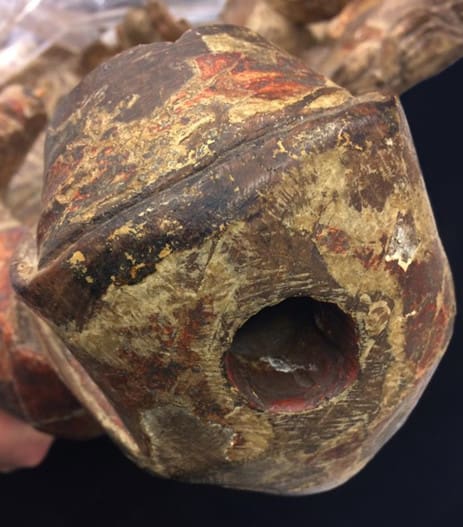
Fig. 9c. Hole in the head of the Weeping Saint Anne in fig. 9a (photo: Michael Rief, Aachen).
The Feast of the Assumptio Mariae and Immaculata Figures
The following considerations of Immaculata figures and their use during the feast of the Assumption of Mary are closely related to observations made by the present author in 2024.[73] Prior to Tripps’s studies of 1998 (reissued and revised in 2000), it was not known that Marian sculptures had played a prominent role on Assumption Day.[74] According to written sources such as the 1532 Liber Ordinarius of Halle,[75] spectacular performances took place on that feast day. In Halle, the sculpture of the Virgin Mary was placed in a coffin, carried in procession from the sacristy to the high altarpiece, and positioned beneath an opening in the vault above. This action was accompanied by clerics and other participants carrying banners and candles, and by song. Then, while a hymn was being sung, the dean and a cantor carefully attached ropes to the sculpture and ensured that it faced east, after which, still accompanied by song, the sculpture was hoisted up and ultimately pulled out of sight through the opening in the vault. While the antiphon Hodie Maria Virgo celos ascendit was resounding, the processionists assembled in the choir area. Further song accompanied the procession’s return to the sacristy.[76] As this description makes clear, both the visual and the auditory aspects played central roles in making the event into a multisensory experience. While a sculpture of the Virgin rose to the heavens, angels attached to cords might accompany it, lending even greater opulence to the Assumption spectacle.[77] Because the people responsible for animating the works were positioned above the apex of the vault, they remained out of view to spectators. The sculptures of the Virgin and angels would thus appear to rise up without human intervention, vanishing from sight through the so-called Himmelsloch (celestial opening). The custom of staging the Assumption of Mary with a sculpture was already widespread throughout Europe by the end of the thirteenth century.[78] Confraternities devoted to the Assumption were often the organizers of these solemnities.[79] It is striking that, on the one hand, a widespread custom is clearly reflected in the written sources while, on the other hand, almost no extant works of art have been connected with the custom. In contrast to the numerous mobile figures of Christ that scholarship has revealed to have been used in Ascension rituals, Marian sculptures have hardly been studied with regard to their possible use in the cult of the Assumption. Only in the case of a now-lost silver statuette of the Immaculata dressed in a star-decorated robe, dating from about 1500, do we have a combination of a written source and a specific sculpture, since the work was part of Cardinal Albrecht of Brandenburg’s reliquary collection in Halle, the so-called Hallesches Heiltum, which was inventoried and published between 1515 and 1530 (Fig. 10).[80] Although no extant sculptures can be linked with particular written sources, we can conjecture, based on the lost Halle statuette, a specific iconographic type for Assumption figures. A future task will be to study the group of Maria Immaculata[81] sculptures that sometimes fall under the rubric “Virgin of the Temple” (Tempeljungfrau)[82] —showing the Virgin with long, loose hair, a hairband, a belt, and her hands folded in prayer—and to ask whether these and other manifestations of the Immaculata type might have functioned as Assumption figures. This idea is supported by a well-known sculptural representation of the Assumption, namely the Creglingen Altarpiece by Tilman Riemenschneider (ca. 1460–1531), which shows the Virgin standing on a cloud, her hands folded in prayer, being born aloft by angels (Figs. 11 a–b).[83] Besides the Immaculata types found in the Hallesches Heiltum and the Creglingen Altarpiece, there is also the iconography of the Virgin wearing a dress decorated with ears of wheat (Maria im Ährenkleid). According to recent findings, this iconographic type emerged in southeastern Germany long before the creation of the once-presumed prototype, a silver miracle-working statuette in Milan Cathedral that was lost in 1387.[84] The extant Immaculata sculptures, the Wheat-Ear Virgins, and the Temple Virgins without wheat-ear dresses[85] have yet to be studied as a group with regard to their possible connections with the practice of hoisting a Marian sculpture into the church vault on Assumption Day.
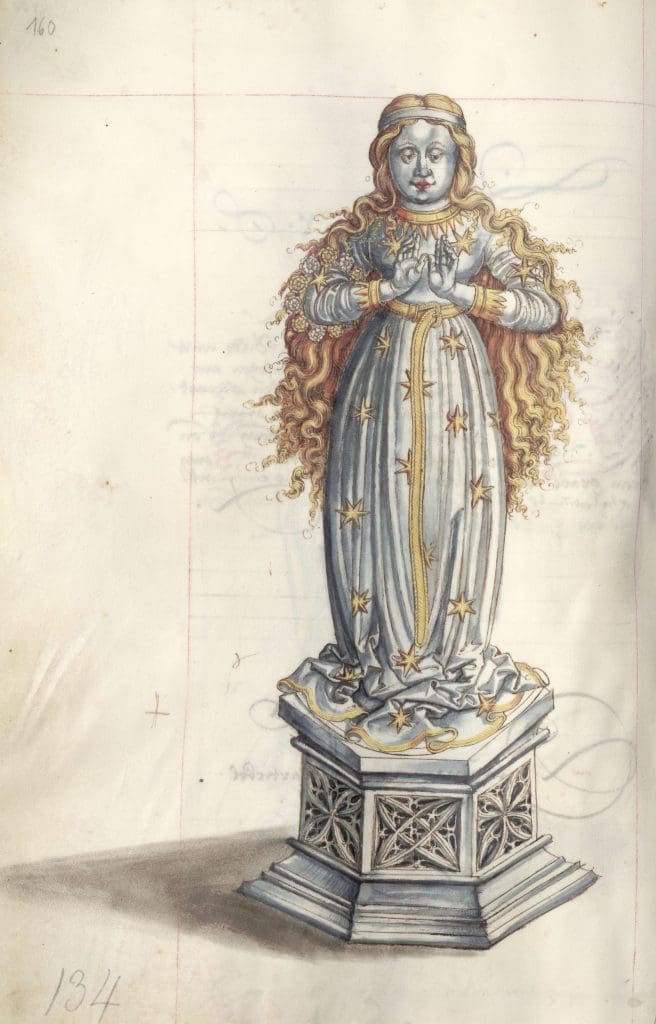
Fig. 10. Silver figure of the Assunta in the Hallesches Heiltum, between 1515 and 1530, body color on parchment, 27.6 x 36.46 cm, Schlossbibliothek, Aschaffenburg (Man. 14, Reliquiar 134, fol. 160v).
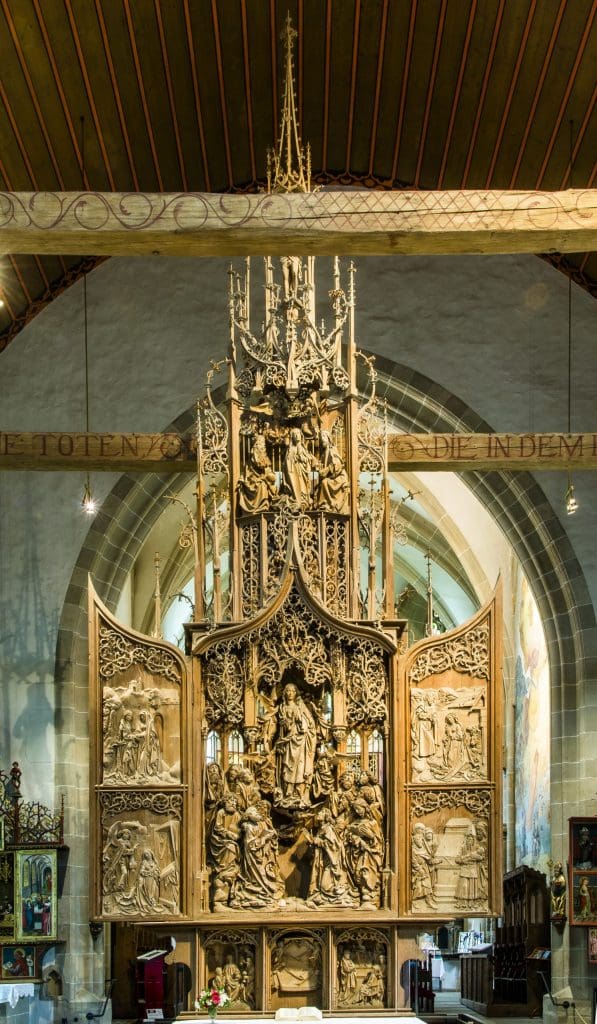
Fig. 11a. Tilman Riemenschneider, Altarpiece of the Assumption of the Virgin, 1505–08, height ca. 10 meters, Herrgottskirche, Creglingen (photo: Matthias Weniger, Munich).
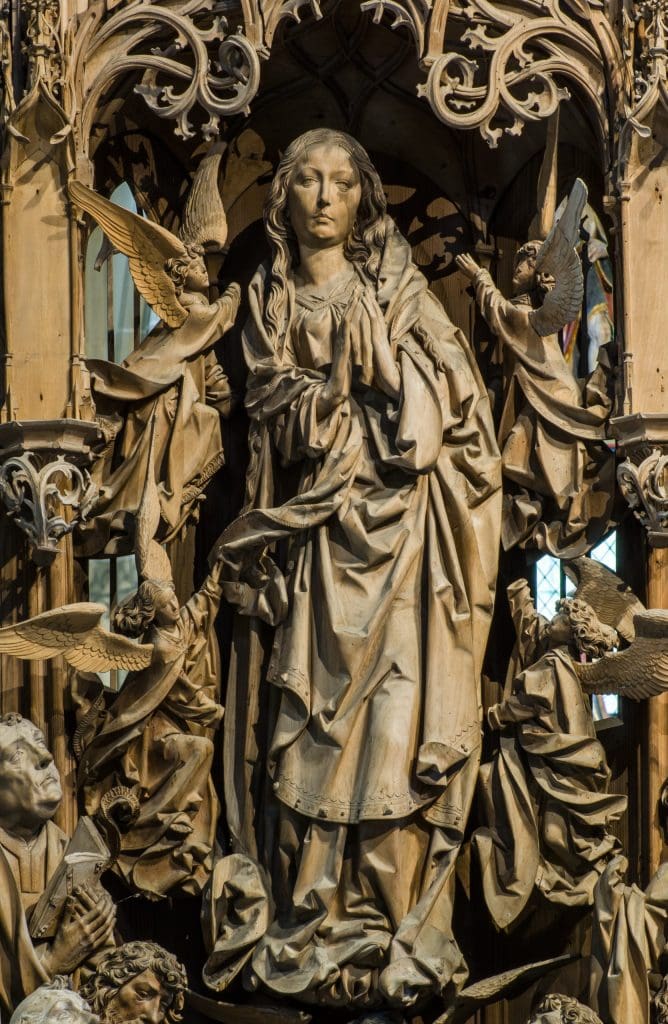
Fig. 11b. Detail of the Virgin Mary (height 120 cm) in the shrine of the Creglingen Altarpiece, fig. 11a (photo: Matthias Weniger, Munich).
One of the earliest extant sculpted representations of the Virgin of the Wheat Ears was made by a follower of Hans von Judenburg about 1430–40 and is now in the Badisches Landesmuseum in Karlsruhe (Fig. 12).[86] Discovered in the parsonage in Itter in Tyrol, the figure stands 95 cm tall and is carved fully in the round. In addition, in the collection of Kuno Mayer in Bregenz, there is southern German limewood figure from about 1500 that measures 85.5 cm in height and is distinguished by the treatment of the hair on the reverse, which is especially long and tapers to three strands (Figs. 13 a–b).[87] Also noteworthy is the Maria Immaculata figure in the Parish Church of Saint Urban in Birgden (Heinsberg district), which was carved by Henrich Douwerman shortly before 1520. It stands 98.3 cm tall and retains its original polychromy. It also features long, carefully formed locks of hair on the reverse. There are two holes in the upper rear of this figure’s head. They have been interpreted as remnants of a former means of fastening the sculpture to its display location.[88] Yet it cannot be ruled out that one of the holes might have held a suspension device (Fig. 14). Additional works of similar type have been discussed elsewhere by the present author.[89]
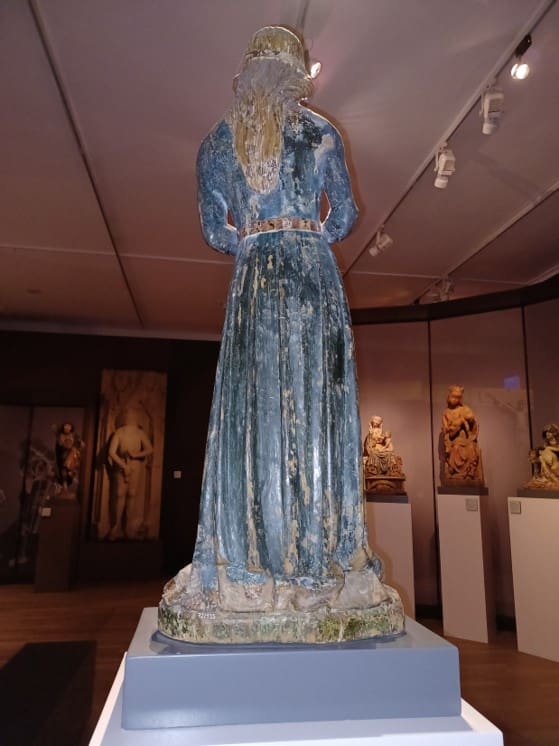
Fig. 12. Hans von Judenburg, Virgin in the Wheat-Ear Dress (Ährenkleidmadonna), reverse, ca. 1430–40, height 95 cm, Badisches Landesmuseum, Karlsruhe (photo: Oliver Sänger, Karlsruhe).
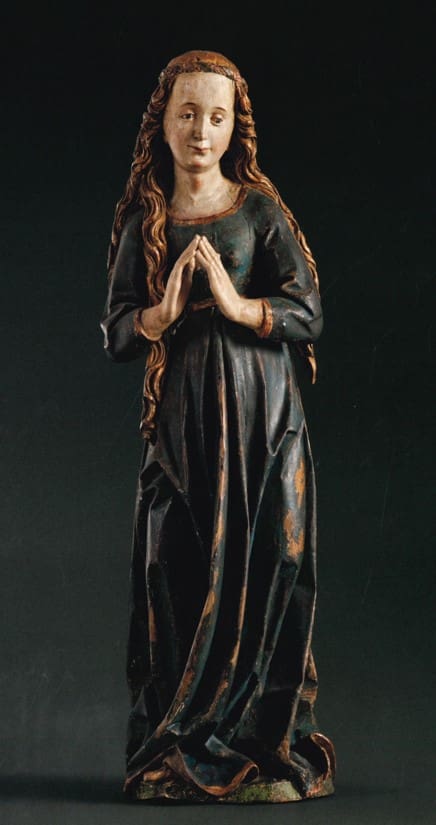
Fig. 13a. Southern Germany, Maria Immaculata, ca. 1500, 85.5 x 25 x 22 cm, Kuno Mayer Collection, Bregenz (photo from Mayer 2015, p. 59).
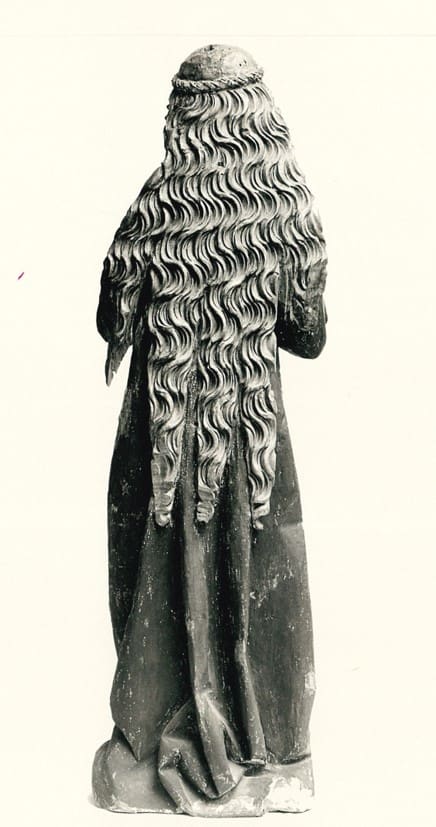
Fig. 13b. Reverse of the Maria Immaculata in fig. 13a (photo from Mayer 2015, p. 60).
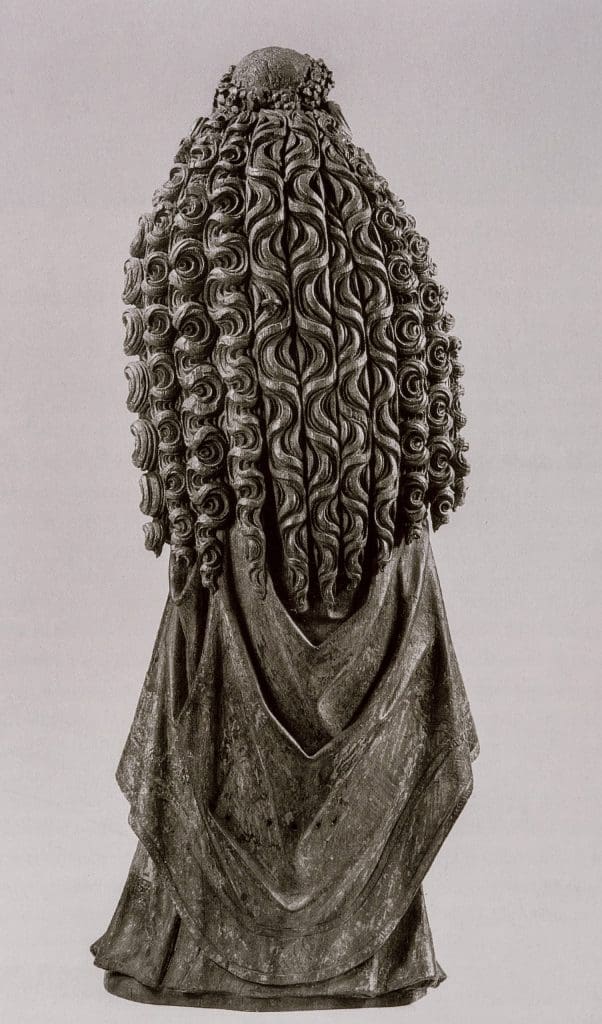
Fig. 14. Henrick Douwerman, Maria Immaculata, reverse, before 1520, 98.3 x 39 x 37.7 cm, Church of Saint Urban, Birgden (photo: Anne Gold, Aachen).
A significant aspect of the sculptures in the Immaculata group is that they are frequently worked up to a high degree of finish on the back. This suggests use in unenclosed spaces, where the sculptures could be viewed from behind.[90] This feature raises the question of the original function of these medium- to large-scale sculptures. Were they placed on altars during the feast of the Immaculate Conception, a holy day documented as early as the thirteenth century in Germany and widespread in the fourteenth and fifteenth centuries?[91] Could such sculptures have also played a role in Assumption Day spectacles? Were the tops of the figures’ heads fitted with eyebolts and rings to be able to raise them up into the church vault? Technical investigations are still needed. In this context, it is interesting to compare figures of the resurrected Christ that were equipped for being suspended. These were often set into a surrounding mandorla, at the top of which there was metal ring for attaching a rope.[92] The Christ figure could be placed on a pedestal in the mandorla but not permanently fixed in place, so that it remained removable, as with the example preserved in Schwäbisch Gmünd from about 1510 (Fig. 15).[93] In medieval sources, mandorlas of this kind were called “rainbows,”[94] probably because they were painted in rainbow colors.[95] In light of a Sienese sculpture of the Assumption from the last quarter of the fourteenth century which shows the Virgin Mary seated within a mandorla and surrounded by angels,[96] there may be reason to believe that other Marian figures, too, such as the standing Immaculata north of the Alps, might have been mounted into mandorlas equipped for being hoisted into a church vault. A configuration of that sort would have obviated the need to attach a ring to the top of the sculpture’s head. The eastward orientation of the Assumption figure noted in the Halle Liber Ordinarius offers an explanation for the highly worked-up reverses of these sculptures: when these works faced east before being lifted upward, their magnificently cascading locks of hair would have been visible from the nave in the west. These observations lend plausibility to the notion that Immaculata figures were used in Assumption Day rituals. The procession with the sculpture of the Virgin—carried on a bier, accompanied by song and lit candles—was a spectacle that took up major portions of the church interior. The ritual presupposed spectators. The people who were assembled to watch the sculpture’s ascension were able to experience it as a real event happening to the Virgin Mary.
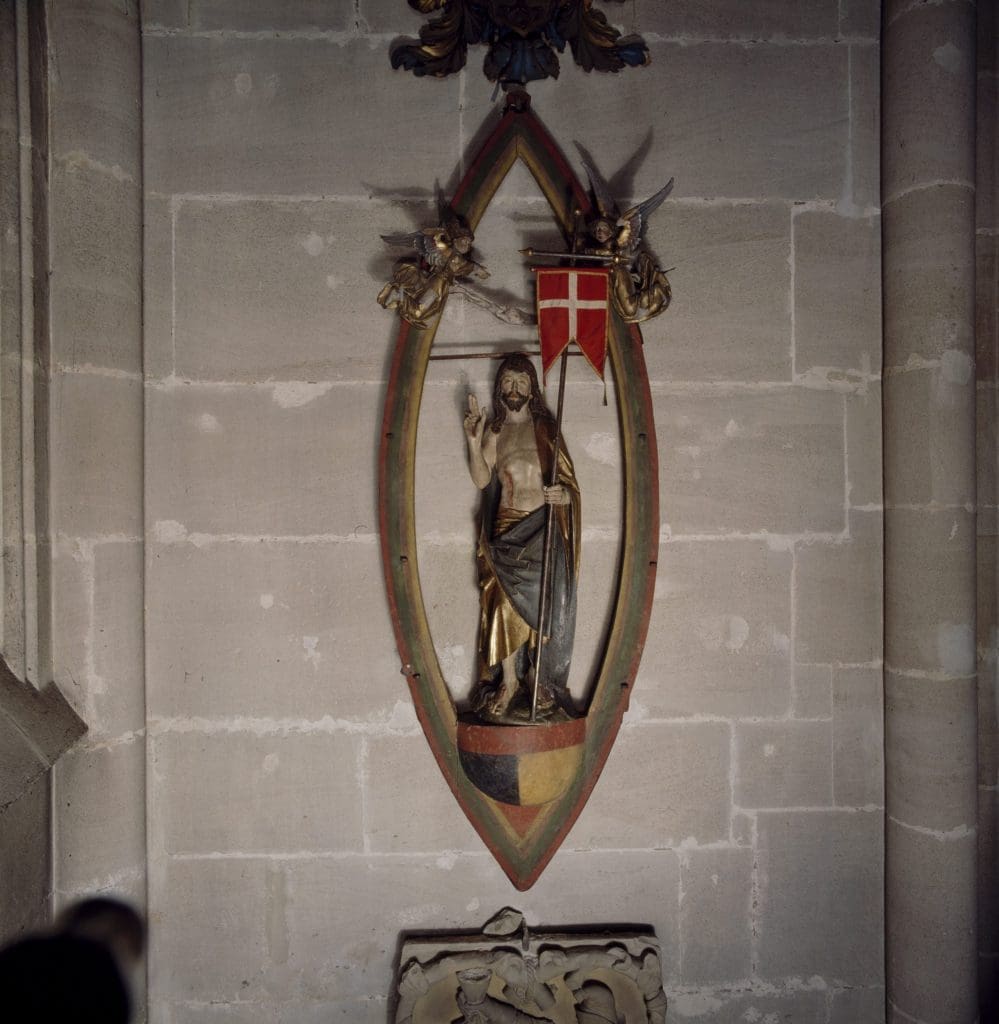
Fig. 15. Southern Germany, Resurrected Christ in a Mandorla, Holy Cross Minster, Schwäbisch-Gmünd (photo: Landesamt für Denkmalpflege im Regierungspräsidium Stuttgart, Birgit Steiner geb. Hübl).
“Mariana” with Raising and Lowering Mechanisms
Church interiors often feature sculptures that are suspended overhead and seem to float in midair. These, too, could be a focus of veneration. Aside from crucifixes and angels, these objects encompass so-called Mariana, which in this case refers to unenclosed, hanging sculptural works with double-sided Marian figures at the center.[97] Such figures of the Virgin and Child often take the form of a Madonna in Glory (Strahlenkranzmadonna) but also appear as hanging sculptures carved fully in the round, as with the Virgin and Child on a Crescent Moon standing on a foliate console that was on offer at the Hugo Helbing auction house in 1926.[98] Another type of Mariana object is the Anna Selbdritt on a cloud platform, a subject sometimes enlivened with putti.[99] The question arises as to whether hanging Marian sculptures could also have functioned as mobile figures and been involved in cultic rituals. In this regard, Tripps points out two interesting examples mentioned in fifteenth-century sources, albeit in Spain. It is recorded that on Christmas in Valencia Cathedral, a figure of the Virgin and Child was made to descend from above. And in Barcelona Cathedral the celebrations of Christ’s incarnation also appear to have included a figure of the Virgin Mary being lowered from the heavens.[100] Even though no other written sources concerning this practice have been identified, it cannot be ruled out that in other locations Marian and Child sculptures may have been lowered down from church vaults on the feasts of the Annunciation or the Nativity of Christ. Considering that this type of lowering from above seems likely to have been carried out with sculptures that were already in a suspended position, the pendent figures categorized as Mariana would seem well suited for such actions, especially given that some are equipped with raising and lowering mechanisms. Raising and lowering are known to have taken place with hanging sculptures that were meant to be concealed or unveiled at certain times in the church year, as happened with objects that were displayed on Marian feast days.[101] Marian chandeliers, too, were often equipped with a raising and lowering mechanism.[102] Such mechanisms presumably did not merely serve the purpose of making candles accessible to be lit and extinguished. Rather, the fact that covers are preserved along with some Marian chandeliers[103] indicates that the raising and lowering contributed to the possibilities of performative staging of those works. Aside from lowering during the aforementioned feasts of the Annunciation/Incarnation and the Nativity, this action appears also to have been performed as a separate, special act of veneration, particularly when a miraculous image was involved. Such was the case with a work in the Pilgrimage Church of Saint Mary of Fallsbach in Gunskirchen near Wels in Upper Austria. It is a Virgin and Child in half-length set between a stag’s antlers. This formerly suspended sculpture was venerated in connection with its origin legend; originally, it was equipped to be lowered in order to be kissed by worshippers (Fig. 16).[104] The kissing of images—both sculptures and paintings—was a widespread custom in the Middle Ages.[105] On another formerly pendent figure, the traces of use suggest that it was lowered at times for kissing: this is the 60-cm-tall Anna Selbdritt of about 1510–20 from the chapel in Perg, now at the Oberösterreichisches Landesmuseum in Linz (Figs. 17 a–b).[106] The act of kissing could well have taken place as part of a collective experience. Possibly singing was involved, too, as with other performances that incorporated sculpture, such as the rocking of the Christ Child’s cradle and the Assumption of the Virgin.[107] However, in order to gain a better understanding of the act of kissing sculptures from the perspective of participants and beholders, it will be necessary to find additional written sources and devote further thought to the subject.
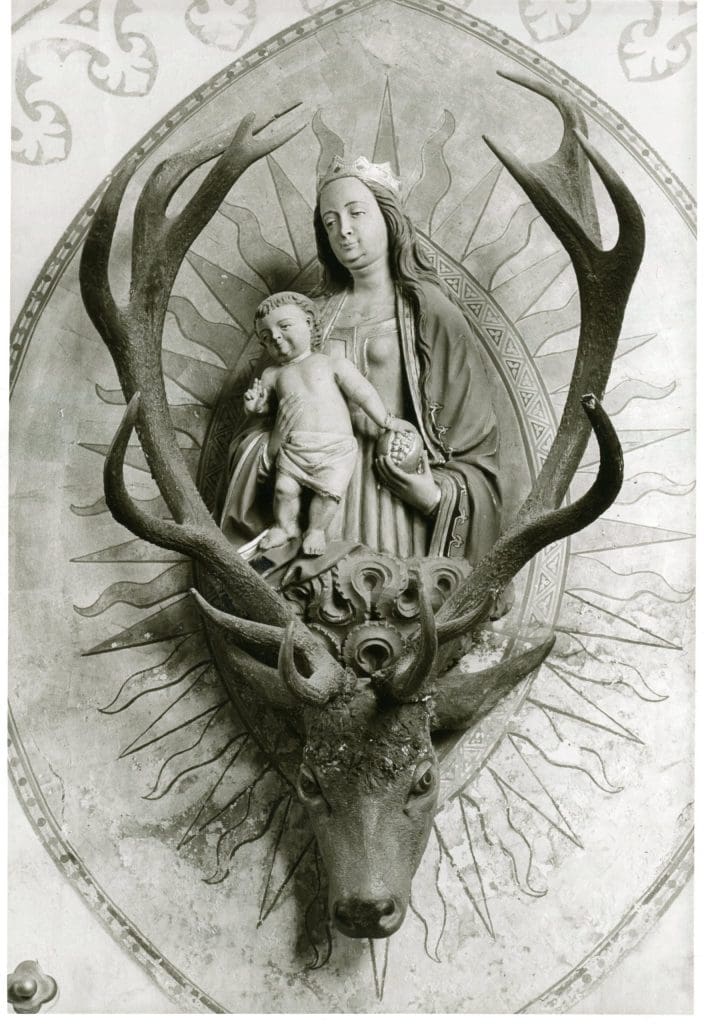
Fig. 16. Upper Austria, Virgin and Child between a Stag’s Antlers, early 16th century, formerly hanging, Pilgrimage Church of Saint Mary of Fallsbach, Gunskirchen near Wels, Upper Austria (photo: Bundesdenkmalamt, Vienna, Fotoarchiv).
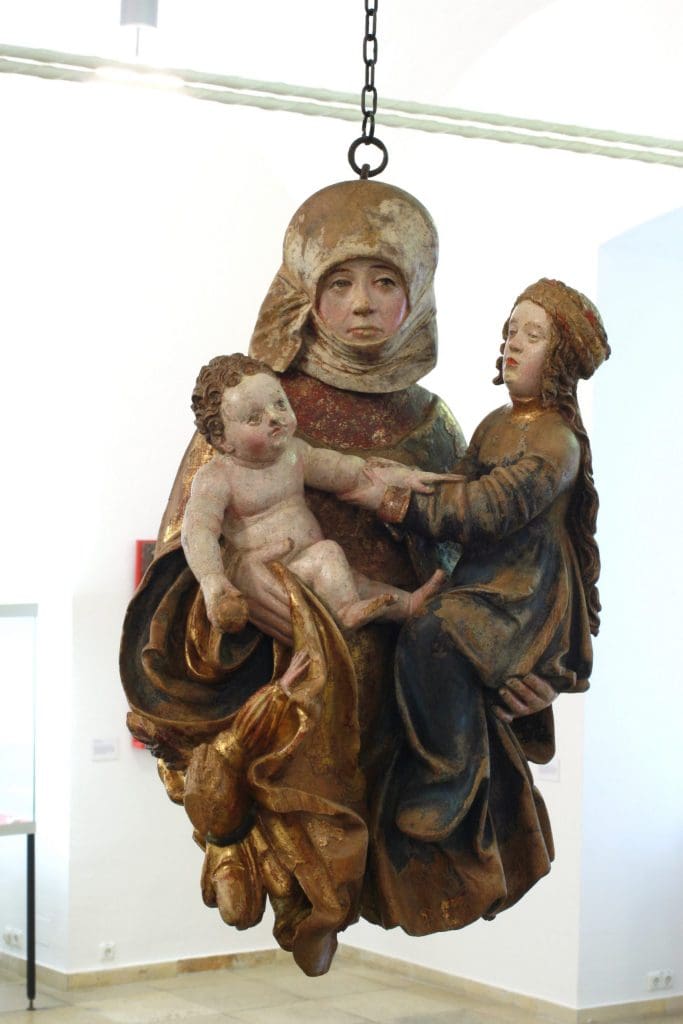
Fig. 17a. Workshop of Lienhart Krapfenbacher (?), Anna Selbdritt, ca. 1510–20, height 60 cm, Oberösterreichisches Landesmuseum, Linz (photo: OÖ Landes-Kultur GmbH, Land Oberösterreich, Kunst- und Kulturgeschichte bis 1918, Inv. Nr.: 820-1-S 32).
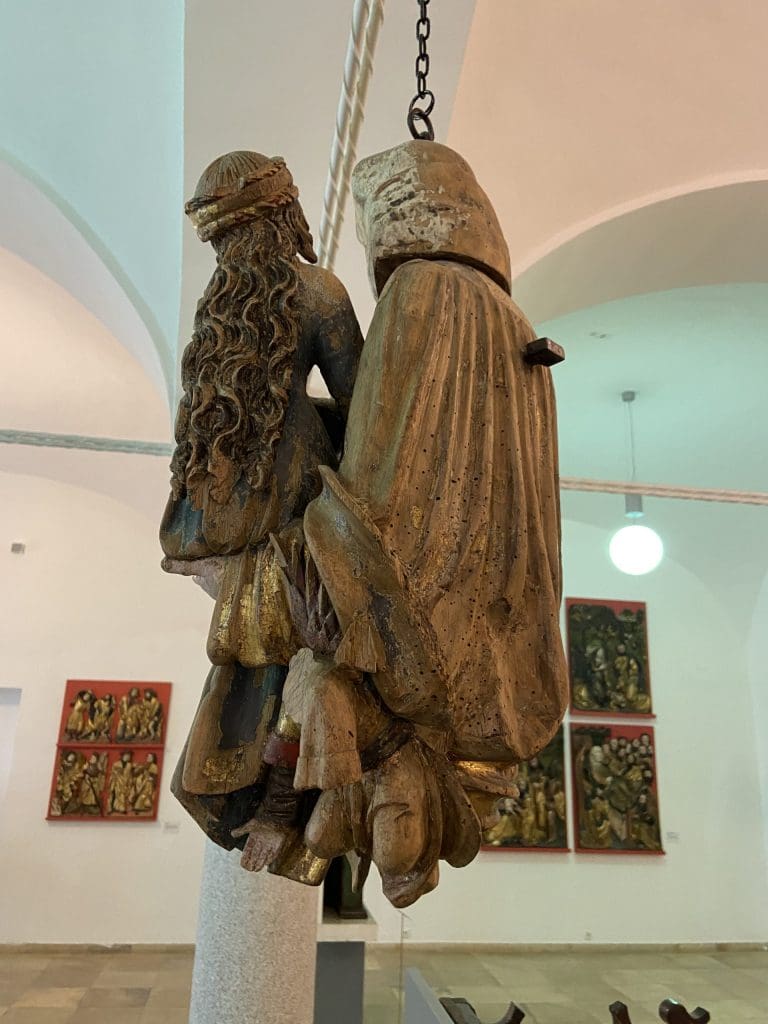
Fig. 17b. Side view of the Anna Selbdritt in fig. 17a (photo: OÖ Landes-Kultur GmbH, Land Oberösterreich, Kunst- und Kulturgeschichte bis 1918, Inv. Nr.: 820-1-S 32).
Self-Acting Marian Sculptures
Self-acting figures are another category of performative sculpture. As noted above, they are distinct from what are termed animated sculptures. Figures that perform actions on their own exist as mechanical automatons, but they also often feature in late-medieval legends[108] and in paintings and prints based on those legends. In the following, however, my focus is less on the written sources and more on their pictorial counterparts.
The mechanical clock in the Cathedral of Our Dear Lady (Frauenkirche) in Munich serves as an example of a sacred-themed automaton that functions without active human intervention. The clock features figures carved about 1500 by the sculptor and architect Erasmus Grasser (ca. 1450–after 1526). A dual intercession is put on display: kneeling figures of the Virgin Mary and of Christ as the Man of Sorrows plead on humanity’s behalf beneath a half-length figure God the Father. Every hour on the hour, the mechanism sets the sculptures in motion, causing them to act out the intercession like characters in a religious drama. Mary moves her left arm, pointing towards to her breast to signify her role as the Mother of God. Christ points to his chest wound and looks upward to God the Father. Not only Christ’s arms but also his eyes are engaged in mechanical motion. God the Father, who hears their pleading, returns the sword of judgment to its sheath; his eyes and lips also move (Fig. 18).[109] This object proves that a carved Marian sculpture could be experienced as palpably active in the context of a machine. Also, the experience of this automaton clock was a collective one, thanks to the clock’s location in a publicly accessible part of the church interior. The scene of dual intercession acquires its full significance only when viewed by a gathering of people. Thus, these wooden sculptures belonged to the phenomenon of social sculpture.
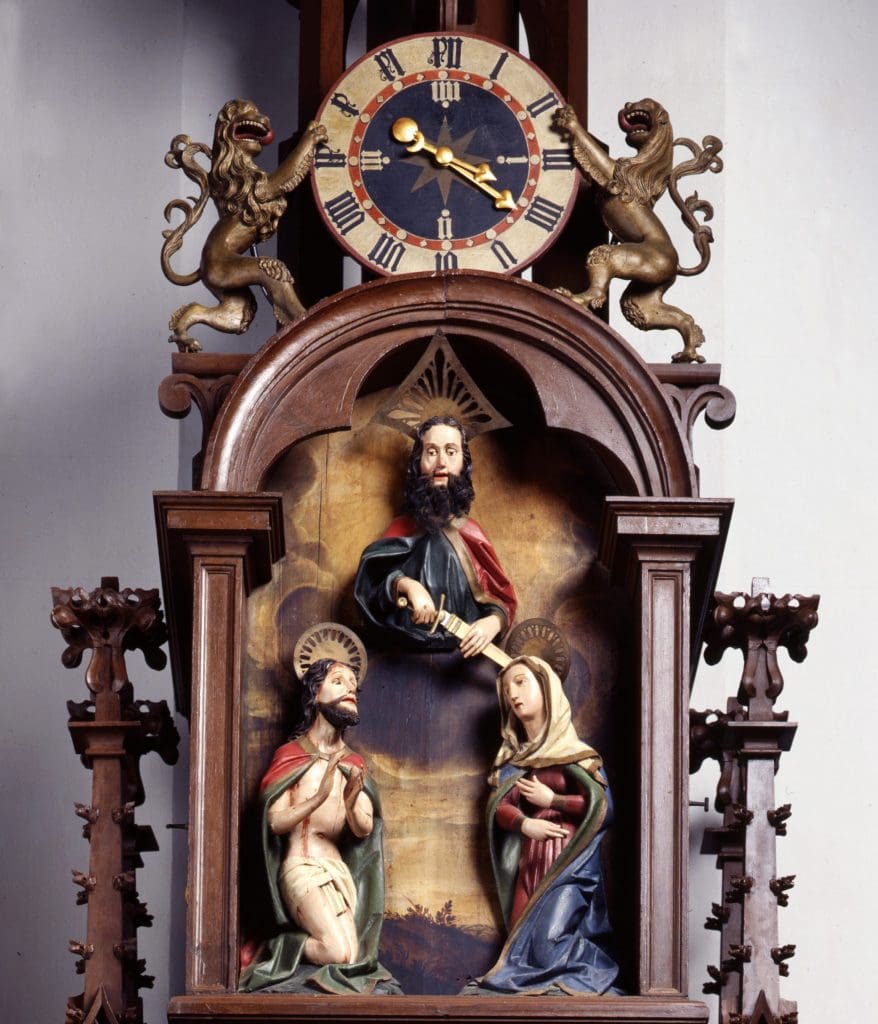
Fig. 18. Erasmus Grasser, automaton clock, detail showing dual intercession, ca. 1500, 64 cm (width of the figural case), Frauenkirche, Munich (photo: Erzbischöfliches Ordinariat München, Hauptabt. Kunst, Wolf-Christian von der Mülbe).
With regard to the representation of self-acting sculptures in paintings and prints, while most examples are crucifixes, some do deal instead with the miracle-working powers of the Virgin Mary.[110] The Lactatio legend of Saint Bernard of Clairvaux is a subject whose two-dimensional representations sometimes pictured the Virgin and Child as a miraculous sculpture. According to this legend, on one occasion when Saint Bernard was speaking the words “Monstra te esse matrem” (Show that you are a mother) from the prayer Ave Maria stella, the Virgin appeared before him and milk flowed from her breast. The Virgin proved her motherhood by taking hold of her bared breast and expressing milk onto Bernard, which streams either onto his eyes or his mouth.[111] This legend came into being at a relatively late date, and it is absent from the Legenda aurea. The literature on this subject notes that in certain late versions of the legend, the description of the miracle proceeds from the assumption that the milk issued from a work of sculpture positioned on an altar.[112] Such is the case with a northern Netherlandish painting of about 1520 now at the St. Annen-Museum in Lübeck.[113] The seated Virgin and Child are shown as a polychrome sculpture situated on a altar slab. The sculpture’s dimensions do not match those of Saint Bernard; instead, they are in keeping with the sizes of the depicted candlestick and girdle book, so that the sculpture fits in with the other altar furnishings (Fig. 19). Another example is found in an engraving of about 1480–85 by the Master IAM of Zwolle.[114] There, too, the sculpture of the Virgin and Child belongs to the altar furnishings; it is positioned between two candles and equipped with a high-backed throne (Fig. 20). Under the influence of the mendicant orders, not only did new cults of saints emerge, but older ones, such as that of Saint Bernard, were revamped with the intention of reinvigorating and updating them, as happened with the Lactatio legend. The perceived efficacy and widespread presence of animated sculptures in the late Middle Ages probably contributed to the emergence of new legends and visions featuring works of sculpture. Even though depictions of self-acting sculptures usually show only a single person experiencing the miracle—in this case, Saint Bernard—the concept of social sculpture remains relevant here, too. That is because the miracle issuing forth from a sculpture and affecting only a single person could be taken as an example of the potential of all believers to collectively experience such a miracle. The performative structure illustrated in the image can therefore be seen as presenting an ideal model both for performances staged in church and for sensations experienced by spectators.
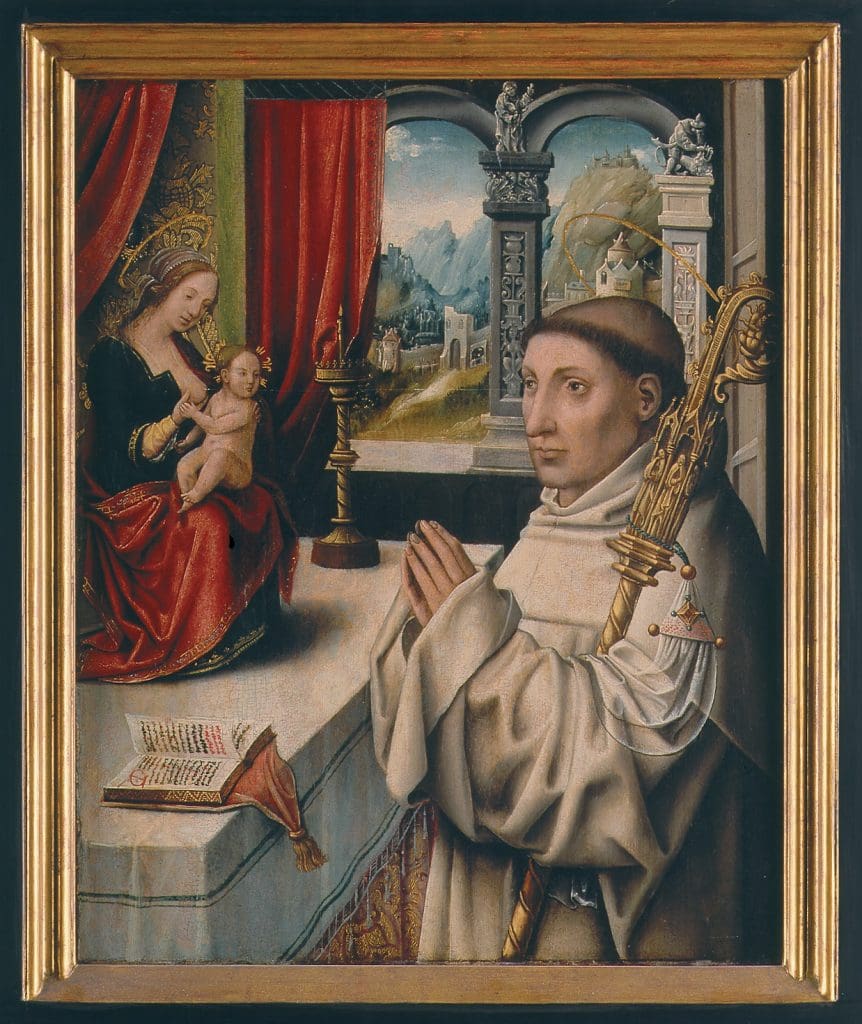
Fig. 19. Northern Netherlandish painter, The Lactation of Saint Bernard, ca. 1520, oil on oak, 50 x 40.5 cm, St. Annen-Museum, Lübeck (photo: St. Annen-Museum, Lübeck, Fotoarchiv).
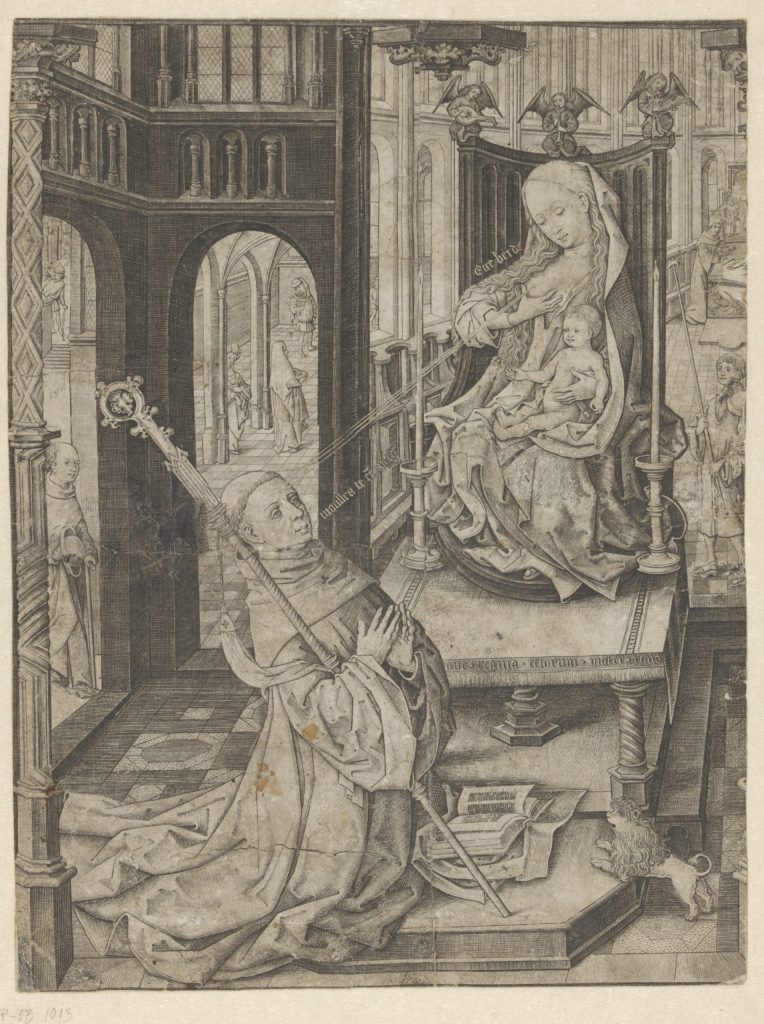
Fig. 20. Master IAM of Zwolle, The Lactation of Saint Bernard, 1480–85, engraving, 320 x 241 mm, Rijksmuseum, Amsterdam (photo: Rijksmuseum, Amsterdam).
Conclusion
In the medieval conception, sculpture possessed fundamental persuasiveness and potency. One manifestation of that understanding was animated sculpture: the use of real, usually wooden, sculptures in performative re-enactments. Closely related, but distinct, were sculptures that took action on their own, either as mechanical automatons or as depicted in paintings and prints—sculptures that were, in other words, self-acting. These phenomena were outgrowths of sculpture’s seeming animateness and ability to speak, qualities that were evoked by the medium’s three-dimensionality, its frequent decoration with a polychrome finish, and its sometimes life-size dimensions.[115] The concepts of both animated and self-acting sculpture apply not only to numerous types of Christ sculptures pertaining to the Passion but also to figures of the Virgin and Child, the Mater Dolorosa, and the Immaculata—iconographically varied Marian figures that were used in the liturgy and in religious dramas, or that were that depicted as self-acting. Sculptures played a role in various communal ritual acts that were associated with the feast-day customs of the cult of the Virgin Mary: sculptures that could be detached or removed from another figure or figural group, sculptures with movable parts, sculptures that were hoisted up into church vaults, and sculptures that were suspended overhead and lowered at times. The multisensory experience of animated sculptures by a gathering of worshippers—people who shared in the performance and sometimes even actively contributed to it—proves to be a form of social sculpture characteristic of the late Middle Ages. The phenomenon of laypeople’s increasing participation in ritual acts, which has been seen as a factor for sculptures dealing with the Passion and Resurrection,[116] also applies to the Marian sculptures. Active lay participation seems very likely to have happened in the context of rocking a cradle containing a Christ Child, a figure that may have originated from within a Maria gravida or have been detached from a Madonna sculpture.
The concept of social sculpture is also relevant to paintings and prints depicting miracles that were performed by wooden sculptures and witnessed by a believer or saint. Such paintings and prints made viewers vividly aware of performances involving sculptures. In doing so, these works provided a template for multisensory encounters with animated sculptures, encounters that became social sculpture when experienced communally. Pictorial representations of people having inner experiences while viewing self-acting sculptures may shed light on how actual worshippers experienced episodes from the history of salvation when re-enacted with movable sculptures. It is hoped that the observations made in this essay will pave the way for further studies of performative Marian sculptures and their reception as aspects of social sculpture that came into being inside medieval churches.
[Translation: Joshua P. Waterman]
References
| ↑1 | Several aspects of this essay build on a recent publication of mine: Dagmar Preising, “‘Handelnde’ Marienbildwerke: Gebrauch und Verbreitung, 1300–1530,” in Populäre Bildkulturen der Vormoderne: Prozesse der Produktion, Distribution und Rezeption, ed. Ekaterini Kepetzis and Maria Männig (Berlin: De Gruyter, 2024), 125–150. https://doi.org/10.1515/9783111172682-006. |
|---|---|
| ↑2 | For the first use of the term, see Peter Jezler, “Bildwerke im Dienste der dramatischen Ausgestaltung der Osterliturgie: Befürworter und Gegner,” in Von der Macht der Bilder: Beiträge des C.I.H.A.-Kolloquiums “Kunst und Reformation,” ed. Ernst Ullmann (Leipzig: E. A. Seemann, 1983), 237 and n. 23. Tripps popularized the concept of the “active” (handelnd) work of sculpture in 1998 and 2000: Johannes Tripps, Das handelnde Bildwerk der Gotik: Forschungen zu den Bedeutungsschichten und der Funktion des Kirchengebäudes und seiner Ausstattung in der Hoch- und Spätgotik, 2nd ed. (Berlin: Gebr. Mann, 2000; 1st ed. 1998). |
| ↑3 | Michael Rief and Dagmar Preising, “Handelnd oder bewegt? Anmerkungen zu Begriffen, Objektauswahl und Fragestellungen,” in Mittelalterliche Skulpturen in Bewegung: Praymobil, exh. cat. ed. Michael Rief and Dagmar Preising, with Till-Holger Borchert, Suermondt-Ludwig-Museum, Aachen (Petersberg: Imhof Verlag, 2026), 18–19. |
| ↑4 | Kamil Kopania, Animated Sculptures of the Crucified Christ in the Religious Culture of the Latin Middle Ages (Warsaw: Wydawnictwo Neriton, 2010). |
| ↑5 | Tanya A. Jung, “The Phenomenal Lives of Movable Christ Sculptures” (PhD diss., University of Maryland, College Park, 2006), 44. |
| ↑6 | Antoni Ziemba, The Agency of Art Objects in Northern Europe, 1380–1520 (Berlin: Peter Lang GmbH, 2021), 456. |
| ↑7 | On self-acting sculptures in paintings and prints, see Dagmar Preising, “‘Animated’ Sculptures and ‘Self-Acting’ Figures in Paintings and Prints: An Interactive Relationship in the Late Middle Ages?” in The Art of Devotion, The Agency of Sculpture, 9th Annual ARDS Conference, postprints (forthcoming). |
| ↑8 | On the performativity of images: Erika Fischer-Lichte, Performativität: Eine kulturwissenschaftliche Einführung, 4th ed. (Bielefeld: UTB / transcript, 2021), 175–182. |
| ↑9 | As recently as 1998, it was still remarked that no types of Marian sculpture were comparable to the animated sculptures of Christ; see Peter Keller, Die Wiege des Christkindes: Ein Haushaltsgerät in Kunst und Kult (Worms: Wernersche Verlagsgesellschaft, 1998), 80. It was thanks to Tripps that attention was turned to Marian sculptures, initially in connection with the Assumption of the Virgin: Tripps, Das handelnde Bildwerk, 186–202. This was followed by investigations of Virgin and Child sculptures with movable Christ-Child heads: Gyöngyi Török, “Die Madonna von Toppertz, um 1320–30, in der Ungarischen Nationalgalerie und das Phänomen der beweglichen Christkindköpfe,” Annales de la Galerie nationale hongroise, 2005–2007 (published 2008), 76–87. More recent publications have increasing dealt with Marian sculptures; see Johannes Tripps, “Vom Ephemeren zur Permanenz: Agierende Figuren in Zisterzienserkirchen,” in Von kurzer Dauer? Fallbeispiele zu temporären Kunstzentren der Vormoderne, ed. Birgit Ulrike Münch, Andreas Tacke, et al. (Petersberg: Imhof, 2016), 35–39, and Johannes Tripps, “Das heilsgeschichtliche Spiel im Kirchenraum,” in Heilige Spiele: Formen und Gestalten des spielerischen Umgangs mit dem Sakralen, ed. Jürgen Bärsch, Christel Köhle-Hezinger, and Klaus Raschzok (Regensburg: Friedrich Pustet, 2022), 179–189. Nevertheless, the subject of animated Marian sculptures is still far from being exhaustively studied. The topic of self-acting Marian sculptures in painting and prints has only been touched on thus far; see Preising, “‘Animated’ Sculptures.” |
| ↑10 | Peter Dinzelbacher, “Religiöses Erleben vor bildender Kunst in autobiographischen und biographischen Zeugnissen des Hoch- und Spätmittelalters,” in Frömmigkeit im Mittelalter: Politisch-soziale Kontexte, visuelle Praxis, körperliche Ausdrucksformen, ed. Klaus Schreiner in collaboration with Marc Müntz (Munich: Fink, 2002), 322 and n. 154. The relative lack of attention is all the more surprising considering that numerous female mystics of the Middle Ages recorded their Marian visions in texts. On that, see Marzena Gorécka, Das Bild Mariens in der Deutschen Mystik des Mittelalters (Bern: Lang, 1999). |
| ↑11 | The concept of social sculpture was developed in mid-twentieth-century writings on the theory of modern art and is mainly connected with the work of Joseph Beuys. It refers to a creative process that presupposes and involves society. On social sculpture with regard to Beuys, see Harald Szeemann, ed., Beuysnobiscum: Eine kleine Enzyklopädie (Amsterdam: Verlag der Kunst, 1997), 286–288; Volker Harlan, Rainer Rappmann, and Peter Schata, Soziale Plastik: Materialien zu Joseph Beuys (Achberg: Achberger Verlag, 1984). |
| ↑12 | Theo Stemmler, Liturgische Feiern und geistliche Spiele: Studien zu Erscheinungsformen des Dramatischen im Mittelalter (Tübingen: Niemeyer, 1970) 19, 301–302. https://doi.org/10.1515/9783110952759. |
| ↑13 | On this, see Stemmler, Liturgische Feiern. |
| ↑14 | See, recently, Stephan Gasser, “Heilige Körper in Bewegung,” in Corpus: Le Corps et le sacré, Das Sakrale und der Körper, ed. Caroline Schuster Cordone, Stephan Gasser, and Ivan Mariano (Fribourg: Editions Faim de Siècle, 2021), 48–49. |
| ↑15 | Brigitte Zierhut-Bösch, Ikonografie der Mutterschaftsmystik: Interdependenzen zwischen Andachtsbild und Spiritualität im Kontext spätmittelalterlicher Frauenmystik (Freiburg i.Br.: Rombach, 2008), 129. |
| ↑16 | Gregor Martin Lechner, “Zur Mariä-Heimsuchungsgruppe im Diözesanmuseum der Brixner Hofburg,” in Am Anfang war das Auge: Kunsthistorische Tagung anlässlich des 100jährigen Bestehens des Diözesanmuseums Hofburg Brixen, ed. Leo Andergassen (Bozen: Athesia, 2004), 93. |
| ↑17 | Preising, “‘Handelnde’ Marienbildwerke,” 127–131; Dagmar Preising, “Marienbildwerke in Bewegung: Horizontale und vertikale Mobilität,” in Mittelalterliche Skulpturen in Bewegung: Praymobil, exh. cat. ed. Michael Rief and Dagmar Preising, with Till-Holger Borchert, Suermondt-Ludwig-Museum, Aachen (Petersberg: Imhof Verlag, 2026), 154–156. |
| ↑18 | Preising, “Marienbildwerke in Bewegung,” 156–158. |
| ↑19 | Gregor Martin Lechner, Maria Gravida: Zum Schwangerschaftsmotiv in der bildenden Kunst, Münchner Kunsthistorische Abhandlungen, 9 (Munich: Schnell & Steiner, 1981), 404–407, no. 155, fig.155; Lechner, “Zur Mariä-Heimsuchungsgruppe,” 90–92. On Bogenberg also Klaus Schreiner, Maria: Jungfrau, Mutter, Herrscherin (Munich: Hanser, 1994), 74–75; Rudolf Kriß, “Die Muttergottes von Bogenberg und ihre Nachbildungen,” Bayerisches Jahrbuch für Volkskunde, 1951, 59–61, 192–194. |
| ↑20 | Lechner, Maria Gravida, 412–413, no. 155/XXI, ill.; Stefan Roller, ed., Heilige Nacht: Die Weihnachtsgeschichte und ihre Bilderwelt, exh. cat., Liebieghaus Skulpturensammlung, Frankfurt a.M., 2016–2017 (Munich: Hirmer, 2016), 248, no. 19, figs. 46 and 47 (closed an open state). |
| ↑21 | Email to the author from Konstanze Schwadorf, Bayerisches Nationalmuseum, 14 February 2023. |
| ↑22 | Aleš Mudra and Michaela Ottová, ed., (art) without borders: Medieval Art and Architecture in the Ore Mountains Region, 1250–1550(Prague: Charles University in Prague, 2015), 255, no. 17, ill.; Bez branic, Without Borders: Umění v Krušnohoří mezi gotikou a renesancí; Art in the Ore Mountains between the Gothic and the Renaissance, exh. cat. (Prague: Národní galerie v Praze, 2015), 146–147, ill. |
| ↑23 | Zierhut-Bösch notes, unfortunately without citing a source, that sculptures of the expectant Virgin were put on display a week before Christmas, on the feast of the Expectation of the Virgin Mary (Expectatio Mariae); see Zierhut-Bösch, Ikonografie, 129. She mentions December 17 as the day of that feast, but according to the Lexikon für Theologie und Kirche it was celebrated on December 18. The feast was widespread in Romance-language areas but was also observed in certain dioceses and monastic orders outside those areas. See Hans-Joachim Schulz, “Marienfeste,” in Lexikon für Theologie und Kirche 7 (Freiburg: Herder, 1962), col. 68. |
| ↑24 | Stephan Gasser, Katharina Simon-Muscheid, and Alain Fretz, Die Freiburger Skulptur des 16. Jahrhunderts: Herstellung, Funktion und Auftraggeberschaft, 2 vols. (Petersberg: Imhof, 2011), vol. 1, 266–267. |
| ↑25 | Gasser, Simon-Muscheid, and Fretz, Die Freiburger Skulptur, vol. 1, 267; Keller, Die Wiege, 108–109, 190. |
| ↑26 | Stemmler, Liturgische Feiern, 32; see also Keller, Die Wiege, 102, 108. |
| ↑27 | Zierhut-Bösch, Ikonografie, 32, 36. |
| ↑28 | Tripps, Das handelnde Bildwerk, 86. |
| ↑29 | Gasser, Simon-Muscheid, and Fretz, Die Freiburger Skulptur, vol. 1, 267. |
| ↑30 | Zierhut-Bösch, Ikonografie, 158–159, ill.; Tripps, Das handelnde Bildwerk, 63, 341, figs. 15a–b. This figure’s current location is unknown. Gasser, “Heilige Körper,” 52. |
| ↑31 | Reinhard Karrenbrock, Die Holzskulpturen des Mittelalters, vol. 2, 1400 bis 1540, pt. 1, Köln, Westfalen, Norddeutschland, Sammlungen des Museum Schnütgen, 5 (Cologne: Gimlet und Partner, 2001), 214–218, no. 27, ill. On this and for the following, see also Preising, “Marienbildwerke in Bewegung,” 158–159. |
| ↑32 | Cologne, ca. 1470–90, oak with polychromy, inv. no. SK 530, acquired in 1907 as part of the Richard Moest collection. Grimme published it as Upper Rhenish, ca. 1500: Ernst Günther Grimme, Europäische Bildwerke vom Mittelalter zum Barock (Cologne: DuMont, 1977), 92, no. 180, pl. 169. |
| ↑33 | The motif of the Christ Child seated on a cushion is especially common in the area of Salzburg and in Tyrol, as noted in Michael Maek-Gérard, Liebieghaus-Museum Alter Plastik: Nachantike großplastische Bildwerke, vol. 3, Die deutschsprachigen Länder, ca. 1300–1530/40(Melsungen: Gutenberg, 1985), 59. But it also occurs in other areas, as indicated by a Christ Child from Mechelen in the Museum Catharijneconvent in Utrecht. Marieke van Vlierden, Hout- en steenscultuur van Museum Catharijneconvent, ca. 1200–1600 (Zwolle: Waanders, 2004), 289–290, ill., and ill. on p. 45. |
| ↑34 | Roller, ed., Heilige Nacht, 261, no. 68, ill.; Maek-Gérard, Liebieghaus-Museum, 56–60, no. 24, ill. |
| ↑35 | On this, see also Michael Rief, “Multifunktionale Skulpturen: Fakten und Fiktion,” in Mittelalterliche Skulpturen in Bewegung: Praymobil, exh. cat. ed. Michael Rief and Dagmar Preising, with Till-Holger Borchert, Suermondt-Ludwig-Museum, Aachen (Petersberg: Imhof Verlag, 2026), 143. |
| ↑36 | Corinna Junker, Mittelalterliche Retabel und Heiligenfiguren der Niederlausitz: Eine Bestandsaufnahme (Berlin, Brandenburg: be.bra wissenschaft, 2021), 224–225, no. 68, ill. |
| ↑37 | Junker, Mittelalterliche Retabel, 264–265, no. 96, ill. |
| ↑38 | Géza Jászai, “Betrachtung einer spätgotischen ‘Anna-Selbdritt-Skulptur’ in Münster,” Das Kunstwerk des Monats, Westfälisches Landesmuseum für Kunst und Kulturgeschichte Münster, December 1993. |
| ↑39 | Zierhut-Bösch, Ikonografie, 154–155, 158. |
| ↑40 | Schulz, Marienfeste, cols. 66–67. |
| ↑41 | Karl Young, The Drama of the Medieval Church, (Oxford: Clarendon Press, 1933), vol. 2, 252; Zierhut-Bösch, Ikonografie, 118–119. |
| ↑42 | Young and Zierhut-Bösch mention Christ Child figures seated on cushions that were used in Candlemas processions. Young, The Drama, 252; Zierhut-Bösch, Ikonografie, 118–119. Yet the motif of a standing or striding Jesus in the imagery of the Presentation in the Temple gives reason to believe that standing, wooden Christ Child figures were placed on altars during the feast of the Presentation. A grisaille miniature in the Hours of Philip the Good of 1454–55 (Koninklijke Bibliotheek, The Hague, Ms. 76 f./2 offers an example of a standing/striding Christ Child (fol. 143v); see John Harthan, Stundenbücher und ihre Eigentümer (Freiburg: Herder, 1977), 104–105, ill. Another example is found on a panel in Ulm Minster painted about 1500 in the workshop of Bartholomäus Zeitblom; see Jerusalem in Ulm: Der Flügelaltar aus St. Michael zu den Wengen, exh. cat., Ulmer Museum (Ulm: Süddeutsche Verlagsgesellschaft im Jan Thorbecke Verlag, 2015), 128–129, ill. (Eva Leistenschneider). |
| ↑43 | As in an Anna Selbdritt group from Brussels in the Musée d’Art et d’Archéologie in Senlis; see Marlies Buchholz, Anna selbdritt: Bilder einer wirkungsmächtigen Heiligen (Königstein: Langewiesche 2005), 13, fig. 12. An Anna Selbdritt group from Mechelen is found in a more recent altarpiece in the Provost Church of the Nativity of the Virgin in Kempen; see Niklas Gliesmann, Geschnitzte kleinformatige Retabel aus Antwerpener, Brüsseler und Mechelener Produktion des 15. und 16. Jahrhunderts: Herstellung, Form, Funktion (Petersberg: Imhof, 2011), 275–276, no. 64, ill. |
| ↑44 | The aforementioned Christ Child on a cushion in the Liebieghaus was originally integrated into an altarpiece or a figural group, but without being fixed in place with dowels. Possibly it was simply inserted (removably) between the Saint Anne and Virgin Mary figures of an Anna Selbdritt. Tripps, Das handelnde Bildwerk, 63. |
| ↑45 | Kerstin Wittenburg, “Der Traminer Altar im Bayerischen Nationalmuseum, München: Studien zu dem Hans Klocker zugeschriebenen Retabel” (Diplomarbeit, Technische Universität München, Lehrstuhl für Restaurierung, Kunsttechnologie und Restaurierungswissenschaft, 2004), 52, figs. 57 and 58, https://mediatum.ub.tum.de/doc/1597444/1597444.pdf. I thank Michael Rief (Suermondt-Ludwig-Museum, Aachen) for bringing this to my attention. On this, see also Michael Rief, “Multifunktionale Skulpturen,” 141–142. |
| ↑46 | Young, The Drama, 253. |
| ↑47 | Török, “Die Madonna,” 76–87; Tripps, Das handelnde Bildwerk, 185–189; Preising, “Marienbildwerke in Bewegung,” 159–160. |
| ↑48 | Török, “Die Madonna,” 76–87. |
| ↑49 | The clearest description is found in Kunrat von Hövelen’s 1666 “Der […] Stadt Lübek […] Herrligkeit,” which refers to “the deceptively mobile Christ Child with Mary, together with little bells in the tones c, e, g” (“das betrigliche bewägliche Christkindchen mit der Marien samt den nach c,e,g tönenden Glöcklein”). Cited after Tripps, Das handelnde Bildwerk, 188. |
| ↑50 | Tripps, Das handelnde Bildwerk, 188; Tripps, “Vom Ephemeren,” 34. |
| ↑51 | Birgit Franke, “Mittelalterliche Wallfahrt in Sachsen: Ein Arbeitsbericht,” Arbeits- und Forschungsberichte zur sächsischen Bodendenkmalpflege 44 (2002), 325. |
| ↑52 | Stephan Beissel cites from Heinrich Scherer’s 1702 Atlas Marianvs Sive Praecipuae Totius Orbis Habitati Imagines Et Statuae magnae Dei Matris : Beneficiis Ac Prodigiis Inclytae Succincta Historia Propositae Et Mappis Geographicis Expressae; see Stephan Beissel, Wallfahrten zu Unserer Lieben Frau in Legende und Geschichte (Freiburg i.Br.: Herder, 1913), 46–47, 47 n. 2. The Atlas Marianvs is online at http://digital.ub.uni-duesseldorf.de/urn/urn:nbn:de:hbz:061:1-399111 (accessed 25 January 2024). |
| ↑53 | Source texts in Franke, “Mittelalterliche Wallfahrt,” 324–326; Tripps, “Das heilsgeschichtliche Spiel,” 186–187. |
| ↑54 | As Luther wrote, these sculptures were “hollow inside and fitted with hinges and strings. Some scoundrel was always positioned behind, pulling the strings to mislead and deceive people […]” (“hohl gewest innwendig, und mit Schlossen und Schnüren also zugericht. Dahinter ist allzeit ein Schalk gewest, der die Schnüre hat gezogen, und die Leute verirt und betrogen […]”). D. Martin Luthers Werke, Kritische Gesamtausgabe, series 4, Tischreden, vol. 6 (Weimar: Böhlau, 1921), 232, no. 6848. |
| ↑55 | As also noted by Beissel, Wallfahrten, 48; Franke, “Mittelalterliche Wallfahrt,” 324–325; Tripps, “Das heilsgeschichtliche Spiel,” 186–187. |
| ↑56 | Andrea Hofmeister-Winter, “Das ‘Soliloquium’ des Andreas Kurzmann (um 1400) als Inszenierung eines ‘inneren Schauspiels,’” in Das Geistliche Spiel des europäischen Mittelalters, ed. Wernfried Hofmeister and Cora Dietl (Wiesbaden: Reichert, 2015), 294–311. https://doi.org/10.29091/9783954906093/023. |
| ↑57 | “Sculptures that opened and closed their eyes and changed their facial expressions were the object of veneration […]” (“Bilder, welche ihre Augen öffneten und schlossen, auch die Gesichtszüge veränderten, genießen Verehrung […]”). Beissel, Wallfahrten, 46–47. |
| ↑58 | Franz Hofmann, “Ein Vesperbild des 14. Jahrhunderts in Watterdingen,” Hegau: Zeitschrift für Geschichte, Volkskunde und Naturgeschichte des Gebietes zwischen Rhein, Donau und Bodensee 53 (1996), 91–112; Jürgen Michler, “Eine neuentdeckte frühe Bodensee-Pietà in Meersburg. Teil 1: Kunstgeschichtliche Einordnung und Bedeutung,” Zeitschrift für Kunsttechnologie und Konservierung 6, no. 2 (1992), 315–323. |
| ↑59 | This sculpture was a subject of discussion at the Freiberg meeting of the research group “Kunst des Mittelalters” on 20–21 October 2023. Lia Bertram, M.A., reported on the findings of past examinations and confirmed the mobility of the Christ figure. The work is illustrated in Heinrich Magirius, Der Dom zu Freiberg (Lindenberg i. Allgäu: Joseph Fink, 2015), 14. |
| ↑60 | On this, see also Rief, “Multifunktionale Skulpturen,” 146. |
| ↑61 | Since not all places had crucifixes with movable arms, works with fixed arms were also often used as animated sculpture and laid in a sepulcher on Good Friday. Gasser, Simon-Muscheid, and Fretz, Die Freiberger Skulptur, vol. 1, 259–260, 266. |
| ↑62 | Hofmann, “Ein Vesperbild,” 100, fig. 7. |
| ↑63 | It is noted in the literature that actors in women’s roles were initially all men, to a large extent probably clerics. Hofmann, “Ein Vesperbild,” 99. |
| ↑64 | Hofmann, “Ein Vesperbild,” 97; see also Tripps, “Vom Ephemeren,” 38. |
| ↑65 | Hofmann, “Ein Vesperbild,” 97. |
| ↑66 | Schreiner, Maria, 272. |
| ↑67 | Hans-Jürgen Wolf, Sünden der Kirche: Das Geschäft mit dem Glauben; Ketzerei, Kreuzzüge, Juden- und Frauenhaß, Heiligen- und Reliquienkult, Zölibat, Moral (Hamburg: Nicol, 1995), 655. |
| ↑68 | Beissel, Wallfahrten, 46. |
| ↑69 | “[…] dem Marienbild, do die walfart hin ist gewest, das haubt auß gehölet und wasser dar ein gossen und darnach mit eyner nadel in die augen gestochen, das das wasser her durch getrungen ist und herab gerunnen, als hetz geweynet, und haben darnach das volck uberredt, die iunckfraw Maria beweyn, das man sie nit mehr do heymen sucht.” Otto Clemen, ed., Flugschriften aus den ersten Jahren der Reformation(Leipzig, New York: Literaricon, 1907), 142–143. |
| ↑70 | Beissel, Wallfahrten, 48. |
| ↑71 | As pointed out to me by Michael Rief, Suermondt-Ludwig-Museum, Aachen. See his recent publication with references to further literature: Michael Rief, “Vorwurf des Betrugs,” in Mittelalterliche Skulpturen in Bewegung: Praymobil, exh. cat. ed. Michael Rief and Dagmar Preising, with Till-Holger Borchert, Suermondt-Ludwig-Museum, Aachen (Petersberg: Imhof Verlag, 2026), 344–346, no 18.2, espacially Streeton, N.L.W. “The original functions of a weeping sculpture: The cult of Saint Anne, active images and late medieval piety,” in Sacred Medieval Objects and Their Afterlives in Scandinavia, eds. N.L.W. Streeton, T. Frøysaker and P. Bjerregaard (Leiden: Brill, 2025), 121-160. https://doi.org/10.1163/9789004712034_006. |
| ↑72 | Beissel, Wallfahrten, 46–47. |
| ↑73 | Preising, “‘Handelnde’ Marienbildwerke,” 141–145. See also more recently Preising “Marienbildwerke in Bewegung,” 161–163. |
| ↑74 | Johannes Tripps was the first to write extensively about the use of sculptures in the context of the Assumptio Mariae. Tripps, Das handelnde Bildwerk, 186–202. |
| ↑75 | For the text of the Liber Ordinarius, see Young, The Drama, 256, and Tripps, Das handelnde Bildwerk, 191 n. 31. |
| ↑76 | “[…] decanus et cantor innectent diligenter funes Imagini, eius facie versa ad orientem […].” Liber Ordinarius of Halle, cited after Tripps, Das handelnde Bildwerk, 191 n. 31. |
| ↑77 | On this, see also Johannes Tripps, “Stumme Zeugen: Zur Verlebendigung von gotischer Sakralarchitektur und Figur im Festtagswesen der Hoch- und Spätgotik,” in Bildlichkeit und Bildorte von Liturgie: Schauplätze in Spätantike, Byzanz und Mittelalter, ed. Rainer Warland (Wiesbaden: Reichert, 2002), 132. Furthermore, based on Tripps: Yvonne Hoffmann, Festtagsgeschehen und Formgenese in den Gewölben der Spätgotik (Mannheim: Waldkirch, 2008), 64–65. |
| ↑78 | Tripps, Das handelnde Bildwerk, 186 and 190. On the prevalence of the practice, see also Stephan Beissel, Geschichte der Verehrung Marias im 16. und 17. Jahrhundert: Ein Beitrag zur Religionswissenschaft und Kunstgeschichte (Freiburg i.Br.: Herdersche Verlagsbuchhandlung, 1910), 385. |
| ↑79 | Tripps, Das handelnde Bildwerk, 195–196; Hoffmann, Festtagsgeschehen, 65. |
| ↑80 | Tripps, Das handelnde Bildwerk, 191–192 and fig. 71; Johannes Tripps, “Sakrales Spiel als Motivquelle der Miniaturmalerei: Gedanken zum Oeuvre der Gebrüder Limburg und ihrer Zeitgenossen,” in Kunst und Liturgie: Choranlagen des Spätmittelalters; ihre Architektur, Ausstattung und Nutzung, ed. Anna Morath-Fromm (Ostfildern: Jan Thorbecke, 2003), 202–203, ill. p. 198. |
| ↑81 | Gertrud Schiller, Ikonographie der christlichen Kunst, vol. 4, pt. 2, Maria (Gütersloh: Gerd Mohn, 1980), 165–168. The doctrine of the Immaculate Conception of Mary (Immaculata), based on the belief in her freedom from original sin, gained acceptance in the thirteenth century and was approved at the Council of Basel in 1438. Leo Scheffczyk, “Mariologie im Lateinischen Mittelalter,” in Lexikon des Mittelalters, vol. 6 (Stuttgart, Weimar: Metzler, 1999), col. 249. |
| ↑82 | Schiller, Ikonographie, 165–166. |
| ↑83 | Schiller, Ikonographie, 411, fig. 722; Iris Kalden-Rosenfeld, Tilman Riemenschneider und seine Werkstatt: Mit einem Katalog der allgemein als Arbeiten Riemenschneiders und seiner Werkstatt akzeptierten Werke (Königstein im Taunus: Karl Robert Langewiesche, 2001), 80–89, ill. |
| ↑84 | Markus Hörsch, “Die Bamberger ‘Judenkapelle’ und ihre Ährenkleidbilder: Untersuchungen zu den Umständen ihrer Entstehung und zur Judenfeindlichkeit im Franken der 1420er Jahre,” Beiträge zur fränkischen Kunstgeschichte 3 (1998), 92, with extensive references to further literature. |
| ↑85 | Schiller, Ikonographie, 165–166. |
| ↑86 | Eva Zimmermann, ed., Die mittelalterlichen Bildwerke in Holz, Stein, Ton und Bronze mit ausgewählten Beispielen der Bauskulptur(Karlsruhe: Badisches Landesmuseum, 1985), 151–153, ill. |
| ↑87 | Kuno Erich Mayer, ed., Dem Himmel nahe: Kunst des Mittelalters Sammeln und Bewahren, Sammlung Mayer (Lindenberg: Josef Fink, 2015), 58–61, ill. (front and back). |
| ↑88 | Barbara Rommé, ed., Gegen den Strom: Meisterwerke niederrheinischer Skulptur in Zeiten der Reformation, 1500–1550, exh. cat., Suermondt-Ludwig-Museum, Aachen (Berlin: Dietrich Reimer, 1996), 222–227, no. 29 (Barbara Rommé). |
| ↑89 | Preising, “‘Handelnde’ Marienbildwerke,” 143–144. |
| ↑90 | The life-size southeastern Bavarian sculpture in the Bayerisches Nationalmuseum, Munich, showing the Virgin Mary with angels underfoot (ca. 1490) is planed flat on the back. Matthias Weniger (Bayerisches Nationalmuseum) kindly provided me with a photo showing this. This treatment of the reverse suggests that the sculpture was originally used in an altarpiece. For a general discussion of this figure, see Theodor Müller, Die Bildwerke in Holz, Ton und Stein von der Mitte des XV. bis gegen Mitte des XVI. Jahrhunderts (Munich: F. Bruckmann, 1959), 40, no. 27, ill. (front). |
| ↑91 | Beissel, Geschichte, 230. |
| ↑92 | There are two examples preserved of a figure of Christ meant to be raised up with a rope. One is in the Holy Cross Church in Schwäbisch Gmünd, on which see Hans-Joachim Krause, “‘Imago ascensionis’ und ‘Himmelloch’: Zum ‘Bild’-Gebrauch in der spätmittelalterlichen Liturgie,” in Skulptur des Mittelalters: Funktion und Gestalt, ed. Friedrich Möbius and Ernst Schubert (Weimar: Hermann Böhlaus Nachfolger, 1987), 320, fig. 23. The other is in the Landesmuseum Württemberg, on which see Spätmittelalter am Oberrhein: Alltag, Handwerk und Handel, 1350–1525, exh. cat., Badisches Landesmuseum Karlsruhe, 2002–2003 (Stuttgart: Jan Thorbecke, 2002), 111, no. 200, ill. (Susanne Erbelding). |
| ↑93 | Krause, “‘Imago ascensionis,’” 320, fig. 23; Hoffmann, Festtagsgeschehen, 61, fig. 26 on p. 93. |
| ↑94 | As, for example, in the 1532 “Breviarius gloriose et prestantissime ecclesie Collegiate Sanctorum Mauritii et Marie Magdalene Hallis ad Sudarium”; Krause, “‘Imago ascensionis,’” 289, 321 n. 177. |
| ↑95 | Krause, “‘Imago ascensionis,’” 321. |
| ↑96 | Tripps, “Sakrales Spiel,” 199, fig. 10. Tripps also supposes that the Marian figures were mounted in a mandorla; for the iconography, he cites a painting by Paolo Uccello in der Galleria dell’Accademia in Florence. Tripps, Das handelnde Bildwerk, 194; see also Hoffmann, Festtagsgeschehen, 66, 100, fig. 33. |
| ↑97 | Distinct from this is the group of Mariana objects encompassing Marian chandeliers, Madonnas of the rosary, and double figures, mostly Madonnas, without a lighting function. See Vera Henkelmann, Spätgotische Marienleuchter: Formen, Funktionen, Bedeutungen (Regensburg: Schnell & Steiner, 2014), 39–62. Vera Henkelmann describes the double figures without a lighting function as “true” Mariana. Henkelmann, Spätgotische Marienleuchter, 40. Extensively on this, see Vera Henkelmann, “Spätmittelalterliche Mariana des Maaslandes,” Aachener Kunstblätter: Spätgotik und Renaissance an Maas und Rhein 68 (2023), 22–46. See also more recently Vera Henkelmann, “Schwebe- und Hängefiguren in performativem Kontext: Mariana, Engelfiguren und Geisttauben des Spätmittelalters,” in Mittelalterliche Skulpturen in Bewegung: Praymobil, exh. cat. ed. Michael Rief and Dagmar Preising, with Till-Holger Borchert, Suermondt-Ludwig-Museum, Aachen (Petersberg: Imhof Verlag, 2026), 166–170. |
| ↑98 | Antiquitäten, Möbel, Textilien, Plastik, Gemälde alter Meister aus süddeutschem und rheinischem Privatbesitz, sale cat., Galerie Hugo Helbing, 17–18 March 1926 (Munich: Helbing, 1926), 26, no. 353, pl. 8. |
| ↑99 | A pendent Anna Selbdritt (ca. 1505–10) from the workshop of Veit Stoss that was probably formerly fitted with a Strahlenkranz is now in the Church of Saint James the Greater in Nuremberg. See Rainer Kahsnitz, ed., Veit Stoß in Nürnberg: Werke des Meisters und seiner Schule in Nürnberg und Umgebung, exh. cat., Germanisches Nationalmuseum, Nuremberg (Munich: Deutscher Kunstverlag, 1983), 295–302, no. 26, ill. (Rainer Kahsnitz). For another pendent Anna Selbdritt formerly in a Strahlenkranz, see the example (ca. 1520) by the sculptor Stephan Rottaler kept in the Chapel of Saints Anne and George in the Frauenkirche in Munich. See Hans Ramisch and Peter B. Steiner, Die Münchner Frauenkirche: Restaurierung und Rückkehr ihrer Bildwerke zum 500. Jahrestag der Weihe am 14. April 1994 (Munich: Pfeiffer, 1994), 149–154, ill.; Johannes Tripps, “Bildwerk und Hülle: Funde zur Inszenierung spätgotischer Plastik und Skulptur am Vorabend der Reformation,” in Skulptur: Die spätgotische Skulptur Freiburgs i. Ue. im europäischen Kontext; Akten des Internationalen Kolloquiums in Freiburg i. Ue. 15.–17. Mai 2008, ed. Katharina Simon-Muscheid and Stephan Gasser (Fribourg: Société d’Histoire du Canton de Fribourg, 2009), 389, fig. 3. |
| ↑100 | Tripps, Das handelnde Bildwerk, 193. |
| ↑101 | The most prominent example of this is the Annunciation in the Church of Saint Laurence in Nuremberg. Tripps, “Bildwerk und Hülle,” 387–388. For other sculptures treated in the same way, see Henkelmann, Spätgotische Marienleuchter, 133–138. The Anna Selbdritt in the Munich Frauenkirche mentioned above in note 92 was also probably covered, as noted by Tripps, “Bildwerk und Hülle,” 389. |
| ↑102 | As is the case with a double Madonna from the Augustinian monastery in Volkhardinghausen in northern Hesse, a fragment of a Marian chandelier ensemble. On this, see Vera Henkelmann, “Die Doppelmadonna aus Volkhardinghausen: Fragment eines spätgotischen Marienleuchterensembles,” Westfalen 85–86 (2007–2008, published 2010), 328–329. See also the chandeliers in Kalkar, Erkelenz, and Nuremberg: Henkelmann, Spätgotische Marienleuchter, 138, 187–189, 25–26. |
| ↑103 | See the examples in Kalkar and Wesel; Henkelmann, Spätgotische Marienleuchter, 135–138. |
| ↑104 | On this, see Franz, “Die Madonnenbüste mit dem Hirschgeweih in Maria Fallsbach bei Gunskirchen,” Christliche Kunstblätter 81, no. 3 (Linz 1940), 47–48; Dagmar Preising, “Jagdtrophäe und Schnitzwerk: Zum Typus des Geweihleuchters,” in Artefakt und Naturwunder: Das Leuchterweibchen der Sammlung Ludwig, ed. Dagmar Preising, Michael Rief, and Christine Vogt, exh. cat., Ludwiggalerie Schloss Oberhausen (Bielefeld: Kerber, 2011), 74; Henkelmann, Spätgotische Marienleuchter, 138–139, fig. 175 on p. 137. However, without firsthand inspection of this work, which is now mounted on the north wall of the choir and no longer in the original display context, it is impossible to say whether the original configuration might have been as an antler chandelier. |
| ↑105 | Schreiner, Maria, 267–268, 546. |
| ↑106 | Lothar Schultes and Bernhard Prokisch, ed., Gotik Schätze Oberösterreich, exh. cat., Oberösterreichisches Landesmuseum Linz (Weitra: Publication No 1, 2002), 297, no. I,3,24. Also, more recently, Preising, “Marienbildwerke in Bewegung,” 160. |
| ↑107 | During the adoratio crucis in the area around Chemnitz, the unveiled crucifix was kissed to the accompaniment of song. Hartmut Kühne, “Frommes Spektakel: Liturgische Inszenierungen am Ende des Mittelalters im Chemnitzer Raum,” in Des Himmels Fundgrube: Chemnitz und das sächsisch-böhmische Gebirge im 15. Jahrhundert, ed. Uwe Fiedler, Hendrick Thoß, and Enno Bünz (Chemnitz: Edition mobilis, 2012), 223. |
| ↑108 | For example, in the reports by the Cistercian monk Caesarius of Heisterbach (ca. 1180–after 1240); see Schreiner, Maria, 273–274; Tripps, “Vom Ephemeren,” 32. Also in the writings of Vincent of Beauvais (died 1264), on which see Tripps, “Vom Ephemeren,” 32. |
| ↑109 | Schreiner, Maria, 183–185, ill.; Ramisch and Steiner, Die Münchner Frauenkirche, 164–174, ill.; Tripps, “Vom Ephemeren,” 35–36, fig. 2. |
| ↑110 | The following observations are based on a lecture I gave in Leuven in 2022, at the ninth annual conference of the Association for Research and Documentation of Medieval and Renaissance Sculpture (ARDS). Preising, “‘Animated’ Sculptures.” Also, more recently, Dagmar Preising, “Handelnde Bildwerke in Malerei und Grafik,” in Mittelalterliche Skulpturen in Bewegung: Praymobil, exh. cat. ed. Michael Rief and Dagmar Preising, with Till-Holger Borchert, Suermondt-Ludwig-Museum, Aachen (Petersberg: Imhof Verlag, 2026), 214–216. |
| ↑111 | The Lactatio of Saint Bernard by the Master of Canapost in the Museu d’Art in Girona (2nd half of the 15th century) shows streams of milk landing both on the eyes and the mouth; see Viktor I. Stoichita, Das mystische Auge: Vision und Malerei im Spanien des Goldenen Zeitalters(Munich: Fink, 1997), 141, fig. 56. |
| ↑112 | Cécile Dupeux, “Saint Bernard dans l’iconographie médiévale: l’exemple de la lactation,” in Vies et légendes de Saint Bernard: création, diffusion, réception (XIIe–XXe siècles), actes des Rencontres de Dijon, 7–8 juin 1991, ed. Patrick Arabeyre, Jacques Berlioz, and Philippe Poirrier (Brecht: Abdij Nazareth et al., 1993), 157. |
| ↑113 | Uwe Albrecht, ed., Corpus der mittelalterlichen Holzskulptur und Tafelmalerei in Schleswig-Holstein, vol. 1, Hansestadt Lübeck: St. Annen-Museum (Kiel: Ludwig, 2009), 539–540, no. 192, fig. 192.1. |
| ↑114 | F.W.H. Hollstein, Dutch and Flemish Etchings, Engravings and Woodcuts, ca. 1450–1700, vol. 12 (Amsterdam: Hertzberger et al., 1955), 270, no. 15. |
| ↑115 | Iris Wenderholm, Bild und Berührung: Skulptur und Malerei auf dem Altar der italienischen Frührenaissance (Munich: Deutscher Kunstverlag, 2006), 77–78, 96–97. |
| ↑116 | Kühne, “Frommes Spektakel,” 226. |