Lieke Smits • Leiden University
Recommended citation: Lieke Smits, “Material Entanglements and Flows of Life: The Madonna Lactans as Social Sculpture,” Different Visions: New Perspectives on Medieval Art 13 (2026). https://doi.org/10.61302/NGAZ1284.
For her History Portrait series, first exhibited in 1990, Cindy Sherman composed photographs in the style of Old Master paintings. As in most of her work, she herself poses, or performs, as the characters in the paintings with the help of costumes, wigs, props, and prosthetic body parts. While many of the photographs evoke the Old Masters without being traceable to one specific original, some of the works in the series do in fact recreate famous artworks. To the latter category belongs Untitled #216 (Fig. 1), in which Sherman poses as Jean Fouquet’s Madonna Surrounded by Seraphim and Cherubim (Fig. 2). This painting is the right panel of the so-called Melun Diptych (ca. 1455) now in the Royal Museum of Fine Arts in Antwerp, separated from its left panel (Étienne Chevalier with St. Stephen, in the Gemäldegalerie in Berlin, Fig. 3). Dressed as the Virgin Mary with crown and veil, Sherman looks down at the plastic doll resting on her arm standing in for the Christ Child, her open dress revealing a prosthetic rubber breast. Sherman substitutes that part of the body that forms the porous boundary between mother and child, the breast through which milk flows from one body into the other, for an artificial prop. It is hard to imagine the fake breast producing milk, but on the other hand, how would a plastic doll be able to digest it? By playing with the permeability of the body, attaching something artificial to her own flesh, Sherman creates a hybrid image with fluid boundaries between living and non-living matter.
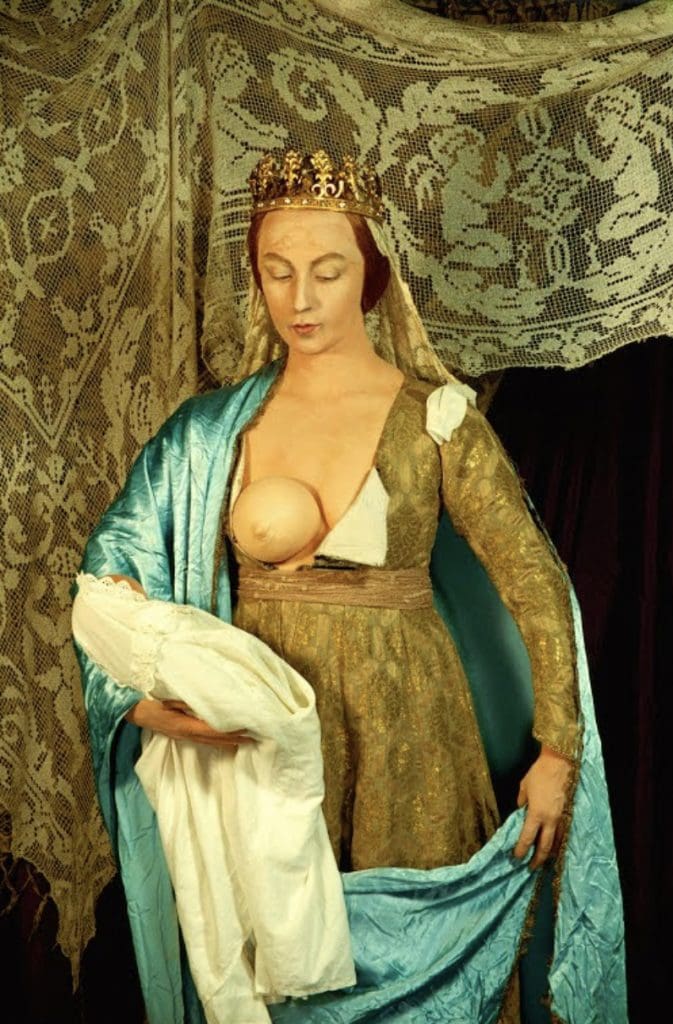
Fig. 1. Cindy Sherman, Untitled #216, 1989, chromogenic print, 221.3 × 142.5 cm.
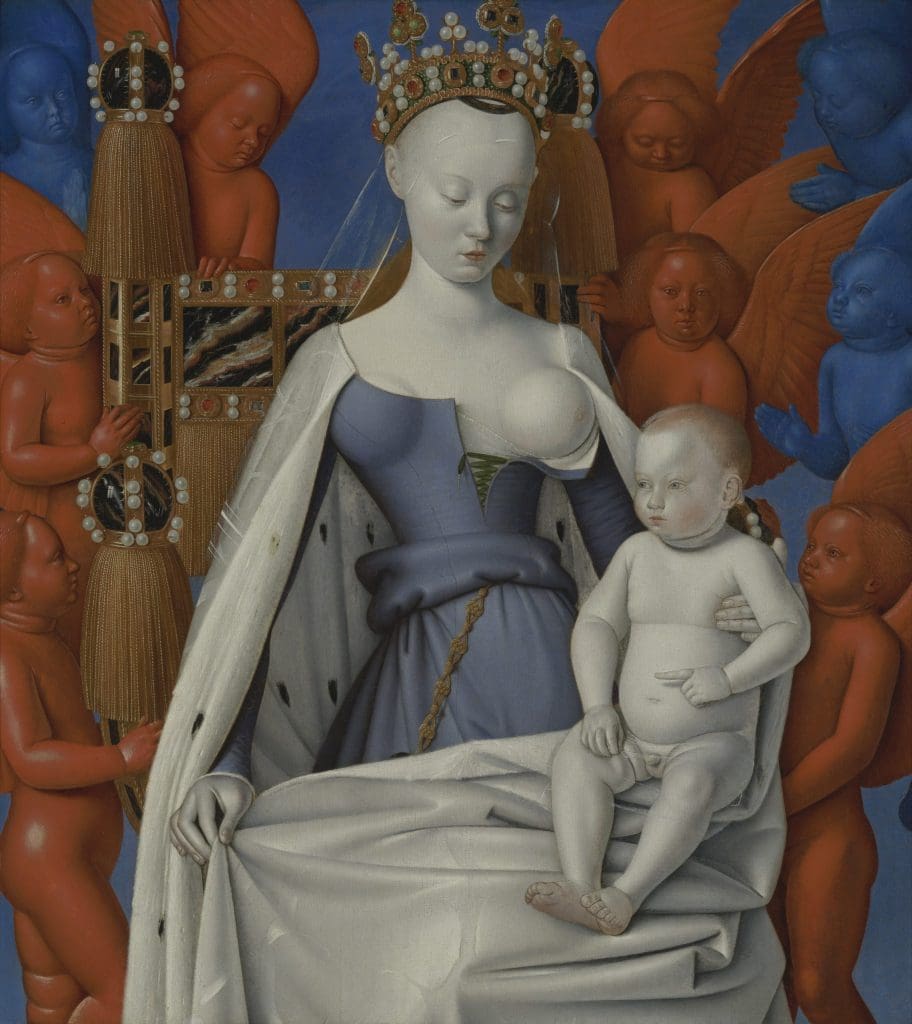
Fig. 2. Jean Fouquet, Madonna Surrounded by Seraphim and Cherubim (right panel of the Melun Diptych), ca. 1455, oil on panel, 92 x 83.5 cm. Antwerp, Royal Museum of Fine Arts – Collection Flemish Community, inv. nr. 132, photo: Cedric Verhelst (public domain).
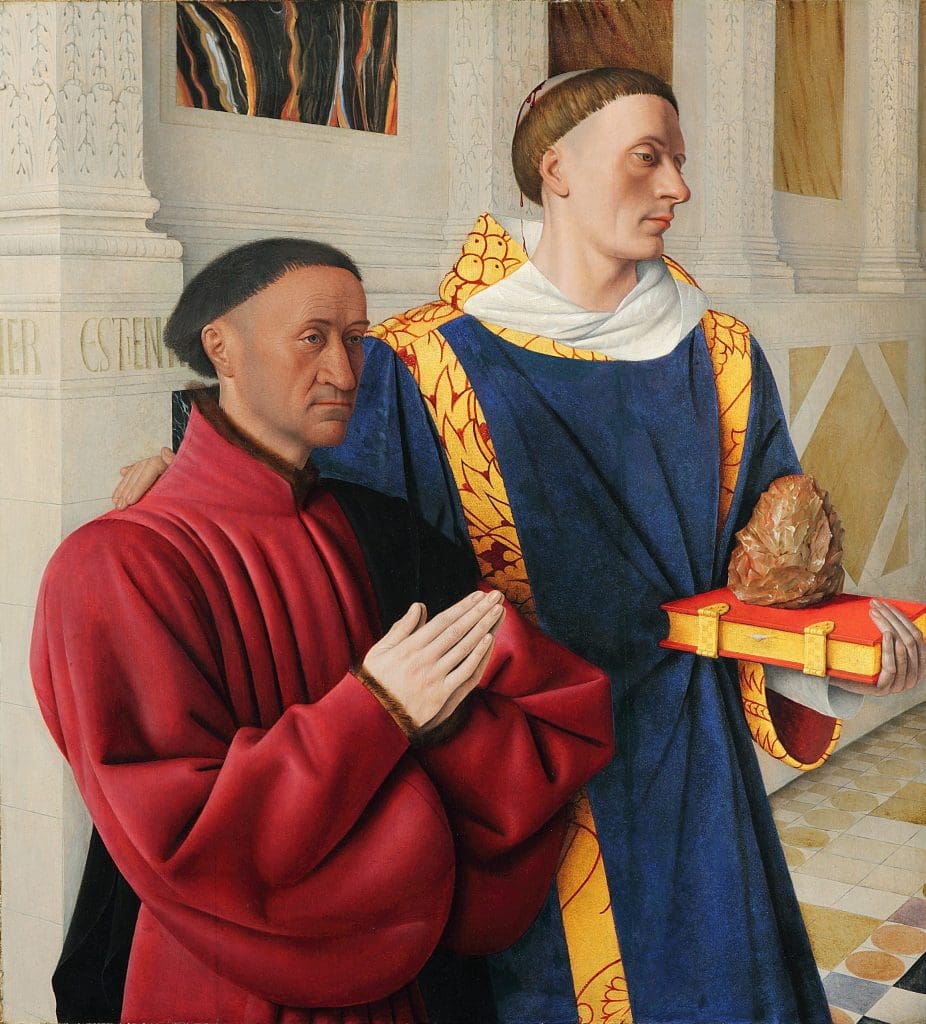
Fig. 3. Jean Fouquet, Étienne Chevalier with St. Stephen (left panel of the Melun Diptych), ca. 1455, oil on panel, 94 x 85.4 cm. Berlin, Gemäldegalerie, Staatliche Museen zu Berlin, inv. nr.1617, bpk / Gemäldegalerie, SMB / Christoph Schmidt.
Sherman’s hybrid and artificial composition of body, plastic, and rubber does not so much depart from the source image, as emphasize and aggrandize certain aspects of it. Art historians have commented on the artificiality of Fouquet’s Madonna, in particular of her bare breast, which has evoked many comparisons; Stephan Kemperdick calls it “round as a billiard ball”,[1] while Sherman herself compared it to a grapefruit.[2] Moreover, her white skin has been interpreted as not so much resembling a living person, but rather a statue made out of marble or enamel.[3] Bringing Sherman’s Untitled #216 in dialogue with its model image, Jutta Sperling has argued that “Fouquet’s Virgin not only looks like a statue, it is meant to be a statue” – and statues of Mary were, in medieval culture, potentially living images that could move or lactate.[4] The popular Flemish motif of the Madonna with one bare breast, usually referred to as Madonna lactans (Nursing Madonna), is connected to representations of the lactatio Bernardi, a miracle in which saint Bernard of Clairvaux received milk from the breast of a statue of the Virgin that had come to life.[5] Devotees could hope for a similar blessing. The Madonna lactans has been interpreted as referring to Mary’s intercessory role in the history of salvation with reference to the Eucharist, her milk parallel with Christ’s blood.[6] Brigitte Kurmann-Schwartz has argued that Étienne Chevalier, treasurer to Charles VII of France, who commissioned the diptych for the collegiate church of Notre-Dame in Melun where he and his wife were to be buried, chose the iconography of Mary’s bare breast to request intercession for the salvation of his soul.[7] Sperling, on the other hand, reacts against the idea that Fouquet’s Madonna would have allowed for serious contemplation. The lack of lifelikeness and of milk coming from the Virgin’s breast in Fouquet’s painting suggest in her analysis a “refusal to come to life”,[8] displaying “a camp-like sensibility that Sherman’s Untitled #216 ingeniously captures and restages”.[9]
In this article, I build both on Sperling’s dialogue between Fouquet’s Madonna and Cindy Sherman’s play with artificiality and on Kurmann-Schwartz’s historicizing interpretation focused on salvation to arrive at a new interpretation of the painting and of the medieval living image. Making use of theories from the field of new materialism and of Joseph Beuys’s notion of social sculpture, I will argue that the Melun Diptych does hold a potential for life and animation, although not life in the sense of projecting human-like qualities on inert matter but rather as entanglement of bodies and stone. The painting’s playfulness, pointed out by Sperling, does not preclude a serious function, if we understand art as performance and transformation in a process that is fundamentally about the individual relating to others, the world, and to God. A comparison with Sherman’s reinterpretation and with late medieval images of the lactatio Bernardi indicates that the heightened artificiality of Fouquet’s Madonna is a unique way of presenting entanglement as something still to be achieved.
Animation and entanglement
Traditionally, animation is seen as a projection of human-like qualities on inert matter. Anthropologists such as Tim Ingold and Graham Harvey propose a different perspective; animation is in their view the acknowledgment that the world is full of beings who are in constant relationships with each other.[10] Life and animacy are not properties of beings, but “the dynamic, transformative potential of the entire field of relations within which beings of all kinds, more or less person-like or thing-like, continually and reciprocally bring one another into existence.”[11] Ingold follows the view of Deleuze and Guattari that the essential relation of the living world is one between materials and forces.[12] Moreover, he builds on Heidegger’s distinction between things and objects: while objects are finished and fixed, things keep unfolding and becoming, “do not exist so much as carry on”.[13] A thing is alive and in constant relationship with the environment. Both people and things are, in the words of archeologist Joshua Pollard, “processes, brought into being through production, embroiled in ongoing social projects, and requiring attentive engagement”.[14] The life of the thing is in these dynamic relationships, in the entanglement with other beings in the world.
Such new materialist perspectives resonate with recent insights in medieval art and materiality.[15] Caroline Walker Bynum has written a fundamental study on what she calls ‘Christian materiality’, arguing that throughout the medieval period, matter was spoken about as “organic, fertile, and in some sense alive.”[16] As the locus of transformation, it could both threaten and enable salvation.[17] Recently, Hans Henrik Lohfert Jørgensen, Laura Katrine Skinnebach, and Henning Laugerud have shown how in medieval animation “various bodies, thinghoods and personhoods intermingle and interchange” — these things and persons being fundamentally interwoven.[18] Bodies and matter were not confined entities, but permeable and open to be affected by others, as part of a relational ontology in which life circulates between interacting persons and things.[19] This relational view of medieval animation results in an understanding of life as being in a liminal condition of motion, transformation, and in between seemingly opposite states.[20]
A new materialist understanding of animation as entanglement highlights certain aspects of the Melun Diptych. The surfaces of both panels are almost entirely covered with bodies (human and angelic) and their clothes, and with man-made surfaces and objects, composed mainly of stone: the marble interior on the left panel, and the lavishly decorated throne with pearls, marble, and gems on the right. In terms of materiality, the two panels function as each other’s negatives. The two human bodies in the middle of the left panel find their parallel in the bodies of the angels that form the background of the right panel, a parallel that is visually highlighted through the correspondence of the colours red and blue. This might suggest that the two men will join the angels in the heavenly sphere – St. Stephen, wearing blue, which is also the colour of heaven on the right, has already done so through his martyrdom, while Étienne Chevalier still has to achieve salvation. The marble quality of Mary and the Christ Child in the middle of the right panel, and the marble on the throne, are paralleled in the marble architecture that forms that background of the left panel. It is not entirely clear what kind of space is depicted here. If it is a church (the setting for which the diptych was made), the correspondence in materiality could point to Mary’s role as Ecclesia and thus her embodiment of the Christian community on earth.
The correspondences between bodies and stone foreground the relations between living, non-living and eternally living beings and things and the potential to shift between the earthly and heavenly realms through this entanglement. On the left panel, one stone stands out, as its rough surface contrasts with the smooth marble: the rock of St. Stephen, the attribute pointing to his martyr death by stoning. Here, we have a thing that has affected and transformed a person: the stone has caused the martyr’s earthly death, but also led to his eternal life in heaven. The blood, dripping from Stephen’s head and visible as remnant on the stone, can be seen as representing the transformative flow of life/death between person and thing. On the right panel, the nursing Madonna provides a parallel to this blood: milk that could flow from her breast, giving life to the Christ Child and, potentially, eternal life through salvation to the devotee.
Thus, the Melun Diptych does not only present horizontal relations between persons and things in this world; there is also a vertical connection with the divine realm. The medieval notion of animation departs from new materialist views because of the centrality of God as “supreme agent and ultimate animator”; all created beings are in a horizontal relationship with each other because of their shared vertical relationship with their divine creator.[21] As Mads Vedel Heilskov argues, through interactions between human, material, and divine actors, ontological boundaries became fluid and “an interface between the otherworldly realm of the divine and the physical world of humans was created, allowing them to slip into each other’s reality.”[22]
The Melun Diptych expresses horizontal and vertical relationships through Mary’s milk – which has not materialized yet. Lactation is an instance of biological animation (“organic life in the corporeal image”), as defined by Jørgensen et al.[23] It involves inorganic images that perform functions that we usually ascribe to organic beings: transformation, growth, movement, speech, and the effusion of liquids such as blood, sweat, tears, milk, and oil. Jørgensen explains the effect of a flow between devotee and image: “Power and agency were exchanged and moved back and forth. Worshippers did something to the image, and it did something to them […]. Like people, things live in full flow.”[24] Mary’s milk does not only forge a relationship with the image, but also with the divine realm. Here I follow Jérémie Koering’s work in the history of ‘ingesting images’, who argues that ingestion serves two functions: it establishes a horizontal relationship, embedding the consumer of the image (in our case not the images itself, but liquid potentially provided by an image) in a community, and it establishes a vertical relationship between viewer and the power of the entity represented by the image (in our case Mary), usually aimed at healing or protection.[25] The milk, if received, provides salvation but it also transforms the receiver and hence their relation to the world.
In the following, I will supplement insights gained from new materialism with the concept of ‘social sculpture’ as developed by Joseph Beuys. Victoria Walters has already pointed out the connections between Beuys’s thought and that of anthropologists working on notions of materiality, such as Tim Ingold.[26] A notable difference is that the vertical relationship with God is an integral part of Beuys’s understanding of art. His thought also involves a binary opposition between living and non-living materials, which can aid our interpretation of the interplay between body and stone in the Melun Diptych.
Social sculpture
Belonging to the avant-garde of performance art, Joseph Beuys (1921—1986) developed an expanded concept of art as ‘social sculpture’ that is not about fixed forms, but about process and transformation. In his own artistic practice this involved performances, actions, and demonstrations, but also the creation of material artworks, which were not to be seen as finished, static end products, but were characterized by a “plastic temporality”.[27] Beuys reacted against the modern sculpture of his time, which he perceived as too static and impermeable.[28] His concern was “for the transformation of substance, rather than the traditional aesthetic understanding of beautiful appearances.”[29] The consequence of this expanded notion of art was that every human being could be an artist, as “every person continually performs material processes.”[30] These material processes include the formation of relationships with others, with society, and with the environment.
The Christian tradition strongly informed his art theory.[31] The Incarnation, the joining of divine and human natures, was Beuys’s model for the way in which the material world can be used as embodiment of ideas.[32] Following the anthroposophical ideas of Rudolf Steiner, his notion of human creativity was pinned on the Christian God as creator of the universe who brought order into chaos.[33] Beuys equated God with creativity, meaning that everyone engaging in creativity or transformation is performing divine acts. This combination of a vertical axis (creativity connects the individual to God) and a horizontal axis (transformation of the self is connected to the transformation of society) is similar to ideas that were expressed in medieval theological thought on creation.[34]
To symbolize transformation and change, Beuys often worked with malleable and decayable materials such as clay, fat, and beeswax, which visibly undergo transformations as they are always in flux through interaction with their environment: “chemical reactions, fermentations, colour changes, decay, drying up. Everything is in a state of change.”[35] Change and movement could also be visualized by means of materials that are fluid and flowing, like the honey in his ‘Honey Pump’ installation.[36] Central to Beuys’s theory of sculpture is a set of fundamental polarities: chaotic material and ordered form, with ‘sculptural movement’ or creativity as transforming force between the two poles:
| chaos | order | |
| undetermined | determined | |
| organic | movement | crystalline |
| warm | cold | |
| expansion | contraction.[37] |
Considering the Melun Diptych as a social sculpture, an interpretation of the work should not only focus on what is depicted on the panels, but also on its performative aspects: how can the actions of the devotee with, around, and in relation to the work be understood as part of the creative, transformative process? Although Fouquet’s Madonna might seem artificial and static, the Melun Diptych is a dynamic object meant to be interacted with. The panels could be opened and closed; the left panel had a now-lost painting on the outside, indicating that this panel would have been moved to cover and uncover the Madonna.[38] When the two panels were closed, just like Étienne Chevalier’s hands and St. Stephen’s book are closed, the mouth of the commissioner would be pressed against the Madonna’s breast (and his praying hands against her womb), creating an invisible nursing scene.[39] Roland Krischel has pointed out the parallel with a bifolio from Étienne Chevalier’s Book of Hours, also painted by Jean Fouquet, in which the book owner and his patron saint Stephen, similarly holding a stone, pray in front of the enthroned Madonna lactans, accompanied by angels in an architectural setting. Closing the book, Mary would hold Stephen’s stone in her hand, while the saint would hold the Christ Child.[40] In Krischel’s interpretation, this exchange of stone and child refers to Peter calling Jesus a ‘living stone’, encouraging gentiles to imitate this role and transform themselves into living stones to build a spiritual house and attain salvation (1 Peter 2:1-6). Krischel extends this interpretation to the Melun Diptych, where Étienne’s spiritual nourishment with Mary’s milk through the closing of the diptych is meant to turn him into such as living stone. The painting and the devotional process around it are part of a process of social sculpture, in which material processes are connected to spiritual transformation.
The painting does not present this spiritual transformation of its commissioner as something already accomplished. Étienne has to work for it, just like his painted visage has to move towards Mary’s breast on the opposing panel, and devotionally interacting with the diptych is part of this work. Fouquet expresses the gap that has to be bridged with material polarities, similar to Beuys’s two sets. Madonna seems cold and out of reach, while Étienne’s body is the site of change, the one that can move and transform. Mary’s promise of milk when the diptych is closed suggests a willingness to come into the temporal world and enter into a relationship, but this requires movement and transformation on the part of the devotee. The unique way in which this entanglement as not-yet-achieved is visualized will become clearer when we compare the diptych to contemporary depictions of the lactatio Bernardi. By first returning to Cindy Sherman’s work, I will show how entanglement can be presented through the creation of a hybrid of a tableau vivant and a tableau non-vivant. Then, I will argue that many late medieval representations of the lactation miracle employ a similar visual strategy, from which the Melun Diptych departs.
Cindy Sherman’s hybrid creations
Sherman’s work has proven to be open to a wide range of theoretical readings, which are often focused on the gendered, feminist, and identity aspects of her work.[41] Sherman’s Untitled #216 can also be understood as social sculpture relating the human being to its environment. This become clear when analysing how she has referenced and transformed Jean Fouquet’s Madonna Surrounded by Seraphim and Cherubim. I make use of the vocabulary of ‘art quotation’ developed by Nina Heydemann, who discusses modes of representation in which elements of the original image are transformed through a strategy of substitution, of addition or subtraction, or of multiplication, division, or combination.[42]
Sherman has made use of a strategy of substitution, here of figures. According to Heydemann’s model, the substituted figure can be either replaced with a living or a substitute body, resulting in a living image in a ‘tableau vivant’ or in an image using lifeless material in a ‘tableau non-vivant’, respectively.[43] The History Portraits present hybrids of the two. In Untitled #216, Sherman uses her own living body but adds a prosthetic breast, while the Christ Child is replaced with a doll, one that is much smaller than the original child and wrapped in cloth. Mary’s throne and the red and blue angels are substituted with a curtain with an angel motif. Sherman’s material substitutions play with our perception of the medium. The original oil painting is replaced with a photograph, but its large format makes it reminiscent of a painting.[44] The cheap fabrics she uses “[a]t first glance [seem to be] brocade, silk, damask, lace, and velvet, look sumptuous and evoke a general ‘Old Master’ era”.[45] As Birgit Käufer notes, “[t]he individual layers of make-up imitate the processes of illusionistic painting, which uses light and shadow effects to model a physiognomy and create the illusion of natural flesh.”[46] Thus, every element in the photograph is ambiguous in terms of medium and materiality, being one thing but representing another in a complex play of quotation, substitution, and artificiality.
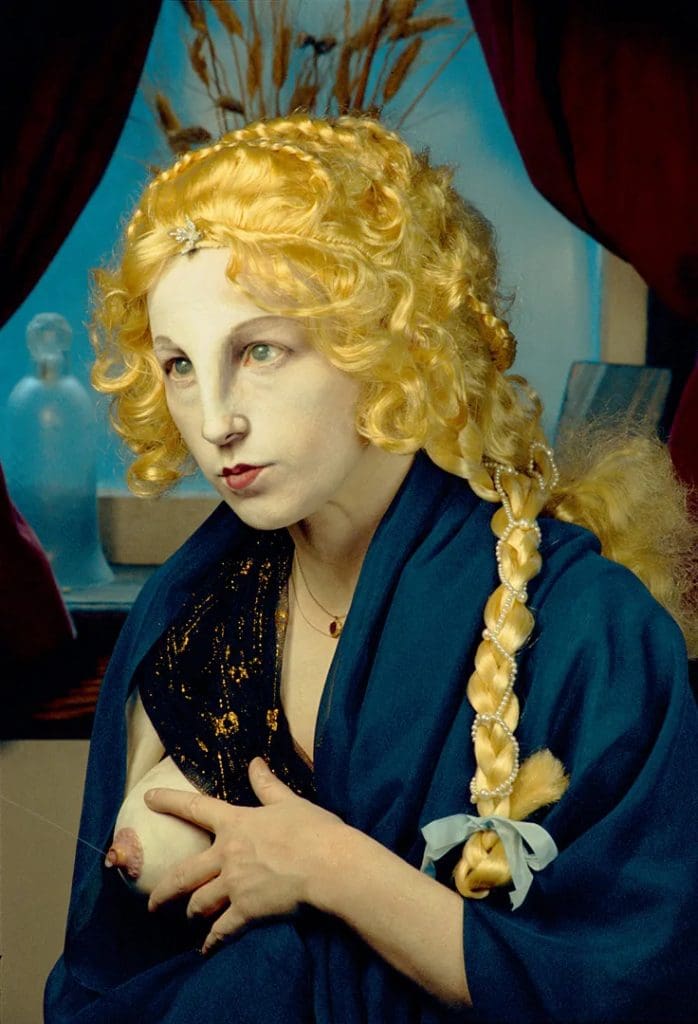
Fig. 4. Cindy Sherman, Untitled #225, 1990, chromogenic print, 121.9 x 83.8 cm.
In this theatrical play with materiality, a hybrid image is created in which the artificial and organic are intermingled. Sherman plays with the two categories of materials that Beuys defines as chaotic and ordered: the ‘warm’ body and decayable bodily fluids, and the static, artificial materials that stand in stark contrast to this organic matter. Through this disparity the properties of both — living and non-living — are highlighted, but at the same time they are blurred in the collage of prosthetic parts attached to a living body. Biological animation is suggested and sometimes visualized: while Sherman’s fake breast in Untitled #216, just like Fouquet’s original, does not effuse milk, other photographs with prosthetic breasts in the series do. A drop of liquid dangles from the artificial nipple in Untitled #225 (Fig. 4), based on a portrait by Sandro Botticelli.[47] In Untitled #223 (Fig. 5), Sherman again performs as the Virgin Mary, in this case nursing a doll with its plastic mouth on her artificial nipple, giving the impression that milk flows from her living body into the plastic child. Bringing the artificial to life, the artist’s body becomes, simultaneously, less organic and more artificial.
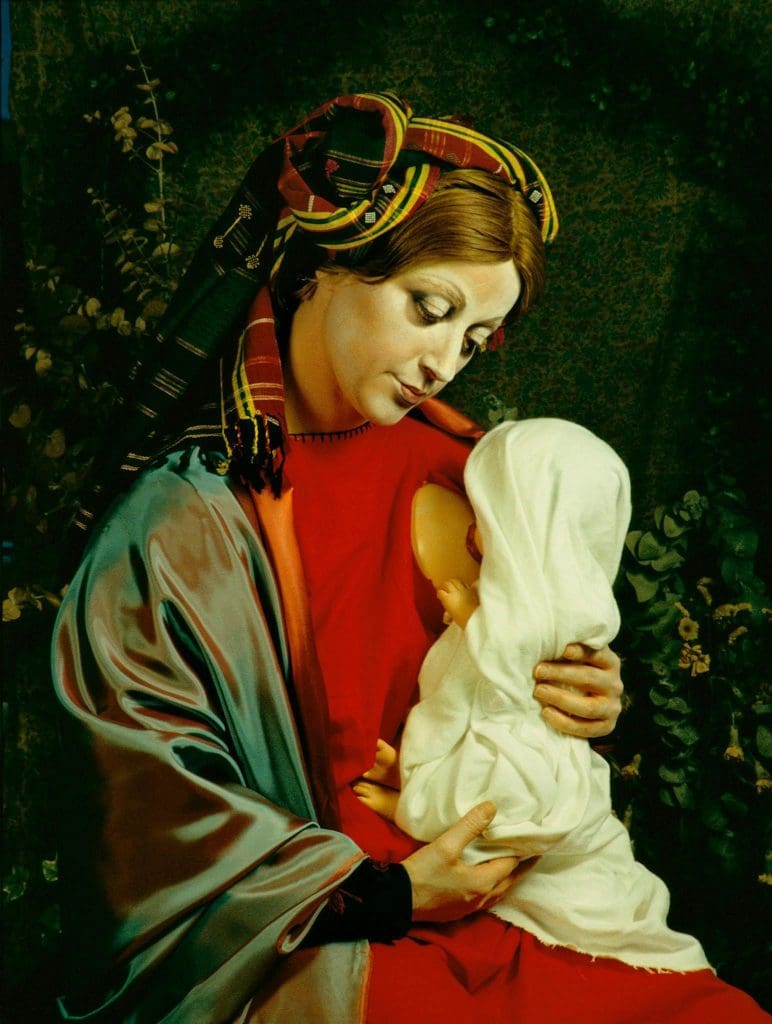
Fig. 5. Cindy Sherman, Untitled #223, 1990, chromogenic print, 146.1 x 105.4 cm.
The late medieval lactatio Bernardi
Both the flow of milk and a play with materiality were ways in which medieval images and stories about images coming to life expressed horizontal and vertical relationships. Several miracle stories involve sculptures and icons of the Virgin Mary that lactate milk or oil. In one case, the breast of a pilgrimage icon of Mary in Syria is described as turning into flesh — a clear case of biological animation.[48] For the West, exempla about images exuding effluvia are collected in the Dialogus Miraculorum, written by Caesarius of Heisterbach in the first half of the thirteenth century, and other collections of miracle tales.[49] Moreover, mystical and visionary experiences of lactation were recorded.[50] The most widespread miracle story of a lactating statue of Mary is the lactatio Bernardi. Stories about the healing powers of Mary’s milk received by devotees — mostly men — already circulated, elements of which became attached to the twelfth-century saint.[51] The earliest textual record of the lactatio Bernardi is found in the exemplum collection Ci nous dit (1313-1330).[52] Feeling unworthy to preach before the bishop of Chalon as he is instructed to do by his abbot, Bernard prays to Mary for help. Subsequently, in a dream vision the Virgin places her breast in his mouth, turning him into a gifted preacher. It is a story of movement and flow: milk streams from Mary’s breast into Bernard’s mouth, causing mellifluous words to flow from his mouth in turn. The flow of milk represents an exchange and distribution of power. In a Norse version, Mary’s milk quenches Bernard’s physical thirst, while a third version narrates how Bernard kneels before a statue of Mary contemplating the mysteries of the Incarnation and Mary’s motherhood.[53] As he meditates on the Marian hymn Ave Maris Stella and arrives at the fourth verse, “Monstra te esse matrem” (Show us that you are our mother), the statue comes to life and Mary squeezes three drops of milk from her breast into Bernard’s mouth. Interestingly, one of the miracle stories concerns a dream vision of Mary, while the other two involve material statues coming to life. There seems to have been a fluid continuity between the two types of phenomena; exemplum collections like the Dialogus Miraculorum do not distinguish between physically animated images and visionary images.[54]
Ambiguity about materiality also pops up in the iconography around the lactation. In the depiction of another Bernardian mircacle, the amplexus Bernardi in which Christ bends down from the cross to embrace Bernard, the textual sources on which the iconography was based mention an immaterial apparition, while many illustrations clearly depict an animated material image.[55] The lactatio has followed a different trajectory; the earliest source is a visual representations from late-thirteenth-century Catalonia, predating the three fourteenth-century literary records mentioned above.[56] It became a popular motif in late medieval art, mainly in panel painting, manuscript illumination and printed images. The iconography flourished after 1475 in the Low Countries.[57] While most depictions show Mary as a person in the flesh, rather a vision than a statue, other representations depict a material image of Mary coming to life.[58] The medium of these represented images varies. Some illustrations of the miracle depict a two-dimensional image, such as a miniature in a Latin Book of Hours from Ghent or Bruges, dated ca. 1500, where Bernard kneels not before a statue but a painted altarpiece of Virgin and Child.[59] From the two-dimensional plane, three jets of milk are sent in Bernard’s direction. The lactating Mary as two-dimensional image is also depicted in several printed images.[60] On a Spanish painting from the late fifteenth century by the Master of Castellnovo, a jet of milk comes from a small painting of Mary and Child hanging on the wall.[61]
Other depictions of the scene suggest that the three-dimensional lactating Mary might be a material statue by placing her on an altar or in an altar-like setting (Fig. 6),[62] an impression that is in some cases strengthened by the smaller scale of Mary.[63] In a miniature from a prayer book probably made in Brussels, ca. 1520–1530 (Fig. 7), Bernard kneels before a painted statue of the Virgin and Child standing on a console against the wall.[64] While these illustrations make a distinction between the human Bernard and the sculpted Virgin, other depictions give Bernard a sculpture-like quality as well. Two retables painted by Jean Bellegambe in the early sixteenth century present the lactatio in grisaille, emphasizing the sculptural quality of both Bernard and Mary (Fig. 8).[65] There are also depictions of the lactatio that are three-dimensional sculptures themselves, again making no distinction between the two figures (Fig. 9).[66] We can look at these cases through the lens of Sherman’s tableaux vivants/non-vivants. While Sherman turns Fouquet’s Madonna into a combination of body and lifeless material, here a body and a statue are made equal in terms of materiality. This highlights the ambiguity of the biologically animated image and stresses the entanglement between person and statue.
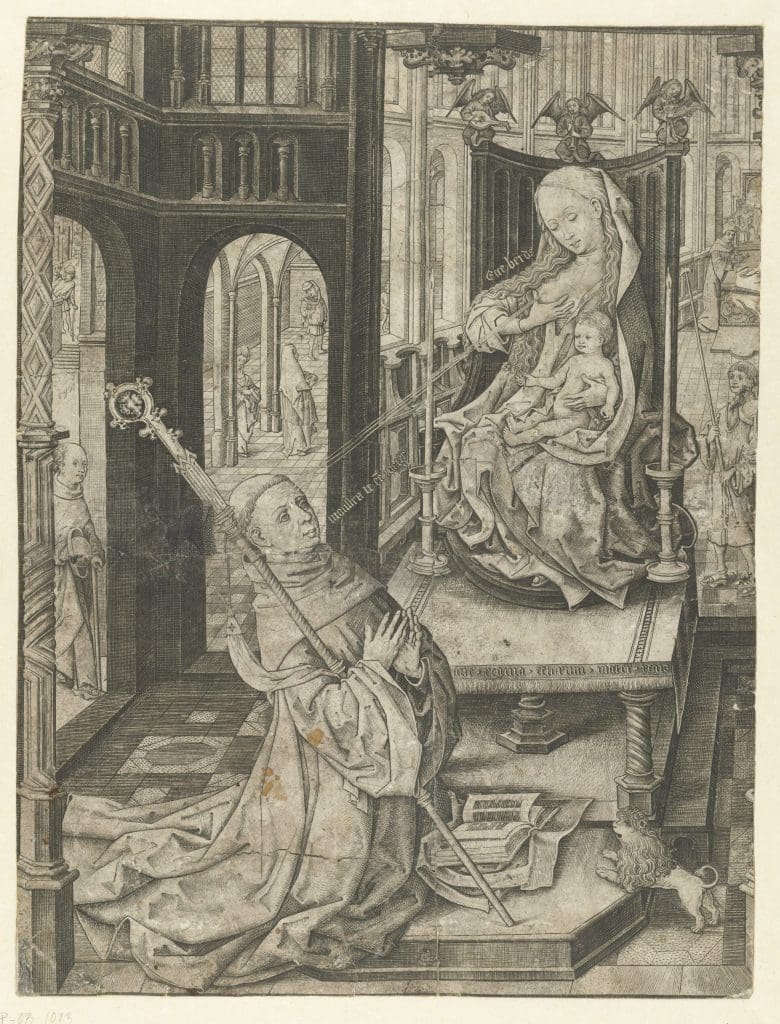
Fig. 6. Lactatio Bernardi, Meester IAM of Zwolle, 1470–1485, engraving, 32 x 24.1 cm. Amsterdam, Rijksmuseum, obj. nr. RP-P-OB-1093, public domain.
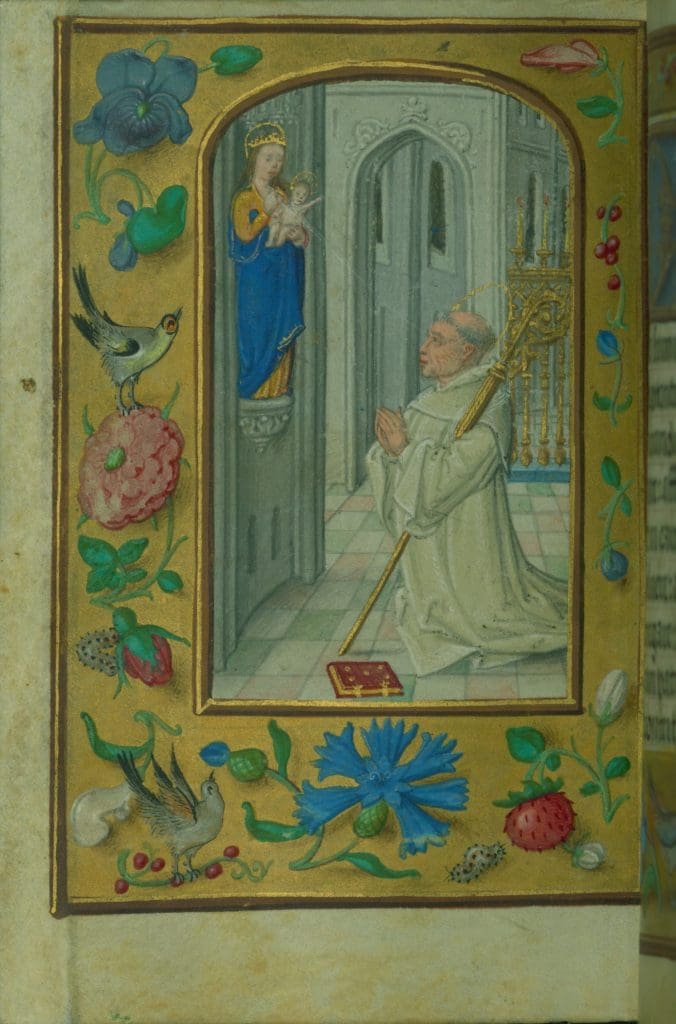
Fig. 7. Lactatio Bernardi in a Prayer Book , in the style of the Master of Charles V, ca. 1520–1530, likely made in Brussels. Baltimore, Walters Art Museum, MS W.425, fol. 30v. Licensed for use under Creative Commons Attribution-ShareAlike 3.0 Unported Access Rights, http://creativecommons.org/licenses/by-sa/3.0/legalcode.
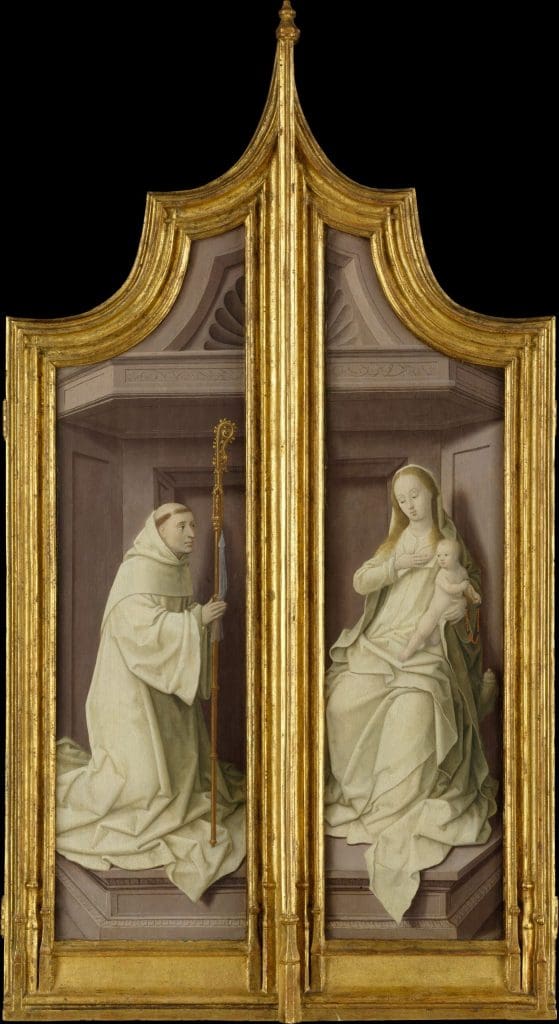
Fig. 8. Lactatio Bernardi on the exterior wings of the Cellier Altarpiece by Jean Bellegambe, 1511–1512, oil on panel, 95.9 x 25.4 and 95.3 x 24.1 cm. New York, The Met, acc. nr. 32.100.102.
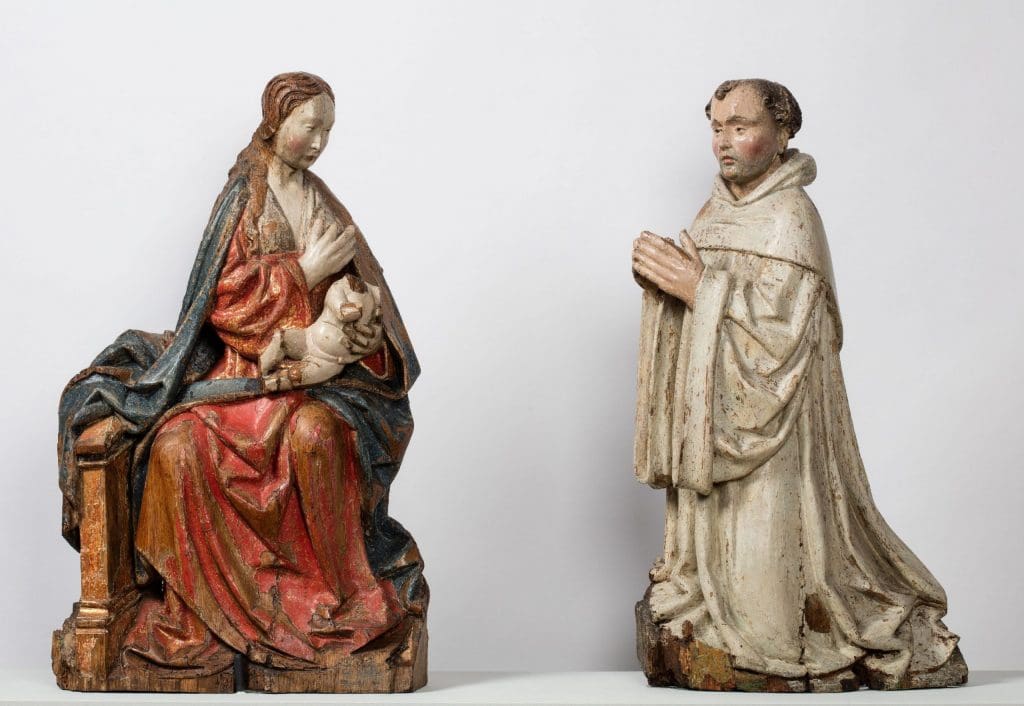
Fig. 9. Lactatio Bernardi, Namur, ca. 1490–1520, polychromed wood, 57 x 34 cm and 57 x 30 cm. Namur, TreM.a – Musée des Arts anciens du Namurois, photo CC BY 4.0 KIK-IRPA, Brussels.
The Melun Diptych as social sculpture
Both Cindy Sherman’s photographic tableaux vivants/non-vivants and images of the lactatio Bernardi play with the boundaries and distinctions between living and non-living matter to present persons and things that are entangled and thus, in a new materialist understanding, alive. Bernard’s Mary has already come to life for him. The Melun Diptych has adopted a different visual strategy. Fouquet’s Madonna looks like a sculpture, but not the limewood or wooden sculptures that are often depicted in scenes of the lactatio Bernardi. Her enamel or marble appearance, reflected in the pearls and stones of her throne and crown and in the marble interior on the left panel, heightens her artificiality. When the diptych is open, the distinction between her artificial materiality and the organic body of the praying commissioner of the portrait is not dissolved; they clearly belong in different realms. Contrast and exaggeration of artificiality function to present something that has not yet been fulfilled, but holds potential: Étienne Chevalier is moving closer to heaven by praying and becoming a spiritual cornerstone; Mary has exposed her breast to exude an organic flow of life. But this potential is not yet reached. Opening and closing the diptych and praying in front of it, Étienne has to work with both material and spiritual means to co-create the hoped for result of salvation as an artist in a process of social sculpture.
Salvation, the vertical relationship with the divine realm, is not the only goal of the devotional process. A comparison with the lactatio Bernardi can, again, be of aid here. A miniature depicting the lactatio in a Middle Dutch Book of Hours from the northern Low Countries, dated ca. 1470 (Fig. 10), contains text banderoles that elucidate how animation could be understood as power flowing between different entities.[67] As was common in the iconography, a text scroll below Bernard gives the Latin text of the Marian hymn: “Monstra te esse matrem”. Uniquely, there is another banderole flowing from his mouth, with the inscription “Cur tuo lacte pio madidas mea guttera virgo” (O Virgin, why does your milk totally overwhelm my throat?). Mary’s reply is given in her banderole: “Omnibus ut populis lactea verba carnas” (So that the whole world may sing words like sweetened milk). Just like in the preaching story, the milk flowing from the statue to Bernard is in turn spread further — not only from Bernard’s mouth, but from the entire singing world. This idea resonates with the reference to Peter’s living stone that can be seen in the Melun Diptych. Étienne works not only for his own salvation, but also for the Christian community. Part of this transformation is how he relates to others in the created world.
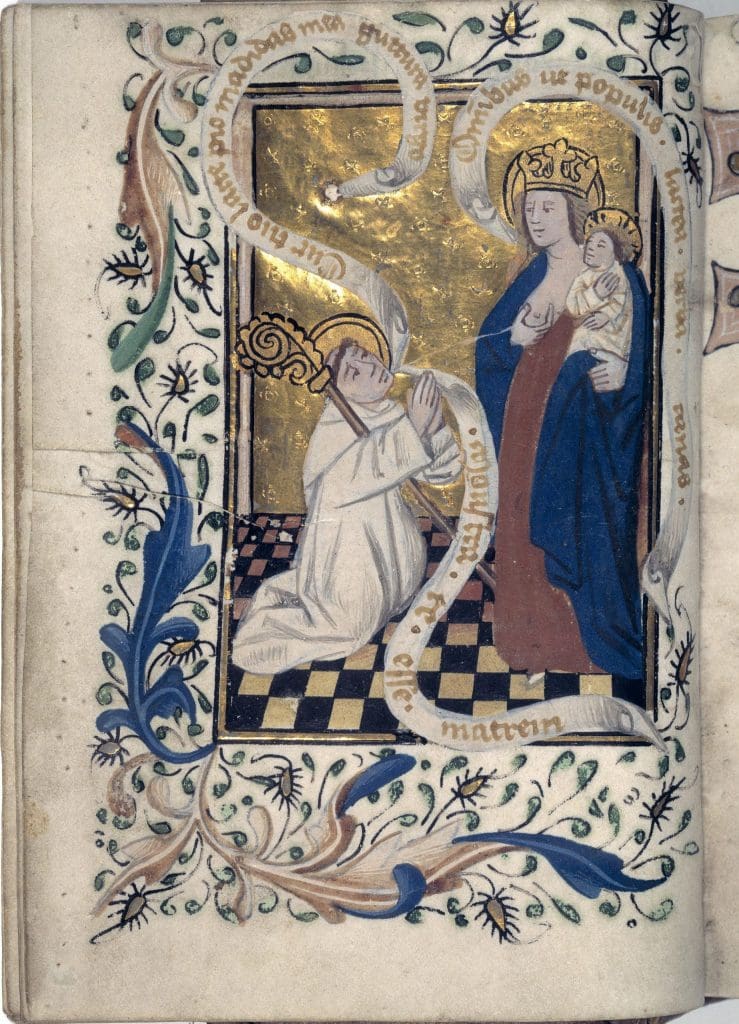
Fig. 10. Lactatio Bernardi in a Middle Dutch Book of Hours by the Master of the Boston City of God, ca. 1470. Utrecht, Museum Catharijneconvent, ABM h19, fol. 16v photo Ruben de Heer.
Fouquet has painted a Madonna lactans as an animated statue whose milk, by closing the diptych, is to be received by Étienne Chevalier. This animation should not be understood in the traditional sense of an image becoming like a person and moving or speaking to the devotee. Rather, the life of the image is in the capacity to affect and be affected by others. This type of engagement with a statue is a creative practice as defined by Joseph Beuys: a transformative formation of relationships with the environment and the divine.
I thank the anonymous reviewers for their helpful comments. This article results from a research project funded by the Research Foundation – Flanders (FWO), file number 12R5922N. Preliminary findings were presented at the seminar ‘Res Ludens – The Playing Thing: Towards a Post-Anthropocentric Ontology of Play’, organized by the research group ‘Ludic Middle Ages: Games, Play, Animation’ at Aarhus University, 3 May 2024. I thank the organizers and participants for the fruitful exchange.
References
| ↑1 | Stephan Kemperdick, “Foulquet le peintre: The Panel Painter Jean Fouquet and the Melun Diptych,” in Jean Fouquet: The Melun Diptych, ed. Stephan Kemperdick (Michael Imhof Verlag, 2018), 11. |
|---|---|
| ↑2 | David Brittain, “Cindy Sherman: How One Artist Learned to Stop Worrying and Love the Role,”Creative Camera 308 (1991), 38. |
| ↑3 | Albert Châtelet, “La Reine Blanche de Fouquet: Remarques sur le Diptyque de Melun,” in Études d’art français offertes à Charles Sterling, ed. Albert Châtelet and Nicole Reynaud (Presses universitaires de France, 1975), 129–133; Brigitte Kurmann-Schwarz, “Regina Angelorum et Misericordiae: Iconography and Iconographic Models of the Madonna in Fouquet’s Melun Diptych,” in Kemperdick, Jean Fouquet, 71–75; Jutta Sperling, “The Anachronic Madonna Lactans: Impersonations of the Nursing Virgin by Cindy Sherman, Catherine Opie, and Vanessa Beecroft,” Zeitschrift für Kunstgeschichte 84, no. 3 (2021): 417. https://doi.org/10.1515/ZKG-2021-3005. On the relation between Flemish painting and three-dimensional images, see also Jeffrey F. Hamburger, “Seeing and Believing: The Suspicion of Sight and the Authentication of Vision in Late Medieval Art,” in Imagination und Wirklichkeit: Zum Verhältnis von mentalen und realen Bilder in der Kunst der frühen Neuzeit, ed. Alessandro Nova and Klaus Krüger (Von Zabern, 2000), 51. According to seventeenth-century sources Fouquet modelled his Madonna on the King’s mistress Agnes Sorèl; see Thomas Kren, “The Melum Virgin, Agnès Sorel, and the Court of Charles VII,” in Kemperdick, Jean Fouquet. |
| ↑4 | Sperling, “Anachronic Madonna Lactans,” 418. |
| ↑5 | Dominique Rigaux, “Réflexions sur les usages apotropaïques de l’image peinte: Autour de quelques peintures murales novaraises du Quattrocento,” in L’image: Fonctions et usages des images dans l’Occident medieval: Actes du 6e ‘International Workshop on Medieval Societies,’ Centre Ettore Majorana (Erice, Sicile, 17–23 octobre 1992), ed. Jérôme Baschet and Jean-Claude Schmitt (Le Léopard d’or, 1996), 165–173; Jutta Sperling, “Squeezing, Squirting, Spilling Milk: The Lactation of Saint Bernard and the Flemish Madonna Lactans (ca. 1430–1530),” Renaissance Quarterly 71, no. 3 (2018): 871–872. https://doi.org/10.1086/699605. |
| ↑6 | Vibeke Olson, “Embodying the Saint: Mystical Visions, Maria Lactans and the Miracle of Mary’s Milk,” in Matter of Faith: An Interdisciplinary Study of Relics and Relic Veneration in the Medieval Period, ed. J. Robinson, L. de Beer, and A. Harndon (British Museum, 2014), 152–153. |
| ↑7 | Kurmann-Schwarz, “Regina Angelorum et Misericordiae,” 71, 76-80. See also Victor M. Schmidt, “Diptychs and Supplicants: Precedents and Contexts of Fifteenth-Century Devotional Diptychs,” in: Essays in Context: Unfolding the Netherlandish Diptych, ed. John Oliver Hand and Ron Spronk (Harvard University Art Museums, 2006), 20. We do not know whether the diptych was already placed in the church during his lifetime, or whether he kept it in his home and it was moved to the church after his death |
| ↑8 | Sperling, “Anachronic Madonna Lactans,” 419. |
| ↑9 | Sperling, “Anachronic Madonna Lactans,” 422. |
| ↑10 | Tim Ingold, “Rethinking the Animate, Re-Animating Thought,” Ethnos, 71, no. 1 (2006), https://doi.org/10.1080/00141840600603111; Graham Harvey, Animism: Respecting the Living World (Columbia University Press, 2006); Tim Ingold, “Bringing Things Back to Life: Creative Entanglements in a World of Materials,” NCRM Working Paper (University of Manchester, 2010); Graham Harvey, “We have always been animists . . .” in Earthly Things: Immanence, New Materialisms, and Planetary Thinking, ed. Karen Bray, Heather Eaton, and Whitney Bauman (Fordham University Press, 2023). https://doi.org/10.1515/9781531503086-006. |
| ↑11 | Ingold, “Rethinking the Animate,” 10. |
| ↑12 | Ingold, “Bringing Things to Life,” 2. |
| ↑13 | Tim Ingold, Making: Anthropology, Archaeology, Art and Architecture (Routledge, 2013), 94. https://doi.org/10.4324/9780203559055. |
| ↑14 | Joshua Pollard, “The Art of Decay and the Transformation of Substance,” in Substance, Memory, Display, ed. Colin Renfrew, Chris Gosden, and Elizabeth DeMarrais (McDonald Institute for Archaeological Research, 2004), 60. |
| ↑15 | Ingold’s view on living matter has been applied to religious statues by anthropologist of religion Amy Whitehead. She studies moments of “active relating” between humans and statues, which come about through “relationships, performances and the moment”: Amy R. Whitehead, Religious Statues and Personhood: Testing the Role of Materiality (Bloomsbury, 2013), 100; see also Amy R. Whitehead, “A Method of ‘Things’: A Relational Theory of Objects as Persons in Lived Religious Practice” Journal of Contemporary Religion 35, no. 2 (2020). https://doi.org/10.1080/13537903.2020.1759902; Amy R Whitehead, “Mary, Matter, Mother: Re-Thinking the Living Image through Animism and Materiality in Moments of Crisis, Ritual, and Devotion,” in The Living Image in the Middle Ages and Beyond: Theoretical and Historical Approaches, ed, Kamil Kopania, Henning Laugerud, and Zuzanna Sarnecka (Routledge, 2025), 71-86. |
| ↑16 | Caroline Walker Bynum, Christian Materiality: An Essay on Religion in Late Medieval Europe (Zone Books, 2011), 30. |
| ↑17 | Bynum, Christian Materiality, 35. |
| ↑18 | Hans Henrik Lohfert Jørgensen, Laura Katrine Skinnebach, and Henning Laugerud, Animation between Magic, Miracles and Mechanics: Principles of Life in Medieval Imagery (Aarhus University Press, 2023), 35–36. |
| ↑19 | Jørgensen et al., Animation, 252–253. |
| ↑20 | Jørgensen et al., Animation, 34. |
| ↑21 | Jørgensen et al., Animation, 36. |
| ↑22 | Mads Vedel Heilskov, “Living Matter in Medieval Denmark,” in Materiality and Religious Practice in Medieval Denmark, ed. Sarah Croix and Mads Vedel Heilskov (Brepols, 2021), 173. https://doi.org/10.1484/M.AS-EB.5.123989. |
| ↑23 | Jørgensen et al., Animation, 26. |
| ↑24 | Jørgensen et al., Animation, 92. |
| ↑25 | Jérémie Koering, Iconophages: A History of Ingesting Images, trans. Nicholas Huckle (Zone Books, 2024), 16–17. https://doi.org/10.1353/book.126583. |
| ↑26 | Victoria Walters, “Working ‘in the Opposite Direction’: Joseph Beuys in the Field, Anthropological Journal of European Cultures 19, no. 2 (2010): 36. https://doi.org/10.3167/ajec.2010.190203. |
| ↑27 | Arnd Wedemeyer, “Pumping Honey: Joseph Beuys at the Documenta 6,” in De/Constituting Wholes: Towards Partiality Without Parts, ed. Christoph F. E. Holzhey and Manuele Gragnolati, (Turia + Kant, 2017), 203. https://doi.org/10.37050/ci-11_09. |
| ↑28 | Wedemeyer, “Pumping Honey,” 178. |
| ↑29 | Joseph Beuys, Joseph Beuys: Transformer, video recording (Mystic Fire Video, 1998); quoted in Mark C. Taylor, Refiguring the Spiritual: Beuys, Barney, Turrell, Goldsworthy (Columbia University Press, 2012), 37. |
| ↑30 | Joseph Beuys in Volker Harlan, ed., What Is Art?: Conversation with Joseph Beuys (Clairview Books, 2004), 21. |
| ↑31 | On the Christian legacy in Beuys’s art, see Wouter Kotte and Ursula Mildner, Het Kruis als universeel teken bij Joseph Beuys (Hedendaagse Kunst, 1986), published in conjunction with an exhibition of the same title, organized by and presented at the Museum Hedendaagse Kunst in Utrecht, May 31–August 18, 1986; Karin Thomas, “Der frühe Beuys — gesehen aus den Koordinaten des Kreuzes,” in Joseph Beuys und das Mittelalter, ed. Hiltrud Westermann-Angerhausen in collaboration with Dagmar Täube (Schnütgen-Museum, 1997), published in conjunction with an exhibition of the same title, organized by the Schnütgen-Museum in Cologne, January 24–May 19, 1997; Jos H. Pouls, “Een half uur lang de heiligste plek in de Peel: ‘Aktion im Moor’ van Joseph Beuys,” Locus: Tijdschrift voor Cultuurwetenschappen 22 (2019). https://edu.nl/ftuq9. |
| ↑32 | Taylor, Refiguring the Spiritual, 40. |
| ↑33 | Taylor, Refiguring the Spiritual, 43; for parallels between medieval conceptions of divine versus human creativity and that of Beuys, see Andreas Speer, “Der erweiterte Kunstbegriff und das Mittelalterliche ‘Kunst’-Verständniss,” in Westermann-Angerhausen, Joseph Beuys und das Mittelalter; see also Gerald Schröder, “Figurationen und Stofflichkeit der Wunde: ‘Halbiertes Filzkreuz mit Staubbild Magda’ von Joseph Beuys,” in Religiöses Wissen im vormodernen Europa: Schöpfung, Mutterschaft, Passion, ed. Renate Dürr, Annette Gerok-Reiter, Anderas Holzem, and Steffen Patzold (Ferdinand Schöningh, 2019). |
| ↑34 | Bynum, Christian Materiality. |
| ↑35 | Joseph Beuys in John F. Moffit, Occultism in Avant-Garde Art: The Case of Joseph Beuys (UMI Research Press, 1988), 109. |
| ↑36 | David Adams, “From Queen Bee to Social Sculpture: The Artistic Alchemy of Joseph Beuys”, afterword to Bees, by Rudolf Steiner, trans. Thomas Braatz (Anthroposophic Press, 1998); Wedemeyer, “Pumping Honey”. |
| ↑37 | Caroline Tisdall, Joseph Beuys (Thames and Hudson, 1979), 44; see also Documenta 6, vol. 1, Malerei, Plastik, Performance(Paul Dierichs KG, 1977), 156. |
| ↑38 | Roland Krischel, “Lactatio Performed: The Kinetics of the Melun Diptych,” Wallraf-Richartz-Jahrbuch 85 (2024), 23-24. |
| ↑39 | This was previously noted by Monja K. Schünemann, “Stillende Andacht: (Un)sichtbare Klappeffekte in Jean Fouquets Diptychon von Melun,” Schlaufen Verlag (blog), February 21, 2022, https://schlaufen-verlag.de/blog/stillende-andacht, and Krischel, “Lactatio Performed”. |
| ↑40 | For a similar visual strategy in a Book of Hours, see Dafna Nissim, “The Kiss of the Lips: Spirituality and Exegesis to the Song of Songs in Laval’s Portrait Praying to Mary and the Infant, Perspectives: Revue de l’Université Hébraïque de Jérusalem 25 (2018). On parallels between books of hours and diptychs, see Andrea Pearson, Envisioning Gender in Burgundian Devotional Art, 1350–1530: Experience, Authority, Resistance (Ashgate 2005). |
| ↑41 | Laura Mulvey, “A Phantasmagoria of the Female Body: The Work of Cindy Sherman,” New Left Review 188, July–August 1991; Rosemary Betterton, “Promising Monsters: Pregnant Bodies, Artistic Subjectivity, and Maternal Imagination,” Hypatia 21, no. 1 (2006); Julie Morère, “Intericonicity in Disguise in Madame Yevonde’s Goddesses series and Cindy Sherman’s History Portraits/Old Masters,” E-Rea. Revue Électronique D’études Sur Le Monde <>Anglophone 13, no. 1 (2015). https://doi.org/10.4000/erea.4659; Sperling, “Anachronistic Maria Lactans”. |
| ↑42 | Nina Heydemann, “The Art of Quotation: Forms and Themes of the Art Quote, 1990-2010: An Essay,” in The Art of Reception, ed. Jacobus Bracker and Ann-Kathrin Hubrich (Cambridge Scholars Publishing, 2020), 12. |
| ↑43 | Heydemann, “Art of Quotation,” 16–24. |
| ↑44 | Hans Belting, Face and Mask: A Double History, trans. Thomas S. Hansen and Abby J. Hansen (Princeton University Press, 2017), 99. https://doi.org/10.1515/9780691244594. |
| ↑45 | Eva Respini, “Will the Real Cindy Sherman Please Stand Up?” in Cindy Sherman, published in conjunction with an exhibition of the same title, organized by and presented at the Museum of Modern Art, New York, February 26–June 11, 2012 (Hazan, 2012), 42. |
| ↑46 | “Die einzelnen Schichten der Schminke imitieren die Verfahren illusionistischer Malerei, die mit Hilfe von Licht- und Schatteneffekten eine Physiognomie modelliert und das Trugbild natürlichen Inkarnats schafft.” Birgit Käufer, Die Obsession der Puppe in der Fotografie: Hans Bellmer, Pierre Molinier, Cindy Sherman (Transcript, 2015), 213. |
| ↑47 | Christa Schneider, Cindy Sherman, History Portraits: The Rebirth of the Painting After the End of Painting (Schirmer, 2012), 47. |
| ↑48 | Hans Henrik Lohfert Jørgensen, “The Continuum of Animation: Naturalia, Mirabilia and Miracula,” in Jørgensen et al., Animation, 98. |
| ↑49 | Sperling, “Squeezing,” 871–872; Henning Laugerud, “The Miraculous Image: Visions, Rhetoric and Animation,” in Jørgensen et al., Animation, 188, 192. |
| ↑50 | Peter Dinzelbacher, “Religiöses Erleben vor bildender Kunst in autobiographischen und biographischen Zeugnissen des Hoch- und Spätmittelalters,” in Frömmigkeit im Mittelalter: Politisch-soziale Kontexte, visuelle Praxis, körperliche Ausdrucksformen, ed. Klaus Schreiner in collaboration with Marc Müntz (Fink, 2002), 307–310; Sperling, “Squeezing,” 874. |
| ↑51 | Léon Dewez and Albert Iterson, “La lactation de saint Bernard: Legende et iconographie,” Citeaux in de Nederlanden 7 (1956): 166–171; James France, Medieval Images of Saint Bernard of Clairvaux (Cistercian Publications, 2007), 206–209. |
| ↑52 | Gérard Blangez, ed., Ci nous dit, Recueil d’exemples moraux (Société des anciens textes français, 1979-1986), 2 vols. |
| ↑53 | France, Medieval Images, 216–217. |
| ↑54 | Anna Russakoff, Imagining the Miraculous: Miraculous Images of the Virgin Mary in French Illuminated Manuscripts, ca. 1250–ca. 1450 (Turnhout, 2019), 90; Henning Laugerud, “Visions and Miracles: Animation as a Total Cultural Fact,”in Jørgensen et al., Animation, 215. |
| ↑55 | Lieke Smits, “Van verschijning naar levende materie: De amplexus Bernardi in woord en beeld,” Vooys 40, no. 3 (2022). See also Alexa Sand, “Materia Meditandi: Haptic Perception and Some Parisian Ivories of the Virgin and Child, ca. 1300,” Different Visions: New Perspectives on Medieval Art 4 (2014). https://doi.org/10.61302/FBJV9093; Dagmar Preising, “‘Animated and Self-Acting Sculptures’: The Impact of ‘Animated’ Sculptures on ‘Self-acting’ Statues in Paintings and Prints,” paper presented at the 9th ARDS Annual Colloquium on Current Research in Medieval and Renaissance Sculpture, Louvain, November 7–9 2022, to be published in The Art of Devotion: The Agency of Sculpture: 9th Annual Ards Conference: Postprints (Brepols, forthcoming). |
| ↑56 | Dewez and Iterson, “Lactation,” 174–175; France, Medieval Images, 209–212. |
| ↑57 | France, Medieval Images, 209; see also the updated accompanying online catalogue: https://cistopedia.org/imagesofbernard/Imagefiles/index-lactatio.htm. Below I will refer to images in this catalogue with ‘cist. nr.’ and direct links. |
| ↑58 | Dewez and Iterson, “Lactation,” 181; Preising, “‘Animated and Self-Acting Sculptures’”. [1] France, Medieval Images, 218, cist. nr. MA361; |
| ↑59 | France, Medieval Images, 218, cist. nr. MA361. https://cistopedia.org/imagesofbernard/Imagefiles/00000232.htm. |
| ↑60 | Anonymous German woodcut from the late fifteenth century, cist. nr. EN06. https://cistopedia.org/imagesofbernard/Imagefiles/0000001a.htm; an almost identical mirrored version, also from late-fifteenth-century Germany, London, Lambeth Palace Library (ZZ)1494.6, cist. nr. EN66. https://cistopedia.org/imagesofbernard/Imagefiles/00000056.htm; an early sixteenth-century French woodcut from a Legenda aurea, workshop of Michel Angier, Lisbon, Biblioteca Nacional, BN Res 2625 P., fol. 146, cist. nr. EN26. https://cistopedia.org/imagesofbernard/Imagefiles/0000002e.htm; an engraving by Hans Holbein from the early sixteenth century, cist. nr. EN73. https://cistopedia.org/imagesofbernard/Imagefiles/0000005d.htm. |
| ↑61 | Perigueux Cathedral, cist. nr. PA83. https://cistopedia.org/imagesofbernard/Imagefiles/000002c2.htm. |
| ↑62 | E.g. a late fifteenth-century Netherlandish engraving by the Master IAM of Zwolle, Amsterdam, Rijksmuseum, RP-P-OB-1093, cist. nr. EN72. https://cistopedia.org/imagesofbernard/Imagefiles/0000005c.htm. |
| ↑63 | Retable of San Ildefonso in Osma Cathedral painted by the Master of Osma in c 1460, Burgo de Osma, Cathedral, cist. nr. PA129. https://cistopedia.org/imagesofbernard/Imagefiles/000002f0.htm; Retable of Our Lady of the Milk by the Master of Canapost from the Church of Sant Esteve de Canapost, second half of the fifteenth century, Girona, Museo Diocesano de Girona, Inv. MDG 293, cist. nr. PA34. https://cistopedia.org/imagesofbernard/Imagefiles/00000291.htm; Netherlandish oil painting from the early sixteenth century, Luebeck, St Anne Museum, IN 1960/1, cat. nr. PA19. https://cistopedia.org/imagesofbernard/Imagefiles/00000282.htm. On a similar development in depictions of the amplexus Bernardi, see Smits, “Van verschijning naar levende materie.” |
| ↑64 | Baltimore, Walters Art Gallery, MS W.425, fol. 30v, cist. nr. MA210. https://cistopedia.org/imagesofbernard/Imagefiles/0000019b.htm. |
| ↑65 | Retable of le Cellier, ca. 1509, commissioned by Abbess Jeanne de Boubais, New York, Metropolitan Museum of Art, The Michael Friedsam Collection, Inv. 32.100.102, cist. nr. PA88. https://cistopedia.org/imagesofbernard/Imagefiles/000002c7.htm; Annunciation with Saints, ca. 1516, cist. nr. 108. https://cistopedia.org/imagesofbernard/Imagefiles/000002db.htm, see France, Medieval Images, 223-224. |
| ↑66 | A fifteenth-century sculpture from the Cistercian Nuns Abbey d’Hastimoulin in Namur, Namur, TreM.a – Musée des Arts anciens du Namurois, cist. nr. SC33. https://cistopedia.org/imagesofbernard/Imagefiles/0000034f.htm; a carved stone altarpiece from 1348 in the Church of St Mary in Montblanch, cist. nr. SC41. https://cistopedia.org/imagesofbernard/Imagefiles/00000357.htm; an alabaster altarpiece from ca. 1530 from Palencia Cathedral, cist. nr. SC53. https://cistopedia.org/imagesofbernard/Imagefiles/00000363.htm; a sixteenth-century relief from Aulne Abbey (Belgium). There is also a pilgrim badge from the early sixteenth-century Low Countries, Cothen, H J E van Beuningen Collection, Inv 2360, cist. nr. VA 18. https://cistopedia.org/imagesofbernard/Imagefiles/00000385.htm; and an ivory carving on which Bernard is depicted sucking Mary’s breast, probably from Oslo, first half of the fourteenth century, Copenhagen, National Museum, Inv No 10357, cist. nr. VA31, https://cistopedia.org/imagesofbernard/Imagefiles/VA31.htm. |
| ↑67 | Utrecht, Museum Catharijneconvent, ABM h19, fol. 16v, cist. nr. MA232, https://cistopedia.org/imagesofbernard/Imagefiles/000001b1.htm, see France, Medieval Images, 220. |